Answering the needs of saltwater anglers and big-boat anglers, these trolling motors deliver high thrust, reliable performance, and durable construction. This guide highlights five standout options and explains who each is best for. Use this to pick a motor that maximizes control, efficiency, and reliability on demanding waters.
| Product | Thrust | Shaft Length | |
|---|---|---|---|
| Newport NV-Series 86lb Thrust | 86 lb | 36″ | Large boats, heavy loads, rough water |
| Newport NV-Series 55lb Thrust | 55 lb | 30″ | Mid-size to large boats, versatile saltwater use |
| Minn Kota Terrova Bow-Mowr 55 lb | 55 lb | 54″ | Freshwater with advanced GPS, spot-lock |
| Minn Kota PowerDrive Bow-Mount 55 lb | 55 lb | 54″ | GPS-assisted control, ease of deployment |
| Newport Kayak Series 55lb | 55 lb | 24″ | Kayak and small craft, saltwater-ready |
Newport NV-Series 86lb Thrust Trolling Motor

The Newport NV-Series 86lb thrust trolling motor provides maximum power for large boats and heavy-duty fishing. With a 24V setup, it’s designed to deliver strong propulsion and reliable control in challenging conditions. The 3-blade propeller optimizes thrust, and the large shaft (36 inches) supports variable depth placement for deeper water trolling. Best for anglers with bigger vessels or when tackling rough seas where extra pulling power is advantageous. A potential limitation is higher battery consumption due to the 24V system and greater thrust, so plan battery capacity accordingly.
Key features include:
- 86 lb thrust for demanding loads
- 24V system for sustained power
- 36″ shaft for versatile depth placement
- LED battery indicator and adjustable mount
Best for: Large boats, heavy gear setups, and situations requiring robust, long-duration power. Choose this if you consistently fish in heavy chop or carry significant weight on board; avoid this if you sail a small craft with limited battery capacity.
Newport NV-Series 55lb Thrust Saltwater Transom Motor
This 55lb thrust trolling motor is built for saltwater use with a 30-inch shaft, LED battery meter, and a 3-blade prop. It offers eight speeds (5 forward, 3 reverse) and adjustable mount height and direction. It’s well suited for mid-to-large boats and coastal environments where dependable low-to-mid-range thrust is sufficient, but a longer run time is preferred. The motor’s design emphasizes quiet operation and heat management to reduce fish spooking. A potential caveat is that top speed is modest in certain hull configurations, which may affect trolling speed in larger vessels.
Key features include:
- 55 lb thrust, 30″ shaft
- LED battery meter and adjustable tiller
- 8 speeds, robust low-end torque
Best for: Mid-to-large saltwater boats needing reliable, quiet trolling with straightforward control. Choose this if you want solid saltwater performance without the complexity of GPS systems.
Newport NV-Series 36lb Thrust Trolling Motor
This 36lb thrust model from Newport Vessels is designed for kayaks, canoes, and smaller craft requiring lightweight power and portability. It uses a 30″ shaft, is built for saltwater and freshwater use, and features an efficient 2-blade propeller designed to maximize battery life for lighter loads. Best for anglers who prioritize portability and easy deployment. A limitation is the lower thrust, which may not suit larger vessels or very strong currents.
Key features include:
- 36 lb thrust, 30″ shaft (saltwater-ready)
- Lightweight, corrosion-resistant aluminum head
- Quiet operation and simple control for small craft
Best for: Kayaks, canoes, and small boats where weight and portability matter. Choose this if you fish in calm conditions or need a backup trolling motor for compact vessels; avoid if you operate large boats in heavy waves.
Newport Kayak Series 55lb Thrust Transom Motor
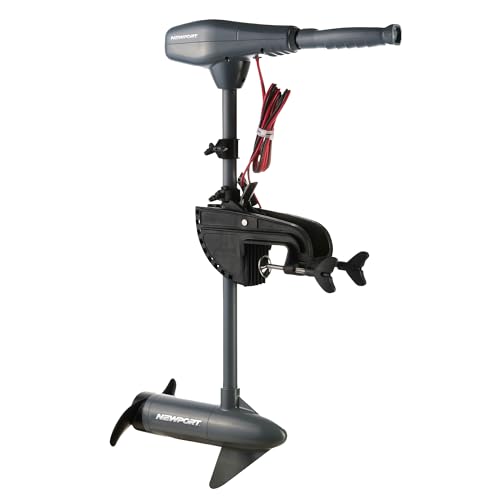
Designed specifically for kayaks, the Newport Kayak Series uses a 24-inch fiberglass shaft for flexible depth placement. It offers eight speeds (five forward, three reverse) and a sturdy all-aluminum motor head with corrosion-resistant hardware for saltwater use. Best for solo kayak fishing or small craft where maneuverability and placement control matter. The shorter shaft may limit deep-water trolling on raised-deck boats, which is a potential limitation.
Key features include:
- 24″ fiberglass shaft for kayak depth placement
- 8 speeds with a 6″ telescoping handle
- All-aluminum head and corrosion-resistant hardware
Best for: Kayak and small craft anglers seeking reliable saltwater performance. Choose this if your boat is close to the waterline and you want easy transport; avoid if you need deep-water trolling on larger vessels.
Minn Kota PowerDrive Bow-Mount GPS 55 Lb

This bow-mount trolling motor offers an advanced GPS trolling system with Spot-Lock, making precise position control and automated steering possible. It includes a Deploy-Assist lever for quick water deployment and a durable construct designed to handle open-water challenges. Best for anglers who want hands-free control and reliable anchoring in varying conditions. A limitation is that GPS features may require additional accessories or setup for optimal use, depending on the boat’s configuration.
Key features include:
- 55 lb thrust, bow-mount with GPS
- Spot-Lock, drift mode, follow mode, dodge mode
- Deploy-Assist lever for quick deployment
Best for: Freshwater or mixed-use boats seeking precise, GPS-guided control. Choose this if you value automated positioning; avoid if you prefer traditional manual control without GPS features.
Buying Guide
What to consider when choosing a powerful trolling motor:
- Thrust versus boat size: Larger boats benefit from higher thrust (50–86 lb) to maintain control and speed in windy or rough conditions. Smaller boats can work well with 30–55 lb motors, especially when weight and battery life are a concern.
- Shaft length: Longer shafts (30–54 inches) help keep the propeller in the water on deeper hulls and rougher water. Shorter shafts are better for kayaks and low-profile boats but may require more careful mounting to avoid drag.
- Voltage and battery life: 12V systems are common for lighter setups; 24V systems deliver more power for larger boats but demand bigger batteries. Plan for battery capacity and charging needs based on expected trip duration.
- Water type and durability: Saltwater models use corrosion-resistant hardware and coatings. If you fish both salt and fresh water, ensure the motor is rated for both environments and maintain it properly to prevent corrosion.
- Features: GPS and Spot-Lock can dramatically improve positioning and control, especially in currents and windy conditions. Telescoping tillers and deploy-stow mechanisms affect comfort and deployment speed.
- Weight and portability: Heavier motors with longer shafts can impact mounting options and boat balance. Consider how often you transport or remove the motor.
Practical decision tips:
- If you fish on a large vessel in rough seas, prioritize high thrust and durable saltwater construction. The 86lb Newport NV-Series is a strong option for heavy loads.
- If you want GPS-guided precision for a mid-to-large boat, consider Minn Kota Terrova or PowerDrive with Spot-Lock for hands-free control.
- If you fish from a kayak or small craft, the Newport Kayak Series provides a lighter, shorter-shaft option designed for portability and ease of use.
FAQ
- What is the typical advantage of higher thrust in trolling motors?
Higher thrust provides better acceleration, improved control in wind and current, and the ability to move heavier boats or gear more efficiently. - Is GPS-powered trolling motor worth it for casual fishing?
For frequent positioning, steady holds, and hands-free control, GPS-based models can significantly reduce drift and improve catching opportunities. For simple trolling, a non-GPS model may suffice. - Do saltwater trolling motors require special maintenance?
Yes. Rinse with freshwater after use, dry thoroughly, and inspect hardware for corrosion. Use saltwater-rated models when operating in coastal zones to extend motor life. - Which shaft length should I choose?
Match shaft length to your boat’s transom height and water conditions. Longer shafts keep the prop in water on deeper hulls and in rough water, while shorter shafts are easier to mount on smaller boats. - Can I switch between 12V and 24V systems easily?
Swapping between 12V and 24V requires compatible batteries and wiring. Most boats require a full electrical assessment before changing voltage configuration. - Are carbon fiber or fiberglass shafts better?
Carbon fiber shafts are lighter and stiffer, but may be more expensive. Fiberglass shafts are robust and cost-effective for many saltwater uses.