Find the right aluminum boat motor to fit your boat size, typical water conditions, and performance needs. This guide highlights five reliable options across power ranges, from small inflatables to mid- and larger-boat setups. Whether you’re chasing speed, fuel efficiency, or quiet trolling, each choice is explained with who it’s best for and why it stands out for aluminum boats. A quick buyer’s summary follows, helping you compare at a glance.
| Product | Best For | Key Benefit |
|---|---|---|
| 4 Stroke 7.5HP Outboard Motor (KTYHNPM) | Small to mid-sized aluminum boats | Strong power with smooth CVT shifting |
| NAZEAOB 18HP 2-Stroke Outboard | Fast travel, heavier loads | High power with durable aluminum alloy |
| Newport NV-Series 62lb Trolling Motor | Larger boats, heavy loads | High thrust for tough conditions |
| Newport NV-Series 36lb Trolling Motor | Lightweight setups, kayaks, canoes | Efficient, quiet, saltwater-ready |
| HinLIaDa 2.3HP 2-Stroke Outboard | Inflatable and small craft | Compact, easy steering, reliable power |
4 Stroke 7.5HP Outboard Motor for Small Boats
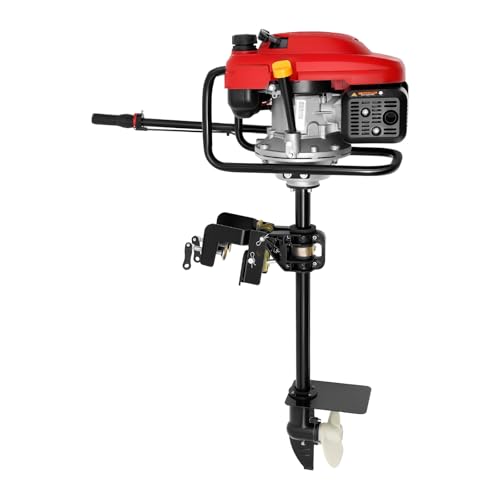
The 4-stroke 7.5HP boat motor delivers up to 3.5 kW (3600 rpm) for solid speed on 13.12–19.69 ft boats. It features a continuous variable transmission for smooth gear shifts, and an air-cooled cooling system with multiple heat-dissipation holes to prevent overheating. Best for small aluminum boats that need reliable power with easy operation. Caution: 4-stroke engines can be heavier than comparable 2-stroke models, affecting mounting and handling on very small craft.
NAZEAOB 18HP 2-Stroke Outboard

This 18HP 2-stroke outboard uses a robust aluminum alloy build and a water-cooled system, delivering strong propulsion for faster travel and reliable performance on larger aluminum boats. It offers a three-gear (F-N-R) setup and a CDI ignition system for consistent starting. Best for boats that require more power and quicker acceleration, while acknowledging higher fuel consumption typical of 2-stroke engines. Limitation: heavier engine weight may affect handling in smaller craft.
Newport NV-Series 62lb Trolling Motor

This 12V trolling motor delivers 62lb thrust and is designed for larger boats with heavier loads. Built for saltwater and freshwater, it includes a large 3-blade propeller for maximum push in challenging conditions. Best for bigger aluminum jon boats and longer runs where steady, reliable thrust is essential. Caution: trolleys with higher thrust require more battery capacity and heavier mounting hardware.
Newport NV-Series 36lb Trolling Motor
With 36lb thrust, this trolling motor provides efficient, quiet propulsion suitable for lighter aluminum craft like kayaks, canoes, or small boats. Its corrosion-resistant build suits saltwater and freshwater use, and a two-blade propeller focuses on battery efficiency. Best for anglers who prioritize battery life and stealthy operation. Limitation: lower thrust may not perform well in strong winds or heavy seas.
HinLIaDa 2-Stroke 2.3HP Outboard
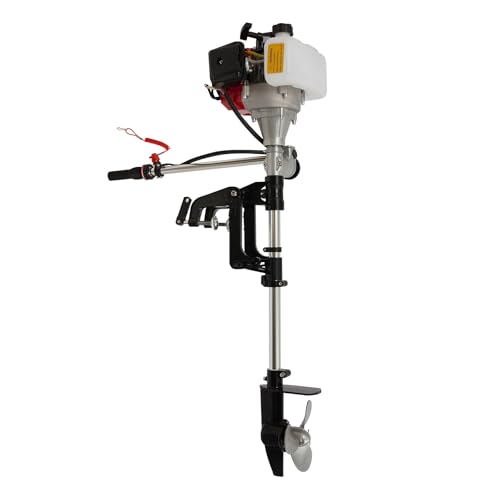
This compact 2.3HP 2-stroke motor provides solid power for inflatable boats and small craft. It features a high engine speed (4500–8500rpm) for quick acceleration and a steering angle greater than 120°, making it easy to maneuver tight spaces. Best for inflatable boats or small aluminum dinghies. Caution: 2-stroke engines require mix-and-go fuel handling and more frequent maintenance compared to some 4-stroke options.
Buying Guide
- Boat size and weight: Match horsepower and thrust to your boat’s weight and plan for occasional heavier loads. Larger boats benefit from higher thrust or larger HP engines.
- Fuel type and efficiency: 2-stroke engines offer higher power-to-weight but can be less fuel-efficient; 4-stroke engines are typically cleaner and quieter but heavier.
- Intended use: For trolling and precision control, choose electric trolling motors with adequate thrust. For fast cruising, opt for higher HP outboards with reliable cooling.
- Mounting and compatibility: Ensure the motor shaft length and mounting hardware fit your transom or bow mount. Consider the mounting height for optimal propeller immersion.
- Maintenance and durability: Aluminum motors resist corrosion; confirm heat dissipation, cooling, and ease of service in your typical water conditions.
- Battery and electrical needs: For trolling motors, plan battery capacity and charging options to avoid mid-day power loss.
- Warranty and support: Check local service availability and warranty terms to minimize downtime after purchase.
Frequently Asked Questions
- What size motor is best for a 14-foot aluminum boat? A lightweight 2.3–5 HP motor is often enough for calm waters, while 9–15 HP suits faster cruising on small to mid-sized boats.
- Are 2-stroke motors still a good option for aluminum boats? Yes, they offer strong power and lighter weight, but require more maintenance and may be louder and less fuel-efficient.
- Is an electric trolling motor suitable for bigger aluminum boats? For larger boats or heavy loads, higher-thrust electric trolling motors (toward 50–60 lb) with a robust battery system are recommended.
- What maintenance should I perform after a season? Flush cooling systems, check propeller integrity, inspect fuel lines, and service the starter and CDI components if applicable.
- How do I choose between a gas outboard and a trolling motor? Use outboards for propulsion and speed; use trolling motors for precise, quiet maneuvering and extended battery life for smaller craft.