If you want to slow your trolling speed without drilling into your hull, a no-drill trolling plate is the right tool. These plates attach to the cavitation or transom area and can reduce speed to around 1 MPH, helping you control line depth and lure presentation. This guide highlights five practical no-drill trolling plate and mounting options, suitable for anglers with small to mid-size outboards and boats like kayaks, canoes, and small powerboats. Each option is chosen for ease of installation, durability, and clear buyer benefits tailored to different boat setups.
| Product | Best For | Why It Stands Out |
|---|---|---|
| Ironwood Pacific EasyTroller Trolling Plate – Standard (50-300 HP) | Mid-to-large outboard boats | Strong, adjustable, and proven slow-trolling control with a hinge design to resist damage. |
| EasyTroller Trolling Plate – Short (30-45 HP) | Smaller outboards and light boats | Compact, easy to install, delivers slow trolling without overhang. |
| Ironwood Pacific EasyTroller Plate – Standard with Fins (50-300 HP) | Heavy boats needing extra stability | Fins add stability and smoother tracking while trolling. |
| Sea Brackets 20″ Straight Trolling Motor Plate | Budget-friendly straightforward plate | Simple design intended to slow trolling without complex mounting. |
| SFNSM Universal Canoe/Kayak Trolling Motor Mount Kit | Non-motor hulls and no-drill mounting on smaller craft | No-drill mounting solution for lightweight, compact setups. |
Ironwood Pacific EasyTroller Trolling Plate – Standard
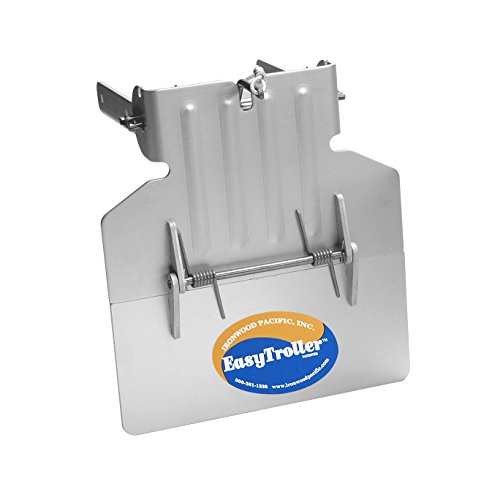
Best for: boats with outboard engines in the 50–300 HP range that need reliable slow trolling. The standard plate slows speed to about 1 MPH and features a damage-resistant hinged design that flexes upward to prevent plate damage during sudden acceleration. It mounts directly to the cavitation plate, just a few inches behind the propeller. The no-drill installation and durable construction suit anglers who want a strong, long-lasting trolling solution without modifying the hull.
Why selected: It provides a proven balance of slow trolling capability, durability, and straightforward installation for mid-to-large boats. The hinged design helps survive incidental impacts, which is helpful for frequent use in rocky or weed-prone waters.
Limitation: Large outboard setups may require more clearance behind the propeller to avoid interference with gear cases or prop wash.
EasyTroller Trolling Plate – Short
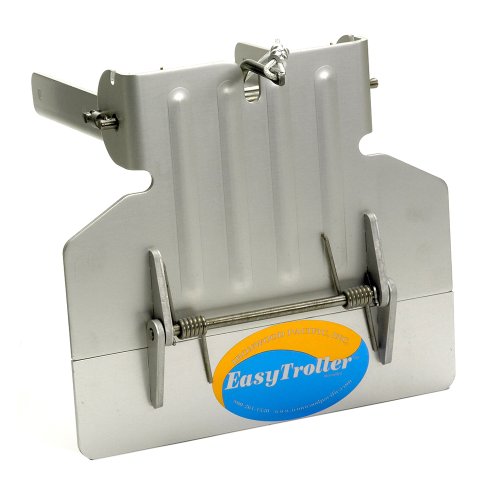
Best for: smaller outboard engines in the 30–45 HP range or compact boats where space is at a premium. The short version delivers effective speed reduction with a compact footprint and easier mounting. It sits close to the prop and cavitation plate, offering predictable performance on lightweight craft.
Why selected: Ideal when a full-width plate isn’t feasible due to tight transom space or smaller engine legs. Its reduced size makes it easier to install and less disruptive to boat handling at low speeds.
Limitation: May not deliver the same moment of drag as larger plates on heavier hulls; performance is tuned for lighter boats.
Ironwood Pacific EasyTroller Plate – Standard with Fins

Best for: boats that benefit from additional stability and smoother tracking during trolling. The standard plate with fins combines the proven slow-troll performance with fins that help maintain a steadier course and reduce wobble.
Why selected: The fins can improve steering feel and reduce erratic plate behavior in varying water conditions, which helps maintain consistent lure depth and presentation.
Limitation: Fins add some drag; be mindful of overall boat performance and engine load, especially on lighter craft or shallow-water trolling.
Sea Brackets 20″ Straight Trolling Motor Plate

Best for: anglers seeking a budget-friendly, straightforward plate option. This 20″ straight plate is designed to slow trolling while remaining easy to install on compatible transoms. It’s a practical choice for casual anglers or those testing no-drill solutions.
Why selected: The Sea Brackets plate provides a clear value proposition: reliable speed control without needing specialized mounting hardware. It’s well-suited for entry-level setups and straightforward boats.
Limitation: Simplicity may mean fewer features for extreme conditions; consider boat size and planned trolling depth before choosing.
SFNSM Universal Canoe/Kayak Trolling Motor Mount Kit

Best for: smaller craft like canoes and kayaks where no-drill installation is a priority. This heavy-duty kit supports trolling motors on flat stern areas without drilling, using a clamp-on system. It is especially useful for portable, lightweight boats that require flexibility.
Why selected: It enables a no-drill, quick-release mounting approach, ideal for recreational trips or temporary setups. The design accommodates various hull shapes while preserving balance and stability during trolling.
Limitation: Not a trolling plate itself; it’s a mounting solution. Check compatibility with your trolling motor model and hull size before purchase.
Buying Guide: No-Drill Trolling Plate And Mounting Considerations
What kind of boat benefits most from no-drill trolling plates?
No-drill trolling plates are well-suited for small to mid-sized boats with outboard engines and for kayaks, canoes, or light jon boats where hull modification isn’t desirable. They are particularly useful for anglers who fish in shallow or weed-prone waters and want better control over lure depth and presentation without permanent alterations.
Key factors to compare
- Engine compatibility: Ensure the plate is designed for your HP range (e.g., 30–45 HP or 50–300 HP).
- Installation and mounting: Check whether the plate attaches to the cavitation plate and whether any additional brackets are needed for your hull type.
- Drag and stability: Plates with fins or broader surfaces may offer smoother tracking but add more drag. Consider your boat’s weight and propulsion.
- Durability: Look for a rugged hinge design or corrosion-resistant materials to withstand regular use and saltwater exposure.
- Maintenance: Choose options with simple maintenance and replaceable parts where possible.
Should you choose a plate or a mounting kit?
If your goal is flexible no-drill use across different craft, consider a no-drill mounting system for canoes/kayaks and a dedicated trolling plate for boats with mid-to-large outboards. For compact boats, a shorter plate may be more practical, while larger boats benefit from standard plates with fins for stability.
What about installation effort and safety?
Select products with clear mounting instructions and sturdy attachments to cavitation plates or transoms. Avoid forcing a plate into spaces where propwash or steering linkage may interfere. Always test trolling speed and lock the plate away from the propeller path when not in use.
Maintenance and longevity tips
- Rinse after use in saltwater to prevent corrosion.
- Inspect hinges and fasteners for wear and tighten as needed.
- Store plates in a position that minimizes exposure to impact when the vehicle is not in use.
Frequently Asked Questions
- Do no-drill trolling plates work on all boats? Answer: They work best on boats with cavitation plates or suitable transoms, and may not fit every hull. Check compatibility before purchase.
- Can I move a no-drill plate between boats? Answer: Some plates are designed for easy transfer, but others require specific mounting hardware. Review manufacturer guidance.
- Will a trolling plate affect top speed? Answer: Yes, mainly it slows the boat to your trolling speed, but may slightly affect peak speed depending on plate and boat weight.
- Are fins necessary for stability? Answer: Fins can improve tracking and reduce wobble, but they add some drag. Choose based on boat size and trolling needs.
- Is installation permanent? Answer: No-drill plates are designed for temporary or removable use, but always follow safety and torque guidelines during installation.
- What maintenance should I perform regularly? Answer: Rinse after use, inspect hinges and hardware, and ensure mounting is secure for safe trolling.