Answering the common buyer question, these outboard boat motors are compact, fuel-efficient choices for inflatable boats, dinghies, and small fishing or recreational vessels. The top options below emphasize reliability, CDI ignition, water cooling, and ease of use. Best for recreational anglers, weekend boaters, and DIY enthusiasts who want simple maintenance and dependable starting. The table summarizes key specs to compare at a glance.
| Product | Engine Type | Power | Shaft Length | ||
|---|---|---|---|---|---|
| Outboard Boat Motors, 2 Stroke 18HP | 2-Stroke | 18 HP | Short (40 cm) | Not stated | Inflatable boats, small fishing craft |
| 2 Stroke 18HP Heavy Duty Outboard Motor | 2-Stroke | 18 HP | Short | Not stated | Rubber boats, sailboats, yachts |
| 4-stroke 6HP Outboard Motor | 4-Stroke | 6 HP | Not stated | Rubber boats, small craft | Casual cruising, easy handling |
| 18HP Outboard Motor, 246cc | 2-Stroke | 18 HP | Short | 24 L tank implied | Fishing boats, small vessels |
| 52CC 2.3 HP Outboard Motor | 2-Stroke | 2.3 HP | Not stated | Compact, lightweight use | Tiny boats, trolling, calm waters |
Outboard Boat Motors, 2 Stroke 18HP — Short Shaft, 246CC
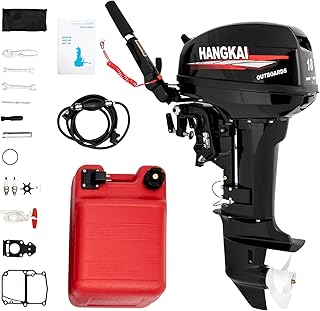
Engine design emphasizes reliability with water cooling, CDI ignition, and a tiller control. This 2-stroke, 18 HP model uses a 246 CC displacement and a 40 cm short shaft, making it well-suited for inflatable boats and small fishing craft. It supports 360-degree steering and reverse without shifting gears, aiding maneuverability in tight spaces. Best for: boaters needing strong mid-range power in compact outboards, especially inflatable or dinghy setups.
Caution: The 2-stroke design tends to require more frequent oil mixing and maintenance than modern 4-stroke options. Ensure proper lubrication and routine cooling checks to prevent overheating during extended use.
2 Stroke 18HP Heavy Duty Outboard Motor — Short Shaft

This engine pairs a large internal fuel capacity with CDI ignition for quick starts. It is designed to handle rough water conditions and long-distance trips, suitable for rubber boats, inflatable boats, sailboats, and small yachts. It features a streamlined propeller design and ergonomic handle for easier transport. Best for: users needing robust cold-start reliability and longer range in variable water conditions.
Limitation: Some users may prefer higher-end corrosion protection in saltwater conditions; verify material fit if planning extensive saltwater use.
4-stroke 6HP Outboard Motor — Lightweight Power

This 6 HP model provides a balance of ease and efficiency with a 4-stroke design. It offers forward and neutral gears, a throttle-controlled approach, and a safe build featuring an anti-swirl plate and emergency cut-off. The suspension tilt feature helps maintain stable sailing attitudes, making it ideal for casual cruising and family outings. Best for: beginners or casual boaters who want predictable, quiet operation and straightforward maintenance.
Caution: It delivers lower top speed compared to larger HP units; choose this if you don’t require high speed or heavy loads.
18HP Outboard Motor, 246cc — CDI, Water-Cooled

This model presents an 18 HP 2-stroke engine with a 246cc displacement and 24-liter fuel capacity, featuring a CDI ignition system and water cooling. A 3-blade, 8-inch propeller design supports better acceleration and efficiency, particularly for small fishing boats. It includes a fuel-efficient carburetor, and safety elements like overheat protection. Best for: boaters needing reliable mid-range power with efficient fuel use for longer trips.
Limitation: 2-stroke engines typically require more ongoing maintenance than 4-stroke engines, particularly around oil mixing and exhaust care.
52CC 2.3 HP Outboard Motor — Compact Power

This compact option delivers up to 8500 rpm with a simple manual start. It features forced air cooling for quick heat dissipation and a CDI ignition system for quick, reliable starts. A lightweight design makes it easy to transport and install on small boats. Best for: ultra-lightweight setups, nearshore fishing, and quick setups requiring minimal hull burden.
Limitation: Lower horsepower means limited top speed and payload capacity; ideal for small, calm-water applications only.
Buying Guide
Key considerations when choosing an outboard motor for small boats:
- Power needs: Match horsepower to boat size, weight, and typical load. Higher HP provides faster speeds and better planing but increases fuel use and cost.
- Shaft length: Short shafts suit dinghies and inflatable boats; longer shafts fit deeper hulls and deeper water use. Verify measured shaft length before purchase.
- Engine type: 2-stroke engines are lighter and simpler but require more maintenance and oil mixing. 4-stroke engines are quieter and cleaner but heavier and pricier.
- Cooling system: Water cooling is common for reliability; ensure compatibility with your water environment (fresh vs. saltwater).
- Ignition system: CDI ignition supports quick starts and reliable operation; essential for cold starts and frequent use.
- Fuel capacity and efficiency: Larger tanks extend range but add weight. Consider fuel economy specs to estimate cruising distance.
- Controls and convenience: Tillers, throttles, and ergonomic handles impact day-to-day use, especially on longer trips.
- Maintenance and spare parts: Availability of parts, ease of maintenance, and service options influence long-term costs.
Frequently Asked Questions
- What’s the difference between a 2-stroke and a 4-stroke outboard motor?
– 2-stroke engines are typically lighter and offer higher power-to-weight but require oil mixing and more frequent maintenance. 4-stroke engines are heavier, quieter, and cleaner, with simpler fuel management but usually higher upfront cost. - Which shaft length should I choose?
– Short shafts fit smaller, lighter boats with shallow water; long shafts suit deeper hulls and higher mounting points. Measure the boat transom height to decide. - Is CDI ignition important?
– Yes. CDI ignition provides reliable and quick starts, especially in colder conditions or when starting frequently. - Do I need a fuel tank capacity larger than standard?
– If you plan long trips or remote cruising, a larger capacity extends range. Balance fuel capacity with boat weight and handling. - Can these motors be used on inflatable boats?
– Many models are designed for inflatable and rubber boats, but verify the shaft length and mounting compatibility with your specific inflatable model. - What maintenance should I expect?
– Regular oil checks for 2-strokes, spark plug inspection, cooling system cleaning, and fuel system checks are common maintenance tasks. Always follow manufacturer guidelines.