Answering the search for an outboard external gas tank means finding durable, portable fuel tanks that fit your boat and motor needs. This guide highlights five reliable options, explains who they’re best for, and notes practical considerations to help you compare quickly. Ideal buyers include saltwater deck boat owners, fishing enthusiasts, and anytime you need extra range without sacrificing space.
The following quick-reference table summarizes five top choices to consider. Each entry notes capacity, typical use case, and a key differentiator.
| Product | Capacity | Best For | Key Differentiator |
|---|---|---|---|
| VEVOR Boat Fuel Tank, 3.17-Gallon | 3.17 gal / 12 L | Small boats, deck boats, anglers | Long hose, Yamaha compatibility |
| AloneGoer 3 Gallon Portable Tank | 3 gal / 12 L | Spare tank, versatile motors | HDPE-EVOH barrier, UV-stabilized |
| Scepter 6 Gallon Portable Marine Gas Can | 6 gal | Under-seat storage, longer runs | 2-way vented cap, built-in gauge |
| VEVOR 6.34-Gallon Portable Tank | 6.34 gal / 24 L | Mid-sized boats, fishing | Separate inlet/outlet, gauge |
| DEF Portable Boat Fuel Tank 6 Gal | 6 gal | Durable, corrosion-resistant use | Two-mode sealing/venting |
VEVOR Boat Fuel Tank, 3.17-Gallon

The VEVOR 3.17-gallon transfer tank is designed for outboard engines and small to mid-sized boats. It includes a 9.8 ft (3 m) fuel hose compatible with Yamaha connectors, making it a practical option for anglers and deck boats that require a flexible reach. The tank body is made from high-density polyethylene, ensuring resistance to aging, impact, and corrosion. A compact design supports easy storage beneath seats or in lockers. Note: avoid prolonged direct sun exposure to prevent aging and expansion.
Best for: buyers needing a lightweight, portable transfer tank with a long hose and Yamaha compatibility. Choose this if you want a simple, compact backup tank for weekend fishing trips. Limitation: the plastic may age with long sun exposure; park in shade when possible.
AloneGoer 3 Gallon Portable Tank
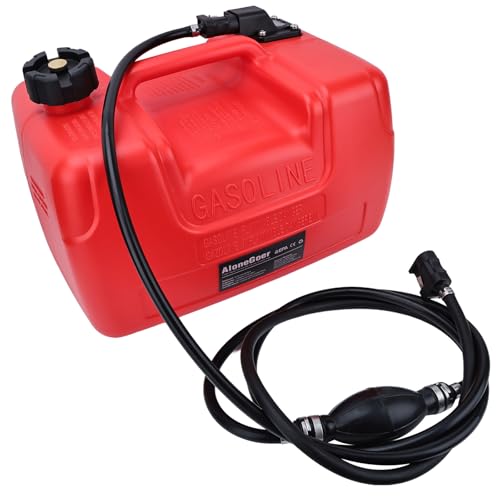
The AloneGoer 3-gallon tank uses an advanced multi-layer barrier technology (HDPE-EVOH-HDPE) to reduce fuel evaporation by up to 98%, making it a strong option for boats in hot climates or longer outings. The tank is designed specifically for outboard motors and is compatible with Yamaha connectors. UV stabilization and a corrosion-resistant formulation enhance longevity in salt spray environments. It includes a 12 L capacity and a ready-to-connect hose assembly.
Best for: boaters who want a durable, low-evaporation tank for longer runs or hot days. Better for: users needing high-barrier performance and UV resistance. Caution: ensure the hose and connector fit your specific Yamaha outboard model to avoid compatibility issues.
Scepter 6 Gallon Portable Marine Gas Can

The Scepter 6-gallon tank emphasizes practicality with built-in fuel gauge and a 2-way vented cap that allows air flow during refueling while venting pressure above 5 PSI. It supports diesel and ethanol-blended fuels and is designed for under-seat storage thanks to a slim profile. The fuel line is sold separately, but the built-in gauge helps with quick checks and planning long trips.
Best for: boaters who prioritize a balance of storage compactness and visibility of fuel level. Choose this if you want a gauge integrated into the can for easy monitoring. Limitation: the fuel line is not included and must be sourced separately.
PeakPursuit Portable Boat Tank 3 Gal

PeakPursuit offers a 3-gallon marine tank with a 9.8 ft hose and a level gauge. Its dual venting system provides options for a sealed or vented cap to manage flow and pressure. The HDPE construction resists aging, corrosion, and impact, maintaining structural integrity in saltwater and humid environments. The long hose allows flexible placement and reach on deck boats and fishing vessels.
Best for: users needing dual-vent options and a longer hose for flexible routing. Avoid if you require a built-in gauge or a larger capacity for longer trips—this model focuses on portability and ease of use in smaller boats.
VEVOR Marine Tank, 6.34-Gallon

The 6.34-gallon VEVOR tank features a clear gauge and a separate inlet/outlet to minimize spills. It comes with a 9.8 ft hose and a 0.3-inch (8 mm) inner diameter, making it compatible with a wide range of marine interfaces. The tank’s HDPE body offers aging and corrosion resistance, and VEVOR notes to avoid prolonged direct sunlight exposure to prevent expansion and aging. This tank suits mid-sized craft and those who want a better balance of capacity and portability.
Best for: boaters needing a larger capacity without stepping up to a full 10+ gallon can. Better for: ensuring a visible fuel level and safer transfer with separate inlet/outlet. Limitation: the 8 mm hose size may not fit some older fittings—verify compatibility beforehand.
DEF Portable Boat Fuel Tank, 6 Gal

The DEF 6-gallon tank emphasizes corrosion resistance with high-density polyethylene construction and includes two modes of sealing and venting. The design supports a smooth fuel flow and reduces leakage by managing venting effectively. An integrated oil volume indicator helps monitor remaining fuel. The tank is designed to stand up to humid and salt-pray environments, making it a solid option for coastal users seeking durable performance.
Best for: buyers prioritizing durability and clear fuel monitoring. Choose this if you want flexible sealing options and a built-in indicator. Limitation: ensure your boat’s fittings match DEF’s hose and cap design to avoid compatibility issues.
Buying Guide: Key Considerations for Outboard External Gas Tanks
- Capacity vs. boat size: Match tank capacity to your typical trip length and available storage. Larger tanks increase run time but require more space and weight management.
- Hose length and fittings: A longer hose offers flexibility, but confirm the inner diameter and connector compatibility with your outboard motor and fuel line fittings.
- Material and durability: HDPE tanks resist aging and corrosion, but UV exposure can still affect longevity. Look for UV stabilization and salt spray resistance if you operate in coastal environments.
- Ventilation and sealing: Some tanks use dual caps for venting vs. sealing. Proper venting prevents vapor buildup and ensures smooth fuel flow during transfer.
- Fuel compatibility: Check whether the tank supports diesel, ethanol blends, or only gasoline. Diesel-compatible tanks are less common but worth noting for certain boats.
- Gauge and visibility: A built-in gauge helps monitor fuel levels without removing the cap. If you need quick checks, prioritize tanks with sight gauges or clear sightlines.
- Portability and storage: Favor tanks with molded handles or slim profiles for easy transport and under-seat storage on smaller vessels.
- Sun exposure and aging: Prolonged sun exposure can cause expansion or degradation. Store in shade or use tanks with UV-resistant construction.
FAQs
- Why choose a portable outboard tank over a built-in fuel tank? Portable tanks offer flexible placement, easy refueling, and are ideal for boats that need extra range without permanent modifications.
- What should I consider about hose length? A longer hose helps reach the fuel filler or motor, but ensure the hose diameter and fittings match your equipment for a secure connection.
- Is a built-in gauge necessary? A gauge helps you monitor fuel before trips, reducing the risk of running out mid-journey. If you don’t rely on quick checks, a simple tank may suffice.
- Can these tanks handle saltwater use? Yes, most recommended tanks use HDPE with corrosion-resistant formulations suitable for salt spray, but avoid prolonged sun exposure when possible.
- What maintenance is needed for a portable fuel tank? Regularly inspect hoses and seals for cracks or leaks, keep caps clean, and store upright to minimize spills.