Answering the top search intent, this guide helps buyers choose outboard mounted trolling motors suitable for saltwater use. It highlights five reliable models and explains who each is best for, plus practical buying considerations. The selection emphasizes durable construction, shaft length, and thrust to match different boat sizes and conditions. Whether you fish coastal estuaries or saltwater rivers, these options offer adjustable mounts, multiple speeds, and battery indicators to simplify day-long trolling.
| Product | Best For |
|---|---|
| Newport NV-Series 55Lb 12V (LED Battery Indicator) | Medium boats; all-day trolling, calm to choppy conditions |
| Newport NV-Series 36Lb 12V (LED Battery Indicator) | Compact boats; low-thrust trolling with good efficiency |
| Minn Kota Endura C2 30Lb | Freshwater and light vegetation; easy handling |
| Newport Kayak Series 55Lb 24″ Shaft | Kayaks or tight cockpit setups; variable depth placement |
| Newport NV-Series 86Lb 24V (LED Battery Indicator) | Heavier boats; powerful trolling in variable conditions |
Newport NV-Series 55Lb 12V Trolling Motor

Best for: medium boats and anglers who fish in varied water conditions. This model delivers 55 pounds of thrust with a 30-inch shaft, a 5-LED battery meter, and a 6-inch telescoping tiller for comfortable control. It offers eight speeds (five forward, three reverse) and a 3-blade propeller designed for strong low-end torque to get the boat moving quickly. The motor is designed for trolling, with a top speed around 4 mph, though actual speed depends on boat shape, weight, water, and wind.
Why it was selected: Strong thrust for mid-sized craft, reliable saltwater-ready components, and a clear battery readout help you manage power on longer trips. The adjustable mount and retractable tiller improve handling in varied conditions. The 3-blade design favors smooth starts with solid low-end torque.
Caution: Performance (top speed) varies with boat and conditions; avoid assuming a fixed speed in rough seas or heavy wind.
Newport NV-Series 36Lb 12V Trolling Motor
Best for: smaller boats or anglers seeking efficient, quiet trolling without excess thrust. This motor also uses a 30-inch shaft and a 5-LED battery meter, with a 2-blade propeller and adjustable mount. It features eight speeds (five forward, three reverse) and a top speed near 3 mph. The two-blade design performs well in weeds and grassy conditions, making it a practical choice for shallow coastal waters.
Why it was selected: Lightweight selection for compact craft; simpler propulsion helps in stable trolling and precise control. The weed-friendly 2-blade propeller reduces clogging in grassy areas.
Caution: Lower thrust means that heavier boats or strong currents may require more effort to maintain line speed or may limit speed under load.
Minn Kota Endura C2 Transom-Mount 30Lb

Best for: anglers seeking dependable freshwater trolling with a robust tiller experience. Key features include a 6-inch telescoping tiller for all-day comfort, a push-to-test battery meter integrated with the motor head, and a 10-position lever lock bracket for easy angle adjustments. The reinforced composite construction resists flexing, warping, and UV damage, ensuring durability in marine environments. The 3-1/4″ motor diameter pairs with a high-performance prop to power through vegetation.
Why it was selected: Strong, user-friendly control and durable build make it a solid all-around choice for variable conditions and frequent use. Availability of replacement parts and compatibility with common mounting setups adds value.
Caution: This model is optimized for freshwater use; saltwater suitability should be confirmed for marine environments or by selecting saltwater-rated variants.
Newport Kayak Series 55Lb 24″ Shaft
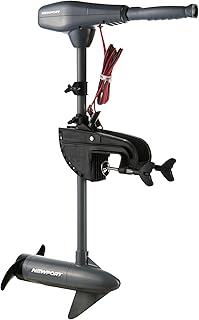
Best for: kayaks and boats requiring a shorter, more flexible shaft setup. This model uses a 24-inch fiberglass kayak shaft for variable depth placement, with an 8-speed range (5 forward, 3 reverse) and a 6-inch telescoping handle for precise control. The all-aluminum motor head includes corrosion-resistant hardware suitable for saltwater use with lead-acid 12V batteries.
Why it was selected: The kayak-specific shaft length and robust tilt mechanism make it ideal for smaller craft or tight spaces where a longer shaft would hinder maneuverability. The saltwater-rated construction supports longer life in marine settings.
Caution: The 24-inch shaft may require closer mounting on wider boats or higher rails; ensure your boat’s transom clearance accommodates the shorter shaft.
Newport NV-Series 86Lb 24V Trolling Motor
Best for: heavier boats or demanding trolling tasks where maximum power is needed. This motor delivers 86 pounds of thrust on 24V with a 36-inch shaft, a 5-LED battery meter, a 6-inch telescoping tiller handle, and a 3-blade propeller. The top speed is around 4 mph, dependent on boat weight, water, wind, and other factors. It offers eight speeds (five forward, three reverse) and adjustable mount settings for precise steering.
Why it was selected: High thrust makes this suitable for larger craft or rougher water, providing strong stopping and starting control. The 24V setup supports longer trolling runs with better battery efficiency over extended periods.
Caution: Heavier weight and longer shaft require careful mounting and battery management; ensure your vessel’s transom and battery capacity align with this setup.
Buying Guide: Key Purchase Considerations
What thrust do you need? Thrust should match boat size and typical load. Light boats can use 30–36 lb options, while mid-size craft benefit from 55 lb or 86 lb models for tougher conditions.
What shaft length is right? Shorter shafts are easier on kayaks and small boats; longer shafts help reach deeper depths on larger vessels. Verify transom clearance and desired mounting height before purchasing.
Should you choose 12V or 24V? 12V motors are common for smaller boats and lighter loads. For heavier boats or frequent trolling in windy conditions, 24V systems provide more sustained power and efficiency, though require a compatible battery setup.
Propeller design matters. A 3-blade prop offers strong low-end torque for quick starts, while a 2-blade propeller can perform better in weedy areas due to reduced clogging. Weed resistance should influence your choice based on fishing locations.
Saltwater readiness. Ensure motors used in saltwater have corrosion-resistant hardware and appropriate seals. Saltwater-rated models typically use aluminum and stainless components to resist corrosion.
Control comfort and adjustability. Consider a tilting or telescoping tiller for ergonomic control, and check if the mount angle, height, and orientation can be locked into place.
Battery indicators. Built-in battery meters help you track remaining power and plan recharge intervals, extending trolling sessions without surprises.
Frequently Asked Questions
- What is the typical top speed for these trolling motors? Most are designed for trolling, with top speeds around 3–4 mph depending on boat weight, water conditions, and propeller choice.
- Are these motors suitable for saltwater use? Several models are saltwater-rated or designed for saltwater environments; always verify hardware materials and seals for marine applications.
- Do I need special batteries? 12V systems use standard deep-cycle 12V batteries; 24V systems require two 12V batteries or a 24V setup depending on the model.
- How do I choose between 2-blade and 3-blade props? 3-blade props provide stronger low-end torque and better acceleration, while 2-blade props perform better in grassy or weed-prone waters.
- Can I install these on any transom? Most transoms are compatible with standard mountings, but verify shaft length, mounting hardware, and weight capacity before installation.
- Is a longer shaft always better? Not necessarily. Longer shafts help in deeper water or higher transoms, but can be unwieldy on small craft. Match shaft length to your boat’s transom height and usage.