Answer: For effective antifouling protection, choose coatings that suit your boat type, water conditions, and maintenance preferences. The top options below include ablative and copper-based paints designed for fiberglass, wood, steel, aluminum, and inflatable boats. They are best for sailors, anglers, and workboats that extend their time between hull cleanings and launches. The following table highlights the five most relevant choices for painting the bottom of a boat.
| Product | Best For | Key Benefit | Notes |
|---|---|---|---|
| TotalBoat Underdog Marine Antifouling | Saltwater sailboats and powerboats | Single-season protection with copper biocide | Durable finish for trailering and beaching |
| Rust-Oleum Marine Antifouling Paint | Fiberglass, wood, steel | Slow copper release for fouling prevention | Recoatable in 4 hours |
| TotalBoat JD Select Ablative (Blue or Black) | Fiberglass, wood, steel in salt/fresh water | Self-polishing ablative film | Low odor and low VOCs |
| TotalBoat Inflatable Boat Bottom Paint | Hypalon, PVC, rubber inflatables | Water-based, flexible coating | Holds under deflation and rolling |
| TotalBoat Spartan Boat Bottom Paint | High fouling conditions | High copper content for maximum protection | Can be burnished for racing finish |
TotalBoat Underdog Marine Antifouling Bottom Paint
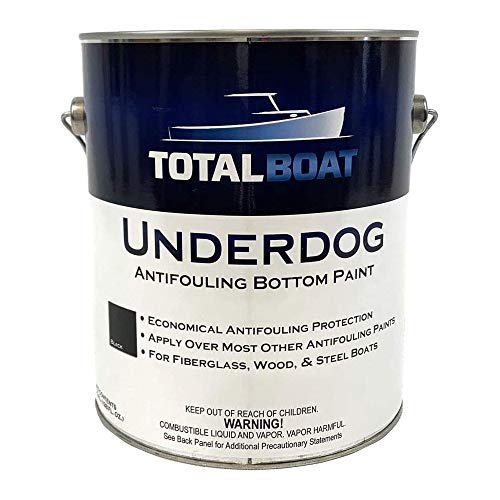
Product overview: An economical antifouling option that delivers excellent single-season protection. The copper biocide deters barnacles and mussels from clinging to hulls in saltwater conditions. Best for boats used frequently, including sailboats, powerboats, fishing boats, and work boats. The coating releases fresh biocide as water moves under the boat, maintaining protection without buildup. Suitable for properly prepared fiberglass, wood, steel, and iron bottoms. The ablative nature means wear away over the season, lightening prep for next year.
Who it’s best for: This is ideal for boat owners who want a budget-friendly, annual refresh with straightforward maintenance. It suits frequent water use and situations where simple reapplication next season is desirable. Limitations: Ablative coatings wear away, so you’ll reapply annually to maintain protection.
Rust-Oleum Marine Flat Boat Bottom Antifouling Paint

Product overview: This antifouling paint is formulated to slowly release copper to deter fouling on fiberglass, wood, or steel surfaces. It supports recoat in about four hours, enabling a faster launch window, and covers up to approximately 110 square feet per quart. Best for boaters needing a straightforward, easy-to-apply solution for prevention of barnacles, weeds, and slime in mixed water conditions.
Who it’s best for: Choose this if you want a simple, quick-recoat option that offers flexible scheduling and reliable coverage on multiple hull materials. Caution: Results can vary with environmental factors; ensure proper surface prep and ventilation in marinas with restrictions.
TotalBoat JD Select Ablative Antifouling (Blue)

Product overview: A unique hybrid, self-polishing ablative coating that keeps barnacles, weeds, and slime from clinging to the bottom for a full season. It’s suitable for fiberglass, wood, and steel boats in both salt and fresh water. The low-odor, low-VOC formula cleans up with soap and water and has no maximum dry time before launch. The coating minimizes paint buildup, reducing next-season sanding work.
Who it’s best for: This option fits boaters seeking a low-odor, environmentally considerate choice with straightforward cleanup and a season-long antifouling effect. Caution: As with all ablatives, expect gradual wear and the need for reapplication after a season or two depending on use and water conditions.
TotalBoat JD Select Ablative Antifouling (Blue, Gallon)

Product overview: Similar to the blue quart, this is a self-polishing ablative coating for fiberglass, wood, and steel in salt and fresh water. It minimizes bottom paint buildup and can be burnished for smoother performance and fuel efficiency. The low-VOC, water-based formula supports cleaning with soap and water and is suitable for marinas with restrictions. No maximum dry time before launch.
Who it’s best for: Choose this if you want a consistent, burnishable finish for top performance and easier yearly maintenance. Caution: As with any ablative coating, performance relies on water movement and hull condition; prep remains critical for adhesion.
Interlux YBB379G Fiberglass Bottomkote NT

Product overview: Interlux Bottomkote NT for fiberglass is a specialized bottom paint formulated to resist fouling with a black finish. The product line emphasizes compatibility with fiberglass boats and provides protection patterns suitable for varying water types. Best for owners seeking a trusted brand with a dedicated formula for fiberglass hulls.
Who it’s best for: This option is suitable for fiberglass boats where a brand-backed, localized antifouling solution is preferred. Caution: Availability and color options can vary by region; verify compatibility with your hull and marina rules.
TotalBoat Alumipaint AF Aluminum and Pontoon Bottom Paint

Product overview: Copper-free antifouling designed for aluminum hulls and pontoons. The ablative coating wears away to continually expose fresh biocide, delivering protection while preventing paint buildup on aluminum surfaces. Best for pontoons and aluminum boats where copper-based coatings are unsuitable or restricted.
Who it’s best for: Choose this if you own aluminum or pontoon boats and want a copper-free option with ablative action. Caution: As with copper-free formulas, performance depends on hull coatings and water exposure; ensure proper prep for metal surfaces and check marina restrictions on copper-free products.
Buying Guide: Key Purchase Considerations
What hull material do you have? The best antifouling paint depends on whether your hull is fiberglass, wood, steel, aluminum, or an inflatable material. Confirm the coating is compatible with your boat’s bottom and environmental regulations where you operate.
What water conditions will you encounter? Saltwater and brackish environments typically require stronger antifouling protection. Freshwater settings may tolerate milder formulas with lower copper content.
How often do you launch and retrieve? Ablative coatings shed over time and are best for boats regularly in the water. Non-ablative or hard antifoulants provide longer-term protection but can be harder to remove when repainting.
What are your environmental considerations? Low-VOC and low-odor formulas are preferable in marinas with environmental restrictions. Consider cleanup requirements and how easy the product is to apply and remove.
How important is easy maintenance? Some paints offer simple recoat windows and quick cleanup, while others require more surface prep or sanding between seasons. Balance effort with desired performance.
FAQ for Bottom Boat Paints
Q: Is copper-based antifouling paint safe for hulls? A: Copper-based formulas deter fouling but may be restricted in certain marinas or water bodies; always follow local regulations and disposal guidelines.
Q: How soon can I launch after applying antifouling paint? A: Many products specify recoat and launch times; follow the specific product label for curing and safety instructions.
Q: Can I use antifouling paint on aluminum hulls? A: Some formulas are designed for aluminum or pontoon boats. Check the product’s compatibility with aluminum surfaces before application.
Q: Do ablative paints build up over time? A: Ablative paints wear away during use, reducing buildup. Reapplication is usually needed after a full season depending on usage.
Q: Are these paints safe for marinas with restrictions? A: Several options are low-odor or low-VOC, making them suitable for restricted environments; verify marina rules before application.