Finding the right personal pontoon boat depends on how you fish, where you go, and how you transport gear. This guide highlights five top options that balance stability, portability, and fishing-ready features for American anglers. Each choice targets different use cases—one-person paddling setups, compact folding designs for SUV trunks, or belly-boat styles for shallow-water access. Read on to see which model fits your style, then compare key details at a glance in the summary table below.
| Product | Best For | Key Benefit |
|---|---|---|
| CADDIS Portable Inflatable Pontoon Boat | Solo anglers who need quick setup | Two frame options, heavy-duty PVC, integrated motor mount |
| Sea Eagle 285 Inflatable Pontoon Boat | Shallow water and mobility | U-Hull stability, quick setup, high payload |
| Goplus Inflatable Fishing Float Tube | Budget-friendly belly-boat with motor-ready design | Motor-mount bracket, padded seating |
| Artigree Folding Pontoon Boat | Storage-constrained travelers | Modular, fits SUV trunk, multi-passenger option |
| Artigree B1 Portable Boat | Compact yet capable group outings | Integrated fish box, modular safety features |
CADDIS Portable Inflatable Pontoon Boat

The CADDIS pontoon boat is designed for solo anglers who prioritize stability and ease of use. The standard option features 8 ft pontoons with a steel frame for a manageable total weight, while the premium option uses 9 ft pontoons with a lighter aluminum frame for reduced heft and easier transport. Its reinforced puncture-resistant PVC with welded seams provides durability in challenging conditions, and thick bottom protection helps guard against rocky shores. A motor mount is included (motor sold separately) to expand fishing options. This model is best for anglers who want a robust, one-person platform with flexible configuration.
Who it’s best for: solo fishermen who need a stable, durable craft that still folds and stores in smaller spaces. Why selected: strong construction, optional lighter frame, and comprehensive accessory compatibility. Limitation: heavier setup with the steel frame may be bulkier to transport compared to aluminum options.
Goplus Inflatable Fishing Float Tube

The Goplus belly-boat is built for anglers seeking a compact, motor-ready platform with solid load capacity. It utilizes premium PVC and 600D polyester for durability and offers a 400 lbs/180 kg maximum load. Included are two aluminum oars and oar locks, which free hands during fishing and a motor mounting bracket (30-65 lbs) to reduce exertion over long sessions. The padded seat and backrest enhance comfort in longer trips. This option is best for anglers who want a price-conscious but capable belly-boat with motor-ready features. Caution: ensure the motor mount is compatible with your chosen motor and local regulations before use.
Artigree Folding Pontoon Boat

The Artigree folding pontoon boat emphasizes modular design for easy storage and rapid assembly, making it ideal for travelers without large storage spaces. It fits easily into a car trunk or SUV and can be set up quickly without tools. The boat uses high-quality PE material with an integrated stamping technique to improve strength, and dual side floats add stability. A 3D hull design enhances safety and performance in varied waters. Choose this if you need a portable, multi-seat option that still supports fishing activities and some level of passenger capacity. Limitation: some users may prefer rigid hulls for rough-water conditions.
Artigree B1 Portable Boat
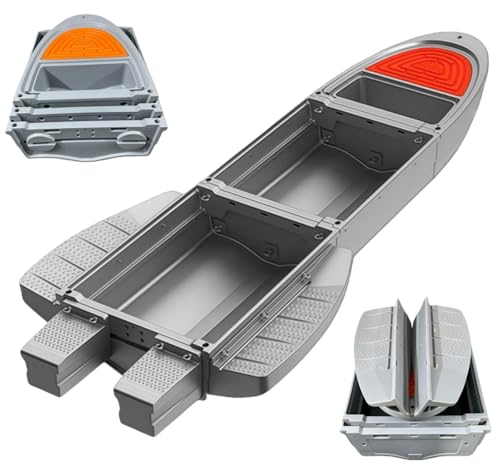
The B1 is marketed as an upgraded modular pontoon with an integrated fish box and capacity for 4-6 people, making it suitable for small group outings. It emphasizes rapid deployment and compact storage, with modular components that suit travelers or seasonal users. The PE construction with durability considerations supports long-term use, and a robust hull design provides stable fishing platforms in calm to moderately choppy waters. Best for small groups who still want a portable, adaptable fishing boat that can double as a utility craft. Limitation: larger models may require more storage space than typical one-person setups.
Buying Guide
Which pontoon features matter most for personal fishing boats? Key considerations include stability, weight, portability, and motor readiness. For solo anglers, prioritize models with compact weight and easier setup. If you frequently travel with gear, look for foldable or modular designs that fit in a trunk or cargo area. For shallow-water access, a hull design with a wide beam and multiple air chambers can improve stability and buoyancy. Motor readiness expands use but requires compatible motors and power sources. Durability matters in RV parks, lakes, or coastal settings; reinforced PVC and sturdy frames reduce the risk of punctures and wear.
Useful questions to guide your choice include: Do you need a one-person craft or space for a friend? How important is portability versus stability? Will you use a motor, and is there a mounting option included? Are there storage features such as gear nets, pockets, or fish boxes? Do you expect to haul the boat on a vehicle with limited space? Answering these helps match the best model to your fishing plan.
Frequently Asked Questions
- What is a personal pontoon boat? A lightweight, portable pontoon craft designed for fishing, typically single- or two-person, with pontoons, a deck, and storage for tackle.
- Are inflatable pontoons durable for freshwater fishing? Yes, many use reinforced PVC with welded seams and protective bottoms, suitable for ponds, lakes, and rivers when used as directed.
- Do these boats require a motor? Some include motor-mount options or brackets, but many are paddled or rowed with oars supplied or compatible with motors.
- What should I consider for storage and transport? Look for foldable or modular designs that fit inside a car trunk or SUV, and check weight limits for safe handling during transport.
- Is these types of boats safe for shallow water? Many models with multiple air chambers and shallow drafts are designed to operate in shallow water, but always observe local regulations and wear appropriate safety gear.
- How do I choose the right size? Consider your body size, gear load, and the stability you want. Shorter pontoons are lighter but may feel less stable; longer pontoons improve tracking and buoyancy.