Answering the question: the best pontoon boat ladders for elderly are sturdy, wide-step, stainless-steel or reinforced aluminum options with secure handrails, slip-resistant treads, and a compact folding design for easy storage. These ladders are best for older adults, mobility-challenged passengers, and caregivers who prioritize stability and safety during boarding. This guide highlights five top picks designed to improve access and reduce slips on pontoons.
Summary of selected products
| Product | Material | Steps | Best For |
|---|---|---|---|
| Mojiate 4-Step Heavy-Duty Pontoon Ladder | 316 Stainless Steel | 4 | Stable footing, heavy loads |
| Hoffen Heavy Duty Pontoon Boat Ladder | 316 Stainless Steel | 4 | Rear-entry, easy deployment |
| COC-LF Pontoon Boat Ladder | 316 Stainless Steel | 4 | Cost-effective, wide steps |
| VEVOR Removable Dock Ladder | 6063 Aluminum | 3 | Lightweight, quick detach |
| Lippert SureStep Pontoon Ladder | Stainless rails, aluminum steps | 3-4 | Kids, pets, ABYC-ready |
Mojiate 4-Step Heavy-Duty Pontoon Ladder

The Mojiate ladder uses marine-grade 316 stainless steel with an all-welded construction for excellent corrosion resistance in saltwater. It features extra-wide 3.94-inch anti-slip steps and dual 16.5-inch tall handrails, designed to help elderly users and heavier loads keep secure footing during boarding. The telescoping, self-supporting design deploys to 66.14 inches and retracts to 16 inches, saving deck space and enabling quick, tool-free setup. This option is best for buyers seeking maximum stability and a high weight rating in harsh marine conditions. A potential limitation is that installation requires careful alignment when securing the ladder to the transom or deck. Best for: older adults and heavy loads who need secure, wide steps and robust handrails.
Hoffen Heavy Duty Pontoon Boat Ladder

This Hoffen ladder is a four-step, all-w welded 316 stainless steel unit with a self-supporting design that requires no additional supports. It uses a rear-entry configuration and quick-release mounting brackets, with a 600 lbs capacity and wide steps plus tall handrails for comfortable boarding. The marine-grade material resists corrosion from sea spray, and the product is best for those who want a ready-to-use, rear-entry option with straightforward mounting. A limitation is that it represents a larger upfront installation footprint on smaller pontoon decks. Best for: users needing a sturdy, rear-entry ladder with easy setup and significant load capacity.
COC-LF Pontoon Boat Ladder

The COC-LF ladder emphasizes cost-effectiveness with 316 stainless steel tubing and telescoping capability, rear-entry access, and quick-release mounting brackets. It offers wider pedals for easier stepping and a sturdier grip. Best for: buyers seeking a budget-friendly, four-step configuration with rear-entry convenience. Limitation: may not include as feature-rich handrails as premium models, which could affect long-term ease of use for some users.
Lippert SureStep Pontoon Ladder
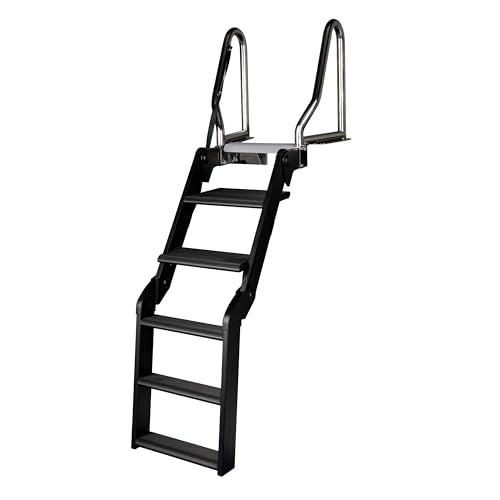
Lippert’s SureStep combines stainless steel rails with powder-coated aluminum steps for corrosion resistance and long-term durability. It’s rated to hold up to 400 lbs and meets ABYC-like safety expectations in many installations, offering slip-resistant, extra-wide steps suitable for families and pets. Best for: families seeking a balanced mix of safety, durability, and ABYC-aligned design. Limitation: aluminum steps may be less durable in extreme, abrasive environments compared to full stainless steel ladders.
DeckMate 5 Step Pontoon Ladder

The DeckMate ladder offers five steps with large handrails for safer boarding, designed for heavy-duty pontoon use. While information on its exact weight rating isn’t specified in the listing, the model is positioned as a robust option for frequent boarding. Best for: buyers needing a five-step configuration with straightforward, wide-grip handrails. Limitation: the listing provides limited technical specifics, so verify load capacity and mounting compatibility before purchase.
Buying Guide
- What material suits your boat climate best? Stainless steel (especially 316) resists saltwater corrosion; aluminum steps offer lighter weight but may wear differently over time.
- How many steps do you need? More steps provide easier access for shorter docks or deep water, but require extra deck space.
- Should you prioritize rear-entry or side-entry? Rear-entry is common on pontoons and can be easier for dockside access; side-entry may suit certain layouts but can be harder to maneuver with passengers on board.
- How important are handrails and step width? Wider, non-slip steps and tall handrails improve stability for elderly users and those with mobility challenges.
- Is quick detach or compact storage a factor? Telescoping designs save deck space but confirm compatibility with your mounting brackets and deck thickness.
- What is the maximum load you need to support? Consider passengers, gear, and pets; choose ladders rated well above your typical boarding load for safety.
Frequently Asked Questions
- What ladder features are most important for elderly users? Wide, anti-slip steps; tall, secure handrails; and a self-supporting or rear-entry design to minimize movement during boarding.
- Are stainless steel ladders always the best choice? Stainless steel resists corrosion well, especially in saltwater; however, weight and mounting requirements vary. Check your deck space and mounting hardware compatibility.
- Can I install a pontoon ladder myself? Many ladders are designed for DIY mounting with quick-release brackets, but follow the manufacturer’s mounting instructions and ensure your deck can support the installation.
- What is a practical ladder height for elderly users? A deployable height around chest to shoulder level when standing on the dock offers comfortable access while minimizing bending or stretching.
- Do ladders hold up to pets? Look for extra-wide steps and secure handrails to accommodate dogs or cats safely during boarding.
- What maintenance is required? Rinse with fresh water after saltwater use, inspect fasteners, and ensure non-slip threads remain intact to prevent slippage.