Answering the common question: which pontoon ramp kit best fits your shoreline needs? This guide profiles five top options designed to help you load and unload safely, even when water levels or dock conditions change. These kits cater to different user profiles, from casual weekend boaters to families with pets and gear, to more heavy-duty Shore-to-Boat operations. Below are concise comparisons and practical buying tips to help you choose the right setup for your pontoon and shoreline environment.
| Product | Capacity | Best For |
|---|---|---|
| RecPro Pontoon Boat Aluminum Loading Ramp | 600 lb | Casual boaters needing lightweight, easy-to-handle ramps |
| Extreme Max Heavy-Duty Aluminum Pontoon Ramp | 600 lb | Durable, weather-ready loading for docks and shores |
| Multinautic 2,000 lb. Ramp Kit | 2,000 lb | Small boats and PWCs requiring reinforced shoreline storage |
| Multinautic 1,200 lb. Ramp Kit | 1,200 lb | Medium-duty loads with reliable winch and rollers |
| Lakeside Recreation Shore Ramp | 1,200 lb | Shore storage for PWC with up to 12 ft craft |
RecPro Pontoon Ramp With 600 lb Capacity
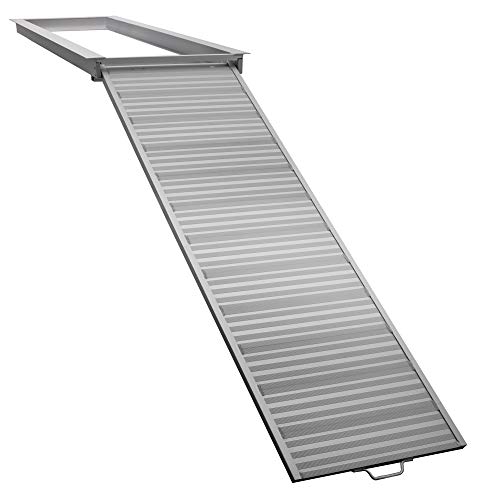
The RecPro ramp uses lightweight aluminum with a 600-pound capacity and a non-slip surface. It measures 74″ long by 21″ wide and just 1 3/8″ deep, making it easy to handle and store. A pull handle at the end aids setup and deployment. Best for casual users who need a straightforward ramp to load coolers, gear, pets, and people from shore or dock to a pontoon without heavy mounting hardware. Consider this if you prioritize portability and a simple loading experience. Caution: for very large loads or frequent rough-water launches, plan for a higher-capacity alternative.
Extreme Max 70″ Aluminum Pontoon Ramp

The Extreme Max ramp offers a length of 70″ with a 600 lb capacity and a durable, non-slip surface with raised edges for safe footing in varying weather. It is designed to support loading on docks and shores, including heavier items like strollers or coolers. This option is better for users who need more reach and stable footing. Best for families or groups that frequently load bulky items alongside passengers. Limitation: longer ramps may require more storage space and careful handling on windy days.
Multinautic 2,000 lb Capacity Ramp Kit

This heavy-duty kit supports up to 2,000 pounds, making it suitable for larger small boats and personal watercraft. It includes six double rollers with 5″ wheels and auto-adjusting axles, plus an 8″ keel roller to help align and launch as water levels shift. A pivoting roller system improves stability on uneven shorelines. Best for users expanding ramp capacity, planning to add wheel sets for higher loads. Caution: data notes additional wheel-set options; when used with higher weights, ensure compatibility and mounting integrity.
Multinautic 1,200 lb Capacity Ramp Kit

The 1,200 lb Multinautic kit provides a balanced option with a smooth two-way winch and roller system. It includes eight 4″ wheels, a keel roller, and a 2-way winch with strap for controlled mounting and lowering. This setup is best for mid-sized boats and PWCs that need reliable shore access with guided alignment. Choose this if you want steady operation without overbuilt hardware. Limitation: may be heavier to install and store than lighter-duty ramps.
Lakeside Recreation Shore Ramp

Designed to store a personal watercraft safely on shore, this ramp supports craft up to 1,200 pounds and is best for recreational use with a surface that balances ease of use and stability. It targets users who want a straightforward shore ramp solution for PWC up to 12 feet. Limitation: not intended for very heavy boats or high-impact launches; verify compatibility with your specific shore layout.
Buying Guide: Pontoon Ramp Kit Considerations
- Load capacity: Match the ramp to your pontoon’s weight plus gear. Oversizing provides safety but increases storage needs.
- Ramp length and width: Longer ramps give gentler angles but require more storage and clearance. Wider ramps offer more stability for bulky items.
- Surface and footing: Non-slip surfaces are essential for wet docks or windy days. Look for raised edges on wetter surfaces for safety.
- Portability vs. fixed installation: Lightweight ramps are easier to move; heavier kits often provide more stability but demand more storage and effort to install.
- Roller and wheel systems: Auto-adjusting rollers simplify loading on changing water levels. Keel rollers help with alignment during launch and retrieval.
- Storage and mounting: Some ramps slide into under-deck sleeves or fold for compact storage. Check for compatibility with your dock or shoreline configuration.
- Expansion options: If you anticipate growing needs, consider ramps that support additional wheel sets or higher capacities.
FAQ
- What ramp capacity do I need for a typical pontoon? Consider your pontoon weight plus gear; 600–1,200 lb options suit most mid-sized to lighter setups, while 2,000 lb ramps support larger craft and heavier loads.
- Are longer ramps always better? Longer ramps reduce the loading angle but require more storage and space; balance with your shore access and dock configuration.
- Should I choose auto-leveling rollers? Yes, auto-leveling rollers improve launching alignment on changing water levels and are helpful for frequent shore-to-boat transitions.
- Can I mix different brands? Mixing components is possible if they are compatible in load rating and mounting interfaces; verify hardware compatibility before combining kits.
- Is a non-slip surface essential? Absolutely. Wet docks and shorelines can be slick; non-slip surfaces significantly improve safety for passengers and pets.
- What maintenance is needed? Inspect for corrosion, loose bolts, and wear on rollers; clean off salt residue and lubricate moving parts as recommended by the manufacturer.