If you’re outfitting a pontoon or small deck boat, a portable marine gas tank is essential for extended runs and reliable refueling. The best choices balance capacity, venting safety, built‑in gauges, and durable construction. This guide highlights five top-rated options, explains who each is best for, and helps you compare features side by side so you can buy with confidence.
| Product | Capacity | Best For | Key Feature |
|---|---|---|---|
| Scepter 12 Gallon Portable Marine Gas Can | 12 Gallons | Long trips; larger boats | Built-in fuel gauge and 2-way vent |
| Scepter 9 Gallon Portable Marine Gas Can | 9 Gallons | Compact spaces; shorter trips | Built-in gauge; 2-way vent |
| LIZHOUMIL Portable Boat Fuel Tank | 3 Gallons | Emergency spare or small boats | Clear fuel gauge; ergonomic handle |
| Parts-Diyer Aluminum Fuel Cell Tank | 14–15 Gallons | Pontoon or larger boats needing aluminum | Aluminum; level sender included |
| CuisinAid 14.5-Gallon Boat Tank | 14.5 Gallons | Durable, wide compatibility | Leak-proof vent cap; HDPE shell |
Scepter 12 Gallon Portable Marine Gas Can

The 12-gallon Scepter tank is a high-capacity option designed for boats that need longer running time between refuels. The built-in fuel gauge helps monitor remaining fuel without disconnecting lines, and the 2-way vented cap reduces vapor buildup during refueling. It accepts standard 1/4 NPT marine fittings, making it compatible with common tank accessories.
Best for: Boat owners with moderate to long cruises who want a reliable, high-capacity portable tank. Better for outboard motor boats that require a sizeable onboard fuel reserve. Caution: Heavier when full; ensure proper lifting technique and stowage to prevent tipping.
Scepter 9 Gallon Portable Marine Gas Can

This 9-gallon option provides a compact balance of capacity and portability, ideal for smaller boats or tight storage. It features the same 2-way vented cap and built-in gauge as the larger model, allowing quick fuel checks in harsh marine environments.
Best for: Smaller pontoons or fishing boats where space is at a premium but a built-in gauge is still valued. Choose this if you want a lighter tank for easier handling. Limitation: Slightly less capacity than the 12-gallon version, which may require more frequent top-offs on longer trips.
Portable Boat Fuel Gas Tank, 3 Gallon (LIZHOUMIL)
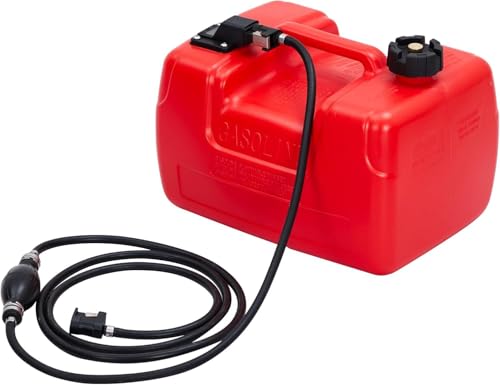
Designed for portability, this 3-gallon tank is ideal as an onboard spare or for small boats. It features a clear fuel gauge window and a built-in filter, supporting easier fuel management and cleaner fuel flow for smoother engine performance.
Best for: Boats needing a compact spare fuel tank or quick refuel option on the water. Better for: Densely packed storage spaces where every inch matters. Limitation: Lower capacity means more frequent refueling on longer trips.
Parts-Diyer 14–15 Gallon Aluminum Fuel Cell Tank

This aluminum fuel cell tank offers a larger capacity with durable construction and a 0-90 ohm fuel sender included. The aluminum build can be desirable for pontoons that regularly operate in environments where corrosion resistance is a priority. It’s a good option for those seeking a rugged, high-capacity tank.
Best for: Pontoon boats that need a substantial fuel reserve and want an aluminum tank for durability. Choose this if you prioritize a metal shell and an integrated level sensor. Caution: Aluminum tanks require careful mounting to avoid stress and ensure proper venting.
CuisinAid 14.5-Gallon Boat Tank

The 14.5-gallon hull‑friendly design uses a leak‑proof vent cap to minimize vapor escape and improve safety during refueling. It’s built with a durable HDPE shell for resistance to aging, impact, and the marine environment, with broad compatibility for common outboard systems.
Best for: Boat owners who want a sturdy, high-capacity tank with reduced vapor risk. Better for: Those needing a widely compatible fitting and a resin-based, impact-resistant shell. Limitation: HDPE, while durable, can be bulkier than some lighter aluminum options.
Buying Guide: Key Considerations for Pontoon Transom Gas Tanks
- Fuel capacity versus space: Choose a tank size that matches your typical cruising range and the available storage on your pontoon. Larger tanks provide longer running time but require more storage space.
- Venting and safety: Look for a 2-way vented cap and built-in gauges to control vapor release and monitor fuel levels without disconnecting lines.
- Material and durability: Aluminum tanks are rugged and corrosion-resistant; HDPE tanks are lightweight and corrosion-resistant but may be bulkier. Consider your operating environment and mounting options.
- Fuel compatibility: Verify that the tank supports your fuel type (gasoline, diesel, or ethanol blends) and that fittings are compatible with your outboard system.
- Built-in features: A built-in gauge, pick-up tube, and filter can simplify refueling and improve engine reliability by keeping the fuel clean and easy to monitor.
- Portability and handling: Look for ergonomic handles and balanced weight distribution to reduce strain during transport and on-water use.
- Mounting and safety: Ensure you have a secure mounting plan and understand weight distribution to prevent tipping or movement while underway.
FAQ
- What capacity is best for long pontoon trips? A higher capacity (e.g., 12–14 gallons) is best for longer runs, especially when refueling opportunities are limited.
- Do these tanks require specialized fittings? Many use standard 1/4 NPT fittings or adapters; verify compatibility with your existing fuel lines and accessories.
- Can I use aluminum or HDPE tanks on all pontoon boats? Yes, but mounting hardware, weight considerations, and corrosion resistance should guide your choice.
- Is a built-in fuel gauge essential? It improves fuel management by providing quick visibility of remaining fuel, reducing the need for guesswork at the dock.
- Should I buy a spare tank as a backup? A smaller spare (e.g., 3 gallons) can be useful for emergency planning on crowded days or short trips.