When choosing a portable fuel tank for a boat, look for durability, easy handling, built‑in gauges, vented caps, and compatibility with your engine. This guide highlights five top options that balance capacity, portability, and reliability for different boaters. Ideal buyers: anglers needing long runtimes, small-boat owners seeking compact storage, and deck/shore boats requiring quick topping‑up before a run.
Summary table of selected products:
| Product | Capacity | Best For | |
|---|---|---|---|
| LIZHOUMIL Portable Boat Fuel Tank | 3 gal / 12 L | Compact boats and dockside refueling | Clear gauge, built-in filter, ergonomic handle |
| Attwood 8806LP2 | 6 gal | All-day trips on small to mid-size boats | EPA certified, vented cap with vacuum valve |
| Scepter 9 Gal | 9 gal | Longer runtimes, space-efficient | 2‑way vented cap, built-in gauge |
| Scepter 12 Gal | 12 gal | Extended outings, larger boats | Tall profile, built-in gauge, EPA/CARB compliant |
| VEVOR Boat Fuel Tank | 3.17 gal / 12 L | Versatile small to mid boats, transfer ready | 9.8 ft hose, durable HDPE construction |
LIZHOUMIL Portable Boat Fuel Tank
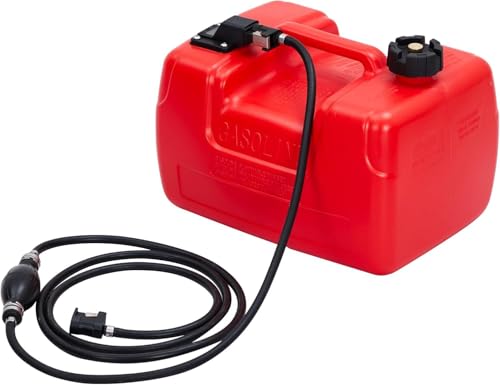
The 3‑gallon LIZHOUMIL tank is built for lightweight, easy transport with an ergonomic I-shaped handle. It includes a clear fuel gauge so users can monitor fuel levels at a glance and a built‑in filter to help keep fuel clean for smoother engine performance. Best for small to mid‑sized vessels, or as a compact spare tank for short trips. Limitations include its smaller capacity, which may require more frequent refueling on longer outings.
Attwood 8806LP2 EPA Certified 6 Gallon Tank

The Attwood 6‑gallon portable tank emphasizes regulatory compliance and practical venting. It carries EPA certification and CARB compliance, with a cap that includes a built‑in vacuum valve to eliminate the need for manual venting. This makes refueling safer and cleaner for most recreational boats. Best for boaters who prioritize regulatory compliance and hassle-free venting. A potential limitation is that some users may prefer larger capacities for longer trips.
Scepter 9 Gallon Portable Marine Gas Can

The 9‑gallon Scepter can balances capacity with a compact footprint, suitable for longer runs without frequent refueling. It features a 2‑way vented cap for airflow during refueling and pressure relief to prevent vapor buildup. A built‑in fuel gauge aids quick checks, and it accepts standard marine fittings. Best for boats needing significant running time while still prioritizing portability. Choose this if you want a larger capacity without moving to a taller design. A potential drawback is the need to handle a heavier unit when full.
Scepter 12 Gallon Portable Marine Gas Can

The 12‑gallon model provides extended fuel capacity for longer trips or bigger boats. It maintains a compact profile and uses a 2‑way vented cap to ensure safe refueling. Built‑in gauge and a compatible pickup line simplify monitoring and fueling. Best for larger boats or anglers who plan longer voyages. Better for those needing high capacity without needing a larger overall footprint. Limitation: heavier to transport when full and may require more storage space.
VEVOR Boat Fuel Tank 3.17 Gal

The VEVOR tank offers 3.17 gal capacity with a 9.8 ft transfer hose and a built‑in gauge for quick fuel checks. Made from high‑density polyethylene, it’s designed to resist aging, impact, and corrosion. It is well suited for outboard motors and deck boats, with portability that fits under seats or in small storage spaces. Best for boaters seeking a balance of moderate capacity and transfer flexibility. A note: prolonged sun exposure can age the plastic and cause expansion; store away from direct sunlight when possible.
Buying Guide: Portable Boat Fuel Tanks
What capacity should I choose?
Small boats or day trips typically do well with 3–6 gallons. For longer runs or larger boats, 9–12 gallons provide more runtime, reducing refueling stops.
What features matter most?
- Vented cap with pressure relief to prevent vapor buildup.
- Built‑in fuel gauge for quick level checks.
- Durable construction and UV resistance for saltwater use.
- Compatible fittings and hoses with your engine model.
Why consider a built‑in gauge?
Built‑in gauges simplify fuel management on the water, helping to prevent running dry mid‑trip and enabling better planning for return legs.
Is venting important?
Yes. EPA/CARB compliant vented caps reduce the risk of pressure buildup and vapor release during refueling, improving safety and compliance across most regions.
Where should I store a portable tank?
Store upright, away from direct sunlight and extreme temperatures. Keep the tank secure to prevent tipping on rough water or during docking.
What about fuel compatibility?
Most marine tanks handle conventional gasoline and ethanol blends. Confirm compatibility with your engine and fuel type, especially if using diesel or non-standard blends.
Usage tips for better longevity
- Rinse and dry the tank after use; avoid prolonged exposure to salt spray.
- Inspect hoses and seals regularly for leaks or wear.
- Use the vented cap correctly to maintain safe pressure levels.
Frequently Asked Questions
- What capacity is best for a small fishing boat? — A 3–6 gallon tank is typically sufficient for short trips and portable setups.
- Are vented caps truly safer? — Yes, vented caps help prevent dangerous vapor buildup during refueling and storage.
- Can I use these tanks with diesel? — Some models are compatible with diesel; verify the product specs before use.
- Do these tanks fit under seats? — Many compact tanks are designed to fit under seats or in small storage compartments; check dimensions.
- Is the gauge accurate? — Built‑in gauges provide quick readings, but periodic cross-checks with a separate pump gauge are wise on longer trips.
- How should I prevent fuel evaporation? — Choose multi‑layer, UV‑stabilized tanks and minimize direct sun exposure when not in use.