Finding the right portable GPS for boating comes down to durability, waterproofing, screen readability, and reliable satellite tracking. This guide highlights five marine-friendly handhelds and fish finders that fit a range of budgets and boating styles. Best for rugged, floating units are frequent picks for saltwater anglers, while compact navigators suit day trips and casual cruising. The table below summarizes key picks and who they’re best for.
| Product | Best For | |
|---|---|---|
| Garmin GPSMAP 79sc | Saltwater boaters needing floatable, rugged navigation | BlueChart coastal charts, floating design |
| Garmin Striker 4 | Anglers seeking built-in CHIRP sonar | Clear Vu sonar, easy installation |
| Garmin eTrex 22x | Casual navigators and hikers on mixed trips | Topo Active maps, routable roads/trails |
| Garmin Striker Vivid 4cv | Fishers wanting vivid color sonar | CHIRP traditional and CHIRP ClearVü sonar |
| Humminbird Helix 5 G3 | Boat owners needing detailed mapping and dual sonar | Dual Spectrum CHIRP, Basemap with LakeMaster/Navionics support |
Garmin GPSMAP 79sc: Rugged Floating Handheld
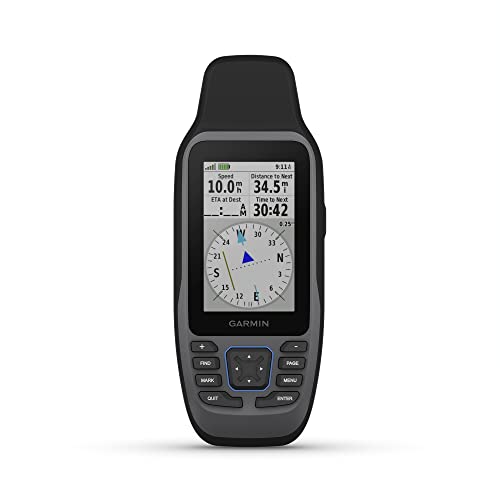
Best for: saltwater anglers and sailors who need a floatable device with reliable global tracking. The 79sc offers a rugged, water-resistant build and a color display with scratch-resistant glass. It includes BlueChart coastal coverage and increased memory to store up to 10,000 waypoints, 250 routes, and 300 activities. It supports GPS, GLONASS, Beidou, Galileo, QZSS, and SBAS for consistent performance around the world. A built-in compass aids navigation when offshore. Caution: unit-level IPX6 protection means it tolerates splashes, but full immersion should be avoided unless the device is specifically designed for it.
Garmin Striker 4 With Transducer

Best for: anglers who want an affordable combo unit with built-in CHIRP sonar. Clear Vu scanning provides near-photographic views of water around the boat, helping you identify fish and structures. The Striker 4 is easy to use and install, with options in 3.5, 5, and 7 inch displays. It is IPX7 rated for water resistance, which makes it more forgiving in wet conditions. Limitation: does not include as extensive mapping as higher-end chartplotters, so plan to rely more on sonar for depth and presence of fish.
Garmin eTrex 22x: Rugged Handheld Navigator

Best for: hikers and casual boaters who want reliable worldwide navigation in a compact form. The 2.2-inch color display remains legible in bright sunlight, and the device ships preloaded withTopo Active maps featuring routable roads and trails suitable for mixed outdoor activities. It provides multi-GNSS support for improved positioning, though its screen is smaller than dedicated marine chartplotters. Choose this if you want multi-use portability beyond boating and don’t need marine-grade mapping on top of basic navigation.
Garmin Striker Vivid 4cv: Vivid Chirp Sonar

Best for: anglers who want advanced sonar visualization with color-rich contrasts. The Striker Vivid 4cv combines CHIRP traditional sonar and CHIRP ClearVü scanning with a 4-inch display. It includes a GT20 transducer and high-sensitivity GPS to mark waypoints and create routes. It’s compact and portable, yet powerful for boat trips. Limitation: smaller screen size may reduce detail at greater depths or when scanning large water areas.
Humminbird Helix 5 G3 GPS Fish Finder

Best for: boaters who want a larger screen with robust mapping and multi-facet sonar. The Helix 5 G3 provides Dual Spectrum CHIRP sonar and is compatible with premium LakeMaster, CoastMaster, and Navionics charts, enhancing coastal and inland navigation. Basemap coverage for many lakes plus coastlines helps with planning and voyage tracking. Pros include clear imaging and flexible chart options; however, higher-end chart features may require optional map cards or subscriptions.
Buying Guide: Key Purchase Considerations
- Durability and waterproofing: Boats encounter spray, rain, and splashes. Look for IP ratings (IPX6 or IPX7) and floating designs if you want buoyant reliability.
- Display and readability: In bright sun, larger screens with high contrast are easier to read. Edge-to-edge glass and scratch resistance improve longevity on a boat deck.
- Navigation vs. sonar: Decide if you need purely navigational GPS, sonar fish-finding, or a combination. Some devices pair strong charting with CHIRP sonar, while others focus on mapping and waypoints.
- Mapping and charts: Coastal BlueChart, LakeMaster, Navionics, and Topo maps cover different environments. Ensure the device includes or supports the maps you’ll use most.
- Power and battery life: Long days on the water demand devices with reliable battery life or easy recharging options. Multi-GNSS support improves satellite lock in challenging conditions.
- Ease of use: Simple interfaces with dedicated buttons help when you’re on a rolling boat. Consider devices with straightforward waypointing and quick-access menus.
- Expandability: If you plan to upgrade later with extra transducers or chart packs, confirm compatibility and available accessories.
Frequently Asked Questions
- What is the difference between CHIRP and traditional sonar?
- Is a floating handheld GPS worth it for small boats?
- Should I prioritize screen size or battery life?
- Can I use these devices for land activities as well?
- Do these devices require an internet connection?
CHIRP sonar sends a range of frequencies to improve target separation and produce clearer images of fish and structure compared to single-frequency traditional sonar.
Yes, for small boats and kayaks, a floating handheld provides buoyant insurance and quick navigation without a fixed mounting system.
Prioritize screen size for visibility and safety on open water, but ensure the device offers enough battery life for your typical trip length.
Many handhelds offer Topo or basemap features suitable for hiking and other outdoor activities, making them multi-use tools beyond boating.
Most handheld marine devices function with satellite positioning without internet. Mapping updates and additional charts may download via Wi-Fi or USB, depending on the model.