Finding the right rock anchor for boats means balancing holding power, durability, and ease of use across varied bottoms. This guide highlights five anchors well-suited for rocky, sandy, and mixed bottoms and explains who each is best for. The listed products range from heavy-duty Danforth and spike designs to lightweight options for smaller vessels and jet skis. Use the buyer’s guide and FAQs to compare use cases and choose the best fit for your craft and typical waters.
Summary table of chosen products:
| Product | Best For | Key Benefit | Bottom Types |
|---|---|---|---|
| Greenfield Richter Boat Anchor Kit | Serious boaters on rivers and lakes | All-in-one kit with coated chain and long rope | Mud, sand, rocks, weeds |
| SajoSolid Heavy Duty Anchor Kit | Pontoon, deck boats, fishing boats | Complete galvanized Danforth with chain and rope | Rocky, sandy, muddy |
| SeaSense Navy Boat Anchor | Small boats, pontoons, kayaks | Vinyl coating for protection on decks | Rocky, sandy, muddy, weedy |
| Anchor-Man Vinyl Coated Richter | Rivers and lakes | Spike design with vinyl coating | Sand, mud, rocks, weeds |
| SAND SHARK Premium Fluke Anchor | Jet skis and small boats | Lightweight aluminum, strong hold in sand/mud | Sand, mud |
Greenfield Richter Boat Anchor Kit

The Greenfield Richter Kit is an all-in-one anchoring package designed for diversified conditions. It includes a Richter anchor, hand-dipped PVC chain, 100 feet of nylon anchor line, and three shackles. Best for boats up to 24 feet on rivers and lakes with mixed bottoms, including mud, sand, and rocky pockets. The chain’s articulation helps position the anchor for optimal setting, increasing holding power in current or shifting bottoms. A caution: the full kit adds weight, which may affect handling on very small craft.
Who it’s best for: boaters seeking a complete, ready-to-deploy package for frequent river and lake anchoring, especially where rocky or weed-prone bottoms occur. Why selected: it combines multiple anchoring components in one purchase, simplifying setup and retrieval.
Limitation: care is needed with storage due to the length of rope and chain; ensure proper stowage on smaller boats.
SajoSolid Heavy Duty Danforth Anchor Kit
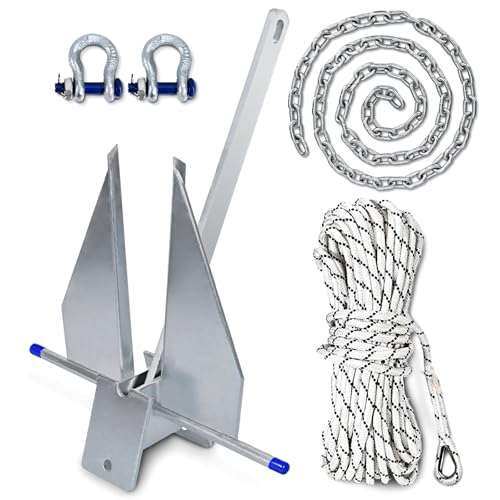
The SajoSolid Danforth kit comes with an 18 lb galvanized anchor, a 6.5 ft chain, a 100 ft rope, and two shackles. It’s designed for rapid penetration into riverbeds or seabeds, offering strong grip in sandy or muddy bottoms while resisting corrosion through hot-dip galvanization. Best for pontoon and deck boats that need reliable hold in varied water conditions. Why chosen: robust galvanization and complete gear out of the box support solid anchoring in diverse environments.
Who it’s best for: boaters needing a ready-to-deploy Danforth setup for stable anchoring in rivers or coastal areas. Limitation: heavier kits may be less ideal for very small boats or tight storage spaces.
SeaSense Navy Boat Anchor

The SeaSense Navy anchor is a versatile option for small boats, pontoons, and kayaks. With a 28-pound weight and a black vinyl coating, it is designed to handle rocky, sandy, muddy, and weedy bottoms. Best for: smaller craft needing a dependable, protected anchor for mixed bottoms. Caution: On very strong currents or heavy weather, consider a larger or differently shaped anchor if space allows.
Anchor-Man Vinyl Coated Richter

The Anchor-Man Richter Spike Anchor features a spike-style design with a vinyl coating to protect decks during deployment and retrieval. It’s positioned as a versatile option for lakes and rivers where spike-style anchors excel in penetrating bottom layers and maintaining hold in mixed substrates. Best for: boaters needing secure positioning with surface protection. Limitation: spike anchors can be less forgiving in extremely soft mud without proper setting technique.
SandShark Premium Fluke Anchor Kit
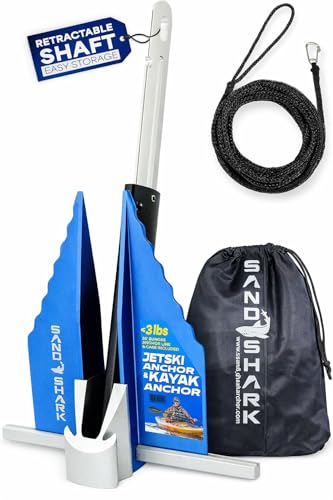
The SandShark Fluke Anchor is lightweight and designed for quick storage and ideal for jet skis and small boats under 17 feet. Made from aircraft-grade aluminum, the fluke-style design digs deeply in sandy or muddy bottoms, making it strong for short moorings at sandbars or shorelines. Best for: compact craft needing a reliable sand/mud hold with easy stowage. Limitation: its lightweight design may be less suitable for larger vessels or high-current conditions.
Buying Guide
What bottom type do you encounter most? If you face mixed bottoms with sand, mud, weeds, and occasional rocks, consider anchors with versatile grip and protective coatings. For rivers and lakes with stronger currents, look for anchors with robust holding power and chain to help set properly.
What boat size and weight will you anchor? Heavier, longer kits work well on boats up to 24 feet but may be harder to store on smaller craft. For small boats or jet skis, lightweight fluke or spike anchors provide effective holds with easier stowage.
What mounting and retrieval considerations matter? Vinyl coatings protect decks during handling, while chain and rope length affect deployment depth and reach. Ensure you have compatible shackles and a length of rope appropriate for your vessel and typical water depth.
Bottom protection and corrosion resistance are important. Galvanized or vinyl-coated anchors resist seawater and abrasion, extending life in rocky or brackish environments. For frequent beach or rocky beach landings, a coated spike or fluke design reduces hull scratching during placement and recovery.
Storage and handling: Assess if your boat has limited storage space. Lightweight, compact anchors like the SandShark are easier to store, while larger Danforth or Richter kits require more space but offer greater anchor power and versatility.
Frequently Asked Questions
- What anchor is best for rocky bottoms? A spike-style or fluke anchor with a strong hold and robust coating tends to perform well in rocky bottoms, as it can bite into various layers without excessive drift.
- Can I use a Danforth anchor in rivers? Yes, Danforth anchors work in rivers, especially when combined with a longer chain and suitable rope for setting in sand or mud near rocky pockets.
- What bottom type is hardest to hold in? Smooth, compact mud can be challenging; anchors with penetrating designs or flukes offer better grip in such bottoms.
- Is vinyl coating beneficial? Yes, vinyl coatings protect decks and hulls during deployment and retrieval and can improve handling in wet conditions.
- Should I buy a complete kit or individual parts? A complete kit offers convenience for beginners or casual boaters, while seasoned users may prefer selecting components tailored to their typical waters.
- What storage considerations exist for larger kits? Larger kits require more cockpit or bow storage space; consider modular options or stowable rope and chain arrangements.