Looking for an effective rubbing compound to restore a boat’s fiberglass gel coat? This guide highlights five top options that target heavy oxidation, scratches, and water spots, while delivering a bright, showroom-like finish. Best for boat owners, RV enthusiasts, and DIY marine restoration projects, these products vary in cut rate, application ease, and suitability for gel coat versus painted surfaces.
The following table summarizes the chosen products and their primary strengths:
| Product | Best For | Why Pick It |
|---|---|---|
| Meguiar’s M6732 Marine/RV One Step Compound | Fiberglass Gel Coat, moderate oxidation | One-step formula that cleans and adds gloss; good all-around restoration for neglected finishes. |
| TotalBoat TotalBuff Marine Rubbing Compound | Heavy oxidation and deep scratches | Aggressive cut with long wet time; versatile for boats, RVs, and painted surfaces. |
| 3M Super Duty Rubbing Compound | Weathered gel coats and paints | High cut rate; removes oxidation and fine scratches without waxes or silicones. |
| Meguiar’s M4916 Marine/RV Heavy Duty Oxidation Remover | Older gel coat and fiberglass finishes | Powerful oxidation removal with restoration of color and gloss; versatile for boats and RVs. |
| Better Boat Marine Rubbing Compound | Fiberglass gel coat and painted surfaces | Professional-grade restoration with long open time; suitable for multi-step refurbishments. |
Meguiar’s M6732 Marine/RV One Step Compound
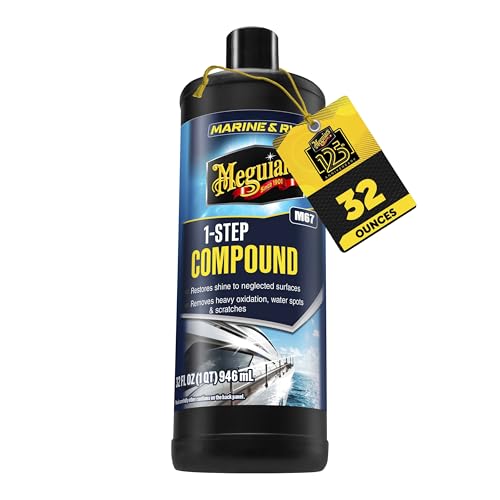
Best for: Boat and RV owners seeking a single-step solution. This compound cleans fiberglass and gel coat while delivering a high-gloss finish. It removes moderate oxidation, scratches, stains, and water spots without requiring separate polish or wax steps. The formula aims to restore dull, faded surfaces to a brighter shine. Cautions: It is designed for fiberglass and gel coat surfaces; test on a small area first to confirm compatibility with your finish.
3M Perfect-It Gelcoat Heavy Cutting Compound

Best for: Industrial or serious prep jobs on marine gelcoat. This product is a heavy-cut compound designed for fast oxidation removal on boat and RV surfaces. Suitable for professionals handling highly weathered finishes. Caution: Not labeled for consumer sale in some listings; verify usage restrictions before buying.
TotalBoat TotalBuff Marine Rubbing Compound
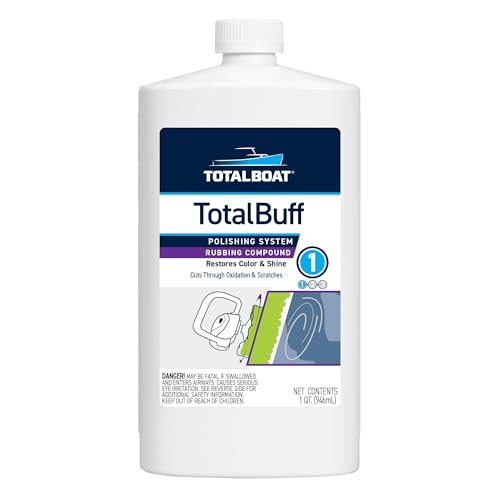
Best for: Heavily oxidized gel coat and painted surfaces needing restoration. It removes heavy oxidation and 600/800 grit scratches with a long open time that keeps the compound wet for effective cutting. Not only for boats; also works on RVs, cars, and trailers. Caution: Best results come with a buffer or mechanical applicator for uniform finish.
Meguiar’s M4916 Marine/RV Heavy Duty Oxidation Remover

Best for: Restoring older gel coat and fiberglass finishes. This heavy-duty remover targets oxidation and water spots to reveal a brighter base color and improved gloss. It works well as part of a multi-step restoration routine. Limitation: May require follow-up polishing or waxing for long-lasting protection.
Meguiar’s M4965 Marine/RV Fiberglass Restoration System

Best for: Complete boat surface revival. This three-piece kit includes oxidation remover, polish, and wax components to restore color and provide a high-gloss finish. Suitable as a comprehensive restoration workflow. Caution: Kit components may require multiple steps and time to achieve final results.
Marine Rubbing Compound By Better Boat

Best for: DIY enthusiasts tackling multi-step restorations. This compound rapidly removes heavy oxidation and revives tired fiberglass and painted surfaces. It can be used by hand or with a buffer. Limitation: Primarily designed for gel coat restoration; verify compatibility with any clear coats on your craft.
Buying Guide: How To Choose The Right Boat Rubbing Compound
- Surface type: Gel coat vs. painted surfaces require different abrasion levels. Gel coat usually benefits from heavier cutting compounds; paint may need gentler blends to avoid removing too much clearcoat.
- Oxidation level: Light oxidation might respond to a single-step polish, while heavy oxidation may require a dedicated oxidation remover followed by polishing and wax.
- Cut rate and temperature: Higher cut rate removes more material quickly but can heat and haze surfaces. Work in small sections and keep the surface damp to manage heat.
- Application method: Hand application works for small areas; a variable-speed buffer can provide consistent results on larger surfaces. Long open time helps the compound stay active for cutting.
- Finish goals: Decide whether you want a simple shine or a long-lasting sealant or wax after polishing. Some products integrate polishing oils for a showroom finish, while others require a separate wax step.
- Safety and compatibility: Check for waxes, silicones, or fillers in formulas if you plan to apply a wax or sealant later. Some products are designed specifically to avoid residue that can interfere with next steps.
Frequently Asked Questions
- What is rubbing compound used for on boats?
Rubbing compounds remove oxidation, stains, and scratches from fiberglass gel coat and painted surfaces to restore color and brightness.
- Can I use rubbing compound on all boat finishes?
Most compounds are formulated for gel coat, fiberglass, and painted surfaces. Always test a small area first and follow with polish and wax as needed.
- Do I need a buffer to use rubbing compounds?
A buffer provides faster, more even results on large areas, but hand application is feasible for small spots or precise work.
- How do I prevent new scratches after rubbing?
Rinse the surface, wipe with a clean microfiber, and apply a sealant or wax to protect the finish after polishing.
- Should I use an oxidation remover first?
For heavy oxidation, using an oxidation remover before broader rubbing can yield better color restoration and gloss.
- Is a one-step compound enough for most boats?
One-step compounds work for light to moderate oxidation. Heavily weathered finishes often require a dedicated oxidation remover plus polish and wax.