For sailors considering an electric propulsion upgrade, choosing the right motor and components is essential. This guide highlights five products suited for sailboat motor conversions, focusing on reliability, ease of integration, and compatibility with common boat setups. Each item is described with who it’s best for, what to watch out for, and why it stands out in its category. Whether you’re retrofitting a small dinghy or upgrading a daysailer, these selections help you decide what to buy.
| Product | Best For | Why It Stands Out |
|---|---|---|
| AEDIKO 6 Sets DC Motors Kit | DIY science projects, small craft | Includes mounting hardware and battery holders, versatile voltage range |
| 6 Set DC Motors Kit, EUDAX | Budget-friendly sailboat conversions | Multiple motors with gears and props for basic propulsion builds |
| U-BCOO Propeller Nut Kit | Propeller replacement & maintenance | Easy prop changes and repair on small to mid-size gear drives |
| Newport NV-Series 36lb Trolling Motor | Saltwater/daysail boats | Saltwater-rated, quiet operation, appropriate thrust for small craft |
| Asixxsix Brushless RC Motor | High-efficiency propulsion projects | Better heat dissipation and longer axle life for demanding use |
AEDIKO 6 Sets DC Motors Kit

The AEDIKO kit provides six compact DC motors with gear reduction and a 3V-12V range, making it suitable for small sailboat propulsion experiments and toy-scale drives. Best for hobbyists who want a ready-made set with mounting brackets, battery holders, and boat rocker switches. The kit includes multiple propellers and gears to experiment with thrust. A limitation is the number of components may require careful wiring planning and secure mounting on a boat deck to prevent vibration or loosening in waves.
Best for: beginners and experimental sailors who want a complete bundle for quick testing and learning about how motor speed and propeller choice affect boat performance.
6 Set DC Motors Kit, Mini Electric Hobby Motor

These compact, high-RPM motors (3V-12V, up to ~25,000 RPM) are useful for lightweight sailboat tests and drive mechanisms where space is at a premium. Best for: small auxiliary propulsion experiments or educational demonstrations on propeller efficiency. Use caution with high RPM on a live hull; secure all components to avoid damage from vibration. The kit’s small shaft and gear options require careful installation to prevent propeller cavitation or binding.
U-BCOO Propeller Nut Kit
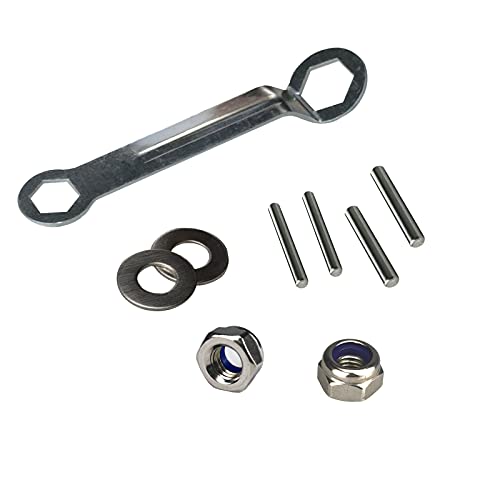
This nut kit helps you replace and reinstall propellers on small motors efficiently. Best for: do-it-yourself sailors performing regular prop maintenance or upgrades. It’s a practical accessory to ensure propeller nuts and pins are secure after rough water or impact. Limitation: kit contains multiple sizes; verify compatibility with your propeller shaft before ordering to avoid mismatches during a retrofit.
Newport NV-Series 36lb Thrust Trolling Motor

Suitable for saltwater and freshwater applications, this trolling motor provides 36 pounds of thrust with a 30″ shaft. Best for: small boats, kayaks, or inflatables needing reliable, quiet electric propulsion. It’s a strong candidate for sailboats when a compact, efficient helper motor is desired. Caution: ensure shaft length and mounting hardware work with your hull design; installation is more involved than battery-operated toy setups, and you should verify the motor’s compatibility with your battery system.
Asixxsix Brushless Motor

Asixxsix offers a brushless RC boat motor designed for efficiency and durability, with enhanced heat dissipation and a longer axle lifespan. Best for: sailboats where higher efficiency and reduced maintenance are valuable. Choose this if you need a motor capable of delivering sustained performance under load. Limitation:Brushless motors typically require compatible electronic speed controllers and battery arrangements, which add complexity to retrofits.
LICHIFIT RC Jet Boat Underwater Motor Thruster

Designed for underwater propulsion, this thruster offers three blades and 16800 RPM. Best for: micro ROVs, toy submarines, or experimental underwater propulsion projects that could inspire sailboat auxiliary systems like a bow thruster concept. Limitation: intended for underwater RC use; integration into a sailboat propulsion system requires careful waterproofing and structural adaptation to ensure reliability on deck or near water lines.
Buying Guide: Key Considerations For Sailboat Motor Conversions
- Purpose and vessel size: Match motor thrust and RPM to boat weight, water conditions, and the desired cruising speed.
- Power source and endurance: Decide between batteries (lead-acid, Li-ion, or LiFePO4) or solar-assisted systems based on trip length and weight constraints.
- Motor type: Brushed vs. brushless—brushless offers efficiency and longevity but requires compatible controllers and wiring.
- Propeller compatibility: Ensure propeller size and shaft diameter align with motor specs, boat transom clearance, and mounting space.
- Mounting and installation: Plan secure, vibration-resistant mounting and weatherproofing for coastal use and spray zones.
- Maintenance considerations: Include spare parts availability for nuts, pins, gears, and seals to minimize downtime at sea.
- Expansion potential: Consider whether the system can accommodate future upgrades, such as larger batteries or a more efficient motor.
Frequently Asked Questions
- What is the best motor type for a small sailboat conversion?
– A compact brushless motor paired with a reliable electronic speed controller often provides better efficiency and durability for small sailboats. - Do I need a dedicated trolling motor for a sailboat retrofit?
– Not always, but trolling motors are designed for marine environments, quiet operation, and controllable thrust, making them a practical option for modest-sized boats. - What safety steps are essential when retrofitting propulsion?
– Secure all wiring, prevent short circuits, use proper insulation, and test in calm water while wearing safety gear and having safety protocols in place. - Can I use RC boat motors for a sailboat project?
– RC motors can work in experiments or auxiliary propulsion, but ensure compatibility with power systems, mounting, and hull integrity before installation. - How do I choose the right propeller for my boat?
– Consider hull weight, desired speed, shaft diameter, and motor RPM; a propeller with appropriate pitch and blade count will optimize thrust and efficiency. - What maintenance is needed after installation?
– Regularly inspect propeller nuts, seals, and mounting brackets; check battery connections and waterproof seals to prevent corrosion.