Answering the common search: these salt water washdown pumps are designed to deliver dependable spray power for boats, RVs, and off-grid settings. The top picks below balance flow rate, pressure, priming capability, and complete installation kits. Best for boat owners needing strong deck cleaning, anglers who require reliable freshwater and saltwater performance, and RV travelers seeking straightforward setups.
| Product | Key Strength | Best For |
|---|---|---|
| SEAFLO 55-Series Washdown Pump Kit | 5.5 GPM, 70 PSI, complete kit | Heavy-duty cleaning, saltwater tasks |
| WASSERMANN 12V DC Washdown Pump Kit | 7.5 GPM, 80 PSI, automatic pressure switch | Stable pressure with automatic control |
| SEAFLO 33 Series Washdown Deck Pump | 3.0 GPM, 70 PSI | Compact setups, freshwater/saltwater |
| TWERE 7.5 GPM 80 PSI Washdown Deck Kit | 7.5 GPM, 80 PSI, quiet operation | High-flow, quiet coastal use |
| VEVOR Washdown Pump | 7 GPM, 60 PSI, self-priming | Balanced power and lift |
SEAFLO 55-Series Washdown Pump Kit

The SEAFLO 55-Series combines a 5.5 GPM flow and 70 PSI shut-off with a self-priming design suitable for up to 6 feet suction lift. It ships as a complete kit, including a UV-protected coiled hose, high-pressure spray nozzle, quick-connect fittings, and an inline filter. Best for heavy-duty cleaning where both freshwater and saltwater use are anticipated, such as boat decks and RV washdowns. The kit simplifies installation and reduces accessory shopping. One caution: high flow can place demands on electrical supply on small vessels or remote sites.
WASSERMANN 12V DC Washdown Pump Kit

This diaphragm pump delivers 7.5 GPM at 80 PSI and self-priming capability up to 6 feet. It includes a 20-foot coiled hose and a spray nozzle with a broad range, plus an automatic pressure switch that starts and stops with the trigger, helping maintain stable pressure and conserve energy. Quiet operation is aided by a rubber mounting base. Suitable for boats, RVs, and gardens, it is a balanced option for users who want reliable, automatic pressure control. Limitations: advanced users should verify compatibility with existing switches and wiring; warranty details are not stated here.
SEAFLO 4238-121-E07 Blaster II Washdown

SEAFLO’s Blaster II is a 12V marine diaphragm pump delivering 3.5 GPM at 45 PSI. It is self-priming and designed for boat decks, RVs, and other freshwater or saltwater cleaning tasks. Best for compact installations where space is limited and moderate pressure is sufficient. A potential limitation is its lower flow compared with higher-capacity models, which may require longer cleaning times for larger areas.
SEAFLO 33 Series Washdown Deck Kit

The 33 Series offers 3.0 GPM at 70 PSI, with a heavy-duty pressure switch for automatic control. This kit emphasizes efficiency and compact design, well-suited for smaller boats and campers needing dependable performance without excessive power draw. Best for lighter-duty washdowns or freshwater isolation tasks. Note the 3.0 GPM rating if you frequently clean large areas or struggle with water pressure at longer hose runs.
TWERE 7.5 GPM 80 PSI Washdown Deck Kit

TWERE’s kit provides 7.5 GPM at 80 PSI with a 12V motor and a 20-foot hose, plus a strainer and pressure switch. It emphasizes strong cleaning power for decks, trailers, and spray applications while maintaining relatively quiet operation. Choose this if you need high flow for larger areas or more demanding spray tasks. Limitation: performance may depend on battery capacity and electrical wiring on smaller rigs.
VEVOR Washdown Pump
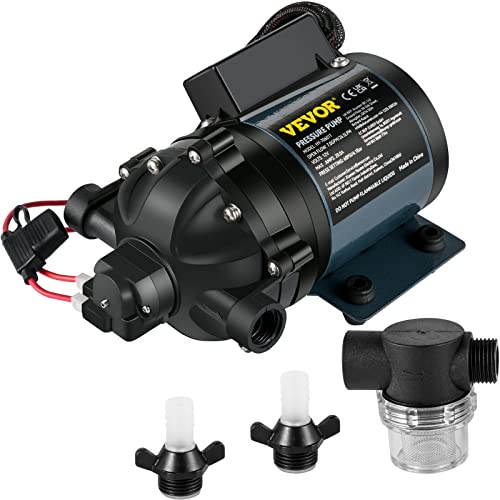
VEVOR offers 7 GPM at 60 PSI with a self-priming mechanism and a 10 ft lift. It includes an EPDM valve and a universal strainer, making it a versatile choice for RVs and yachts exposed to saltwater. Best for users who want solid flow with moderate lift and robust protection features, including overload and thermal safeguards. Limitation: performance notes indicate max temperature around 140°F (60°C), so very hot water should be avoided.
Buying Guide
- Flow rate vs. pressure: Higher GPM means faster cleaning but can demand more power. Match 7–8 GPM models with 60–80 PSI for most deck tasks; 3–5 GPM models are better for compact spaces or light-duty washdowns.
- Self-priming capability: Ensure the unit can pull water from your tank or reservoir without manual priming. A 6-foot to 6.5-foot lift is common and sufficient for most onboard setups.
- Complete kit contents: Look for included hose, spray nozzle, quick-connect fittings, and a filter. A full kit reduces extra purchases and installation time.
- Material and durability: EPDM valves and Santoprene diaphragms resist saltwater exposure. UV protection in hoses prolongs life in sunny environments.
- Automatic pressure control: Pumps with built-in switches maintain stable pressure and reduce wear. This is especially helpful for long nozzle runs and spray wand usage.
- Noise and vibration: Rubber mounts and dual-bearing constructions reduce noise and vibration—important for RV living and quiet marinas.
- Electrical considerations: Check battery capacity and alternator output for high-flow models. Some pumps draw substantial current and may require wiring upgrades.
Frequently Asked Questions
- What is the typical lift for these washdown pumps? Most self-priming models lift 6 feet or less, which covers standard onboard tanks and water lines.
- Are these pumps suitable for saltwater and freshwater? Yes, the kits listed here are designed for both, but always verify corrosion resistance of components.
- Do all kits include hoses and nozzles? Many do, but verify the included contents before purchase to avoid extra accessories.
- Is automatic pressure control important? It helps maintain consistent spray pressure and reduces pump wear during frequent trigger starts and stops.
- Can these pumps run directly off a battery? Most 12V models are designed for direct 12V battery power but may require proper fusing and wiring.
- What should I consider for installation? Ensure hose reach, mounting stability, and electrical supply are compatible with the chosen pump’s specifications.