If you’re hunting for a small, inexpensive motor to power a compact boat, you’ll want options that balance price, reliability, and ease of use. This guide highlights five affordable choices ideal for small boats, kayaks, canoes, inflatables, and dinghies. Each pick is ranked by practicality, maintenance needs, and suitability for entry-level boaters. Whether you fish, explore calm waters, or tow a light craft, these motors offer solid value for budget-minded buyers.
Summary table of selected products:
| Product | Best For | Power/Thrust | Notes |
|---|---|---|---|
| YIYIBYUS 2.3HP Outboard | Dinghies & Inflatable Boats | 2.3 HP | Gas-powered, lightweight, entry-level |
| Minn Kota Endura C2 30 Lb | Freshwater Fishing) | 30 Lb Thrust | Electrically convenient, dependable |
| Newport NV-Series 36lb | Kayaks, Canoes, Small Boats | 36 Lb Thrust | Saltwater capable, quiet |
| Minn Kota Endura C2 40 Lb | Small Boats Under 16 ft | 40 Lb Thrust | Balanced power and efficiency |
| Newport NV-Series 55lb | Heavier Small Boats | 55 Lb Thrust | High power, longer run time |
YIYIBYUS 2.3HP Outboard Motor

Best for small, budget-friendly dinghies and inflatable boats. This 52cc, 2-stroke gas-powered motor offers a compact option with non-contact electronic ignition for easy starts. Ideal for casual lake cruising or fishing trips where a lightweight, portable engine is valued over high-end features. The 0.22-gallon fuel tank supports short to moderate outings without frequent refueling. The aluminum and PP construction provides corrosion resistance for coastal or freshwater use.
Who it’s best for: first-time boaters needing a simple, affordable motor for a small craft. Why selected: combines affordability with basic gas propulsion in a compact form. Caution: 2-stroke engines require proper fuel mixing (25:1) and routine maintenance to prevent performance drop.
Minn Kota Endura C2 Transom-Mount Electric Trolling Motor – 30 Lb
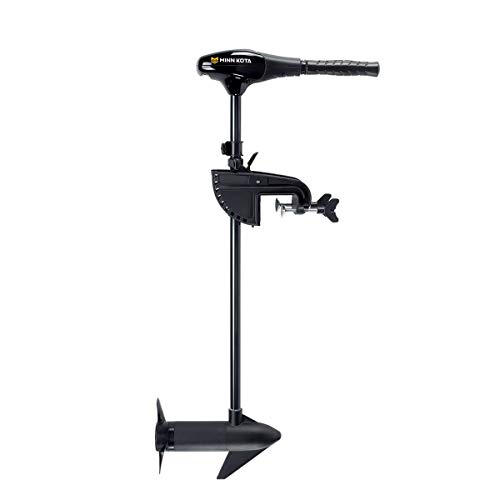
Best for freshwater anglers with smaller boats who want quiet, reliable propulsion. The Endura C2 30 Lb offers a telescoping tiller for easy steering, a testable battery meter, and a durable reinforced composite build. The 10-position lever lock bracket helps secure the motor angle, while the Power Prop handles heavier vegetation. Choose this if you prioritize simplicity, low noise, and straightforward maintenance in light to mid-weight watercraft.
Best-for note: ideal for hobbyists who fish calm lakes or rivers. Limitation: not designed for high-speed cruising or heavy offshore use; battery life will determine runtime on longer trips.
Newport NV-Series 36lb Thrust Trolling Motor

Best for light saltwater and freshwater use on kayaks, canoes, or inflatables. This 12V trolling motor emphasizes efficiency with a lightweight profile, corrosion-resistant components, and a two-blade propeller optimized for battery life. The motor is well-suited for steady, low-speed propulsion, ideal for trolling in calm waters or anchoring in shallow areas. It’s a good pick when quiet operation and battery efficiency matter more than sheer power.
Consideration: performance depends on boat size, water conditions, and battery capacity; maintain appropriate propeller care to avoid damage from debris.
Minn Kota Endura C2 40 Lb Thrust
Best for small to mid-sized boats where more thrust is helpful without moving into premium models. The 40 Lb version builds on the 30 Lb by delivering extra thrust for heavier rigs or windier days. It retains the same durable construction and control features that simplify operation on longer trips. Choose this if you frequently encounter stronger currents or wind when transporting small craft.
Limitation: higher thrust comes at the cost of slightly increased weight and battery draw; ensure the battery and mounting setup support the added load.
Newport NV-Series 55lb Thrust Saltwater Transom Motor
Best for heavier small boats that still require a budget-friendly electric solution. The 55 Lb thrust motor is designed for saltwater use with a longer 30-inch shaft, a multiple-speed range, and a 3-blade propeller for stronger low-end torque. It allows a broader range of boat sizes and water conditions, delivering reliable performance without breaking the bank.
Tip: ensure shielded wiring and proper mounting to maximize efficiency; heavier boats may widen the power demands on the battery.
Buying Guide
What type of motor fits your boat?
Gas outboards (like the YIYIBYUS) provide flexible mounting on dinghies and inflatables, but require fuel management and maintenance. Electric trolling motors (like Minn Kota and Newport Vessels) offer quiet operation, simple control, and easier maintenance, best for smaller boats and calmer waters.
How much power do you need?
For very light craft, 30-40 Lb thrust is usually adequate in calm conditions. For larger small boats or windy days, 55 Lb thrust provides better performance but draws more battery.
Battery and fuel considerations
Gas engines require stable fuel mixes and regular maintenance. Electric motors depend on battery capacity and run time. If you plan longer trips or heavier loads, factor in battery size and charging options.
Durability and environment
Saltwater compatibility matters for coastal use. Corrosion-resistant materials and protective housings extend motor life. For freshwater use, simpler models may suffice but still benefit from quality propellers and mounting hardware.
Ease of use and maintenance
Look for features such as a telescoping tiller, easy mounting, reliable ignition, and accessible service intervals. Simpler maintenance reduces downtime and supports longer boating seasons.
Compatibility and mounting
Match shaft length and mounting arrangement to your boat hull. A too-short shaft can reduce efficiency and raise the motor from the water, while a too-long shaft may complicate storage and handling.
FAQ
- What is the best cheap outboard for a fiberglass dinghy? A lightweight 2-stroke gas option or a small electric trolling motor with adequate thrust can fit well, depending on your water conditions and preferred fuel type.
- Do electric trolling motors work well in saltwater? Yes, many models are designed for saltwater with corrosion-resistant components; ensure proper rinsing after use.
- Is more thrust always better? Not always; higher thrust increases battery usage and weight, which may not be ideal for very light boats. Balance with boat size and expected speed.
- How do I choose the shaft length? Measure from the mounting surface to the waterline when seated. A shaft that is too short reduces efficiency; too long can cause handling issues.
- What maintenance should I perform regularly? For gas engines: fuel mixing, oil checks, and spark plug care. For electric motors: battery health, propeller condition, and post-season rinsing.
- Can I mix gas and electric motors on the same boat? It’s possible but not typical. Use one propulsion method to avoid interference and ensure system compatibility.