If you need a compact, capable radar for smaller boats, these five options deliver reliable visibility without dominating your deck space. They’re suited for weekend sailboats, center consoles, and small sport boats where space and ease of use matter. This guide compares top small radars by coverage, integration, and practical use cases to help you choose the best fit for your needs.
Buyer’s note: the following selections emphasize compact form, ease of installation, and clear target detection in close- to mid-range nautical view. In the table below, you’ll find a quick-reference summary of each product’s strengths and who it’s best for.
| Product | Best For | Why It Stands Out |
|---|---|---|
| Furuno 1815 8.4 Color LCD Ra Radar 19 4kw Dome | Owners needing strong classic performance on a small-to-mid vessel | Clear 8.4″ color display and a 19″ dome for broad coverage with a solid 4 kW transmitter |
| Simrad GO9 XSE Chartplotter and Fishfinder with HALO20 Radar | Advanced navigation with integrated radar on sport boats | Multifunction display with full navigation, radar, and preloaded charts in one system |
| Simrad GO9 XSE – 9-inch Chartplotter with Active Imaging 3-in-1 Transducer | Best for high-detail imaging on compact layouts | Active Imaging 3-in-1 sonar with radar capability and Vector charts |
| Lowrance Halo 20+ Radar | Value-friendly compact radar for smaller boats | 20″ class dome with fast real-time sweep and Doppler tracking |
| Raymarine Quantum 18″ Radom Wireless | Wire-free installation with strong imaging for tight spaces | Wireless radar with energy efficiency and easy integration |
Furuno 1815 8.4 Color LCD Ra Radar 19 4kw Dome

Best for: boaters who want a traditional, reliable radar with a readable display on deck. The Furuno 1815 uses an 8.4-inch color LCD and a 19-inch dome to deliver dependable coverage, especially in coastal cruising scenarios. The 4 kW transmitter supports confident target detection in challenging weather and sea states. This option favors buyers who prioritize a robust, proven radar interface over the latest imaging features.
Caution: The 8.4″ display is compact relative to larger screen systems; consider this if you plan heavy multitasking on-screen during navigation. The data suggests excellent performance, but ensure the install space accommodates the 19″ dome for optimal placement.
Simrad GO9 XSE Chartplotter And HALO20 Radar
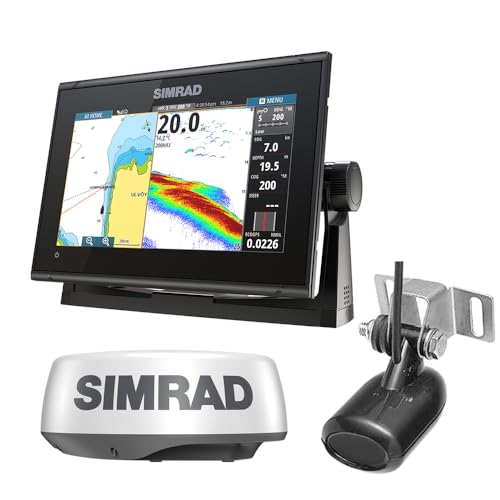
Best for: boaters seeking an integrated system that combines navigation, radar, and charting in one unit. This GO9 XSE setup pairs GPS navigation, sonar, and radar with preloaded C‑MAP Discover charts, providing a comprehensive deck interface for sport boats and center consoles. The included HDI transducer supports CHIRP sonar and DownScan Imaging for enhanced bottom structure detail.
Why chosen: It offers an all-in-one solution that reduces mounting space while delivering robust radar detection alongside mapping and sonar capabilities. Best for those who value seamless integration and a consolidated screen footprint.
Caution: This configuration is feature-rich, which can be more complex for first-time users. Ensure you’re ready to configure multi-function display settings to optimize radar overlays with charts and sonar.
Simrad GO9 XSE – 9-inch Chartplotter With Active Imaging 3-in-1 Transducer

Best for: those who want high-detail imaging and flexible charting on a compact platform. The Active Imaging 3-in-1 transducer provides CHIRP sonar, SideScan, and DownScan, while onboard radar adds a protective layer of navigation support for coastal and offshore cruises. The combination is well-suited to smaller cruisers needing sharp imagery without adding bulk.
Why chosen: The GO9 XSE with Active Imaging offers top-notch target clarity and a streamlined user experience. It’s particularly strong for anglers and coastal navigators who rely on precise sonar detail alongside radar overlays.
Caution: As a high-end multifunction system, setup and ongoing maintenance may require more familiarity with marine electronics than simpler units.
Lowrance Halo 20+ Radar

Best for: small boats and budget-conscious buyers who still want strong radar capability. The Halo 20+ uses a 20-inch dome and features 25W Pulse Compression with rapid 360-degree sweeps, delivering quick situational awareness. VelocityTrack Doppler technology helps distinguish moving targets from stationary clutter.
Why chosen: This option balances price with performance, offering essential radar capabilities for collision avoidance and near-field awareness without excessive setup complexity. It’s a practical choice for weekend hobbyists and smaller saltwater craft.
Caution: While compact and robust, it may lack some advanced imaging features found on higher-end systems. Ensure it aligns with your planned navigation and risk management workflow.
Simrad HALO24 Radar System

Best for: larger small boats or dayboats that need longer-range detection without a full-size dome. The HALO24 compact 24-inch dome provides high-quality short, mid, and long-range detection with a Dual Range mode to monitor near hazards and distant weather cells simultaneously. VelocityTrack helps assess target movement in real time.
Why chosen: It combines near- and far-range visibility with fast updates, helping prevent close-quarters collisions while keeping a manageable footprint on deck. It’s a strong choice for boats where space is precious but demands high situational awareness.
Caution: The HALO24’s feature set is robust, which may require some time to master the radar’s advanced modes for optimal performance.
Buying Guide: Small Radar For Boat — What To Consider
- Range and resolution: For coastal cruising, 12–24 nautical mile capability is common. Short-range detection helps with collision avoidance in marinas and harbors; long-range helps with weather cells and offshore navigation.
- Display and integration: Consider whether you want a standalone radar display or an integrated multifunction display (MFD) with GPS, charting, and sonar. A single interface reduces clutter and learning time.
- Antenna size and footprint: Dome diameter and mounting space influence installation on smaller boats. A 19–24 inch dome is typical for compact radars that still offer strong coverage.
- Power and performance: Higher kW output improves target detection in rough seas or rain, but may require more power consumption and space for proper ventilation.
- Imaging features: Advanced capabilities such as CHIRP, SideScan, DownScan, and VelocityTrack help distinguish targets and weather patterns. Choose based on how you will use radar in coordination with sonar and charts.
- Wireless and install ease: Wireless models or compact domes simplify installation on limited deck spaces. Consider cable routing and mounting hardware as part of the plan.
- Future expansion: If you anticipate adding more sensors later (e.g., additional transducers or a larger charting suite), ensure the selected system supports upgrade paths or easy integration with existing gear.
Frequently Asked Questions
- What is the difference between a 20″ and a 24″ dome radar?
- Do I need a radar with CHIRP or SideScan for a small boat?
- Can I install radar without professional help?
- Which radar is best for a compact center-console?
- Is wireless radar reliable for small boats?
- What should I consider before buying a radar for a small boat?
The dome size mainly affects mounting space and potential range; larger domes often support longer-range detection and can house more robust electronics, but require more installation room.
CHIRP and SideScan improve target clarity and seabed detail. For coastal navigation and fishing, these features can provide meaningful advantages, though they add cost and complexity.
Many compact radars are designed for DIY installation, but complex integrations with MFDs or helm wiring may benefit from professional wiring and calibration to ensure optimal performance.
A compact 20″–24″ dome radar with an integrated MFD (where applicable) tends to balance space and performance well, like the HALO20 or GO9 XSE setups for an all-in-one experience.
Wireless radar can offer easier installation on tight decks, with reliable performance for short to mid-range navigation. Confirm range and interference considerations for your sailing area.
Assess your typical voyage length, harbor density, desired integration with existing electronics, and space for mounting. Prioritize essential features first (range, clarity, and ease of use) and add advanced imaging as needed.