Answering the buyer’s need for reliable, 12V solar charging on boats, cars, and RVs, this guide highlights top solar marine battery chargers with MPPT controllers. These devices help maintain 12V batteries while resisting the elements on water, land, and travel. The following selections are best for boaters, RV travelers, and outdoor enthusiasts seeking low-maintenance, automatic charging. A summary table below compares the five featured products.
| Product | Wattage | Best For | |
|---|---|---|---|
| SUNER POWER Waterproof 12W Pro | 12W | Small boats, personal vehicles | Ultra-Smart MPPT, 3-stage charging |
| POWOXI Upgraded 7.5W | 7.5W | Compact setups, bikes, small boats | Smart protection, waterproof design |
| SOLPERK 20W Kit | 20W | Car, RV, trailer, boat | High efficiency MPPT, durable build |
| SUNER POWER 50W Pro | 50W | Medium to larger boats, RVs | Ultra-Smart MPPT, maintenance-free |
| Voltset 20W Kit | 20W | Universal 12V charging | Smart controller, 20-30% faster charging |
Note: All products in this guide are designed to keep 12V batteries healthy with automatic shutoff when full and resumed charging when discharged. Consider panel wattage, mounting options, and battery type when choosing the best fit for your setup.
SUNER POWER Waterproof 12W Pro
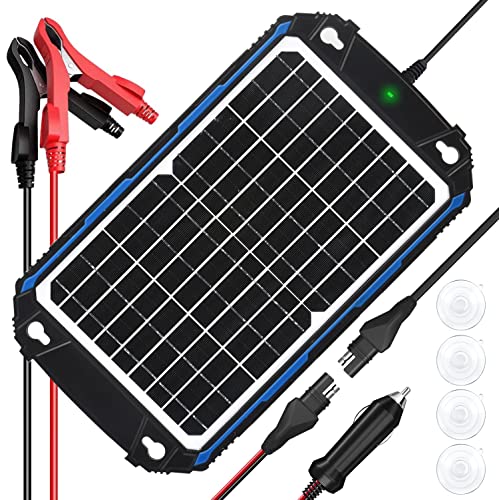
Best For: Small boats, cars, and light marine use where compact, maintenance-free charging is needed. The Ultra-Smart MPPT technology targets higher efficiency, and the 12W capacity suits limited space installations.
Why selected: It combines a compact 12W panel with a sophisticated MPPT controller to optimize power, delivering improved utilization over typical trickle chargers. The three-stage charging (Bulk, Absorption, Float) helps protect battery life in intermittent sun conditions.
Caution: The 12W rating may limit charging speed for larger batteries or heavy draw scenarios. Ideal for trickle charging rather than rapid recharge.
POWOXI Upgraded 7.5W Solar Charger
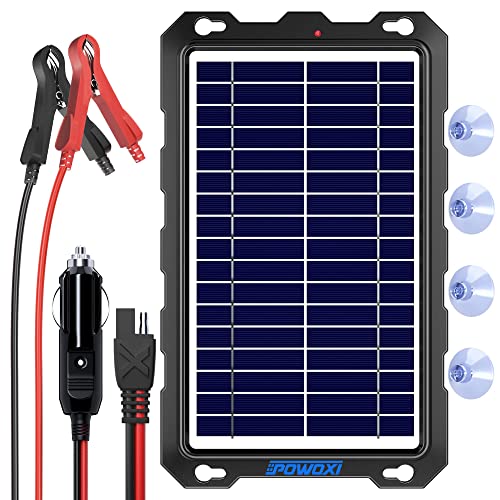
Best For: Compact vehicles, motorcycles, small boats, and seasonal setups where portability matters. The 7.5W size fits tight spaces and lighter batteries.
Why selected: The upgrade emphasizes a built-in protection system and smart charging, reducing risk of overcharge and short circuits. The rugged waterproof design supports outdoor use without extra maintenance.
Caution: A smaller wattage means slower charging for larger batteries or when solar conditions are poor. Choose this if space and portability are your primary concerns.
SOLPERK Solar Panel Kit 20W
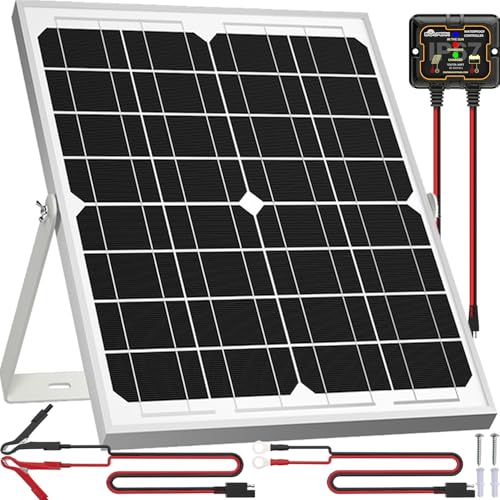
Best For: RVs, boats, trailers, and trucks needing a robust 20W charging solution with strong weather resistance.
Why selected: The kit uses a high-efficiency mono-crystalline panel and a smart 8A controller. The system supports multiple battery chemistries and features three-stage charging to prevent overcharging and optimize battery health.
Caution: The 20W kit may require more mounting space and a sturdy mounting surface to maximize exposure and durability in harsh conditions.
SUNER POWER 50W Pro

Best For: Medium to larger boats or RV setups that require more capable charging while underway or at anchor.
Why selected: The 50W solar panel paired with Ultra-Smart MPPT delivers high tracking efficiency and peak conversion, enabling quicker charging and better performance in variable sun. It minimizes maintenance with automatic charge control.
Caution: Higher wattage units demand more space and sturdier mounting. Ensure your installation area supports the panel size and weight.
Voltset 20W Kit

Best For: All-around 12V charging for cars, RVs, boats, and trailers, with broad battery compatibility.
Why selected: It emphasizes universal 12V compatibility and smart protection, offering reliable charging for diverse battery chemistries. The kit aims for faster charging within its wattage class due to its MPPT controller.
Caution: Ensure compatibility with your battery type and confirm that the mounting and wiring suit your vehicle or vessel layout.
Buying Guide
What should you consider when choosing a solar marine battery charger?
- Wattage and charging speed: Higher wattage panels charge faster, but require more space. Consider your typical sun exposure and battery size.
- MPPT vs. PWM: MPPT controllers maximize power conversion in variable light, especially useful on boats where shading or intermittent sun occurs.
- Battery compatibility: Check whether the charger supports LiFePO4, AGM, Gel, Flooded, or other chemistries in your fleet.
- Durability and weather resistance: Look for waterproofing, rugged housings, and tempered glass for marine environments.
- Maintenance and automation: Automatic on/off functionality reduces manual input and extends battery life.
- Installation space and mounting: Assess panel dimensions and mounting hardware to fit deck rails, cabins, or trailer roofs.
- Safety features: Overcharge protection, short-circuit safeguards, and reverse polarity protection help prevent battery damage.
Which setup is right for you?
- High-use boats with limited sun: A higher wattage MPPT kit (like 50W) offers quicker charging and better performance in variable conditions.
- Compact or space-constrained vehicles: Smaller panels (7.5W–12W) paired with reliable protection suit tight spaces.
- All-around versatility: A 20W kit provides a balance of size, weight, and charging capability for RVs or trailers.
Battery maintenance basics
Regularly inspect connections for corrosion and ensure mounting remains secure. If you use lithium-based batteries, confirm the charger’s compatibility with your chemistry to avoid unintended charging profiles.
FAQ
- What is the advantage of an MPPT controller?
MPPT improves efficiency by tracking the maximum power point, delivering more usable energy in variable sunlight.
- Can I use these on a boat deck?
Yes, most units are designed for marine environments, featuring weatherproof housings and durable materials.
- Will a 20W panel fully recharge a dead 12V battery?
Typically not in a single session; it provides trickle charging, maintenance, and gradual replenishment depending on sun and battery size.
- Do all models support multiple battery chemistries?
Many do, but verify with the product page to ensure compatibility with LiFePO4, AGM, Gel, and other chemistries.
- Is a larger panel always better?
Not always. Choose based on your available mounting area, typical sunlight, and the battery’s capacity to be charged efficiently.
- Do these require maintenance?
Most are maintenance-free, stopping charging automatically when full and resuming when discharged.