Answering the search intent for solar-powered outboard options, this guide highlights electric trolling motors that pair well with solar charging setups or sun-powered ambitions. The top picks are best for small boats, kayaks, canoes, inflatables, and lightweight craft. Each profile explains who benefits most, plus practical strengths and limitations for real-world use.
Quick look at the picks:
| Product | Why It’s a Fit |
|---|---|
| Newport NV-Series 36lb Thrust Trolling Motor | Lightweight, saltwater-ready, ideal for casual day trips |
| Newport NV-Series 55lb Thrust Saltwater Transom Motor | More power for larger kayaks or small boats |
| Newport Kayak Series 55lb Thrust Transom Motor | Compact kayak shaft with solid control |
| Newport NT300 Electric Outboard Motor | High thrust, longer range, digital throttle |
| Newport NV-Series 46lb Thrust Trolling Motor | Balanced power for medium loads |
Newport NV-Series 36lb Thrust Trolling Motor

Best for light craft: kayaks, canoes, inflatables, and small boats that require efficiency and quiet operation. It supports 12V or 24V setups, making it easy to pair with a solar-powered charging approach for extended daylight boating. A two-blade propeller optimizes battery life, delivering steady, controlled movement with minimal wake.
Who it’s best for: casual anglers or day-trippers who prioritize portability and simplicity. This model is ideal when weight and battery economy matter most.
Limitations: Lower thrust means this model works best on smaller vessels or in calm water; heavier loads may require more power.
Newport NV-Series 55lb Thrust Saltwater Transom Mounted Motor
Better for more power: 55 lb thrust supports larger anglers’ craft and slightly heavier loads while remaining quiet and efficient. It includes a 30-inch shaft, a multi-LED battery indicator, and a versatile tilt/direction lock system for precise steering in varying conditions.
Who it’s best for: boaters who need reliable push in moderate wind or current and want longer days on the water without overheating.
Limitation: Top speed is moderate (around 4 mph) and performance depends on boat weight, water, and wind conditions.
Newport Kayak Series 55lb Thrust Transom Motor
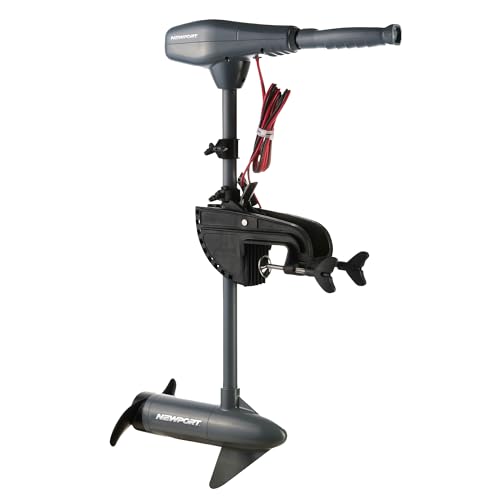
Best for kayaks requiring extra power with a compact shaft: a 24-inch fiberglass shaft allows depth flexibility and dependable performance. Eight-speed options (five forward, three reverse) with a six-inch telescoping handle give you strong control in saltwater and freshwater use.
Who it’s best for: kayakers navigating choppier water or heavier loads who still want kayak-specific shaft dimensions.
Limitation: Saltwater build uses all-aluminum motor head with corrosion-resistant hardware; ensure proper maintenance for long-term use.
Newport NT300 Electric Outboard Motor

Best for extended trips: 3HP-equivalent (1300W) with 110 lb thrust and a 66-mile range on a single charge. Digital throttle, LCD display, and trim/tilt options enable smooth operation in varied water conditions.
Who it’s best for: serious anglers or explorers who need long runtime and a quiet, emission-free option. Ideal when paired with solar charging to maximize daylight boating standards.
Limitation: Higher voltage and weight require a compatible battery system and more careful portage or mounting considerations.
Newport NV-Series 46lb Thrust Trolling Motor
Balanced power for mid-sized boats: 46 lb thrust with a three-blade propeller improves control in wind or light current. A saltwater-ready design supports years of reliable use on various craft.
Who it’s best for: boaters who want more thrust than smaller models but still prioritize efficient battery use and quiet operation.
Limitation: Moderate top speed means it won’t push very large vessels at high speeds in rough water.
Buying Guide: Solar-Power Ready Considerations
- System compatibility: Ensure the motor’s voltage aligns with your solar charging setup (commonly 12V, 24V, or 36V). Higher-voltage motors may require larger solar arrays and storage capacity.
- Battery type and capacity: Li-ion or AGM deep-cycle batteries paired with solar charging can extend runtime. Consider reserve capacity for extended trips.
- Solar charging integration: Look for solar-friendly charging options, such as built-in solar chargers in some boats or external solar panels designed for marine use. Waterproofing and secure mounting are essential.
- Weight and balance: Heavier motors affect trim and stability. Check shaft length and mounting options to ensure proper balance on small craft.
- Fuel replacement vs. emissions: Electric motors with solar charging eliminate onboard emissions and reduce fuel handling, but watch for battery degradation and maintenance needs.
- Water conditions: Power and thrust should suit typical water conditions you’ll encounter. Calm lakes versus choppy coastal waters require different thrust levels.
- Quiet operation: Lower noise helps with fishing and wildlife observation, a common reason users choose electric over fuel-powered options.
- Maintenance considerations: Corrosion resistance is key in saltwater environments. Regular inspection of propeller, shaft, and hardware extends life.
FAQ
- Can a trolling motor be charged by solar panels on the water? Yes, with appropriate solar charging gear and a compatible battery setup. Always ensure waterproofing and proper mounting.
- Which motor is best for a kayak? A lighter 36-55 lb thrust model with a kayak-specific shaft generally works best for stability and efficiency.
- Is higher thrust always better? More thrust helps with heavier loads and wind but can reduce battery life if not managed with a larger battery or solar charging.
- What maintenance is needed for saltwater use? Rinse after use, check corrosion-resistant hardware, and inspect the propeller and pivot points for wear.
- How long can a solar-powered setup run? Runtime depends on battery capacity, solar input, motor thrust, and water conditions; planning with a generous battery bank is recommended for longer trips.
- Is solar charging practical for all boats? It’s most practical for smaller boats and day trips where sun exposure is consistent and storage is manageable.