The best speed boat bottom paint choices balance speed, durability and ease of maintenance. This guide highlights five top options that help reduce drag, resist fouling, and minimize sanding between seasons. Each product is suitable for boats used regularly in saltwater or freshwater. The buyers most likely to benefit are sailors, sport power boats, and workboats seeking reliable antifouling protection with manageable cleanup and environmental considerations. Below is a quick summary table of the selected products to compare at a glance.
| Product | Best For | Coating Type | Key Benefit |
|---|---|---|---|
| TotalBoat Underdog Marine Antifouling Bottom Paint (Blue, Gallon) | Sailboats and power boats in saltwater; frequent users | Ablative, copper biocide | Economical single-season protection with easy re-application |
| TotalBoat JD Select Ablative Antifouling (Black, Quart) | Boats in mixed water types; marina environments | Ablative, low odor/VOC | Self-polishing with low environmental impact |
| TotalBoat JD Select Ablative Antifouling (Black, Gallon) | Frequent-launch boats; long-season use | Ablative, low odor/VOC | Continuous antifouling protection with easy cleanup |
| Rust-Oleum 396967 Marine Antifouling Paint (Quart, Black) | Fiberglass, wood or steel; standard maintenance | Cu-containing antifouling | Slow copper release for enduring protection |
| TotalBoat Spartan Boat Bottom Paint (Quart, Black) | High fouling waters; needs robust protection | Ablative with high copper content | Maximum antifouling protection and burnishable finish |
Note: Always follow surface prep and compatibility guidelines for fiberglass, wood, steel, or other hull materials when applying antifouling paints.
TotalBoat Underdog Blue Antifouling Bottom Paint
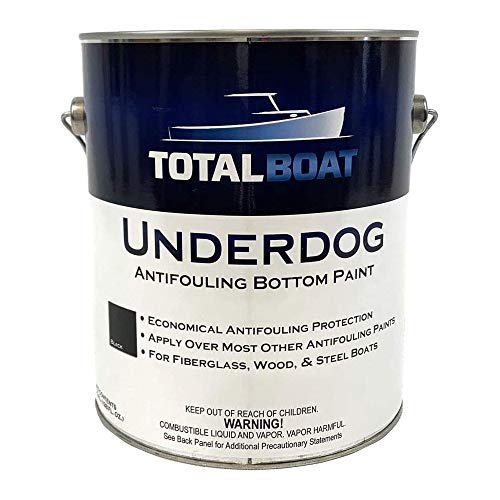
Product type and use: An economical antifouling bottom paint designed for fiberglass, wood, and steel hulls. It releases fresh biocide as water flows under the boat, helping prevent barnacles and mussels. Best for boats used frequently in saltwater conditions, including sailboats, powerboats, fishing and work boats.
Best for: Frequent users who want single-season protection with a durable finish that tolerates trailering and beaching better than traditional ablatives. It avoids paint buildup because the coating wears away during the season.
Why selected: Combines cost efficiency with reliable anti-fouling performance for a range of hull materials. It works well when annual re-coating is anticipated and simple maintenance is preferred.
Caution or limitation: May require thorough surface prep for optimal adhesion; performance is tied to proper application conditions and hull cleaning prior to coating.
TotalBoat JD Select Ablative (Black, Quart)

Product type and use: A hybrid ablative antifouling paint suitable for fiberglass, wood, and steel boats in both salt and fresh water. It is a self-polishing coating that wears away gradually during movement through water.
Best for: Boats that require reduced bottom paint buildup and easier sanding in the following season. This option also benefits users who value low odor and low VOCs for marina-friendly applications.
Why selected: The self-polishing feature minimizes buildup, helping maintain speed and fuel efficiency with easier re-application later. It supports lower environmental impact through low VOC content.
Caution or limitation: No maximum dry time before launch is specified in some data; ensure marina or local regulations permit its use and cleanup with available water supply.
TotalBoat JD Select Ablative (Black, Gallon)

Product type and use: A high-performance ablative antifouling coating for fiberglass, wood, and steel boats, designed to deliver seasonal protection in both saltwater and freshwater. It wears away gradually, reducing layer buildup.
Best for: Boats that plan multiple launches across a season, where a burnishable surface is advantageous for speed and ease of maintenance. Clean-up remains straightforward with soap and water.
Why selected: The gallon size makes it suitable for larger hulls or multi-season projects, while the low odor and VOCs support compliant applications in controlled environments.
Caution or limitation: Users should ensure compatibility with hull materials and follow re-coating guidelines to maintain antifouling effectiveness between seasons.
Rust-Oleum Marine Antifouling Paint (Quart, Black)

Product type and use: A copper-releasing antifouling paint for fiberglass, wood, or steel to prevent below-waterline fouling. It is formulated to provide controlled copper release for ongoing protection.
Best for: Boats requiring a traditional, proven antifouling approach and a coating that can be recoated within typical four-hour minimums for surface reactivation.
Why selected: It offers a straightforward option with familiar application patterns for if you need a reliable and widely available antifouling solution.
Caution or limitation: Ensure the copper release rate aligns with local environmental guidelines and marina rules; over-application can lead to excessive copper deposition on hulls.
TotalBoat Spartan Boat Bottom Paint (Quart, Black)

Product type and use: A multi-season marine antifouling paint with high copper content designed for maximum protection against barnacles and slime in fresh, salt, and brackish waters. The advanced copolymer ablative formula supports ongoing antifouling even when the boat is at anchor or underway.
Best for: Boats operating in high fouling conditions that want strong, long-lasting protection and the option to burnish for a racing finish.
Why selected: It provides robust antifouling with excellent wear characteristics and easy reactivation after hauling, reducing the need for heavy sanding during repaint cycles.
Caution or limitation: High copper content may not align with very strict environmental restrictions in certain marinas; verify local guidelines before use.
Buying Guide: Key Considerations For Speed Boat Bottom Paint
What hull materials are supported by antifouling paints? Compatibility typically includes fiberglass, wood, steel, and iron. Check your hull type and prep requirements before selecting a product.
What level of fouling protection do you need? Ablative coatings wear away during use, reducing buildup and easing maintenance. Self-polishing formulas can maintain effectiveness as water moves past the hull.
Are low VOC and low odor important? If you marina in sensitive areas, choose low-VOC or water-based options to ease environmental compliance and cleanup.
How often do you launch and haul your boat? Ablative paints are well suited for boats hauled or re-launched regularly, as they can be reactivated with light scuffing.
What is the maintenance routine after application? Most antifouling paints require surface prep, cleaning, and occasional re-coating. Follow manufacturer instructions for surface preparation and curing times.
Frequently Asked Questions
- What is antifouling paint? A coating that prevents organisms like barnacles and weeds from attaching to the hull, helping maintain speed and fuel efficiency.
- Which paint should I choose for a sailboat in saltwater? An ablative antifouling with good protection and easy re-application, such as TotalBoat undetog or Spartan variants, is typically suitable for frequent use in saltwater.
- Can I apply antifouling paint over old coatings? It depends on the existing coating and surface prep. Generally, you must remove incompatible coatings and sand to a clean, smooth surface before applying a new layer.
- Is low-VOC antifouling paint effective? Yes, low-VOC options are designed to reduce environmental impact while maintaining antifouling performance, especially in marinas with restrictions.
- How long does antifouling paint take to dry? Dry times vary by product and conditions; follow the manufacturer’s guidelines for reentry and launching times.
- Should I repaint every season? Repainting frequency depends on usage, water type, and coating wear. Ablative coatings often require less material buildup and more straightforward re-coating.