Find the right steering system to match your boat’s size and engine. This guide highlights five top-rated speed boat steering systems, with clear comparisons to help you choose. Best for: boat owners upgrading control, replacing worn components, or equipping a new craft. The selections emphasize durability, ease of maintenance, and compatibility with common outboard setups.
| Product | Cable Length | Wheel Size | Best For |
|---|---|---|---|
| VEVOR 10 ft Kit | 10 ft | 13.5 inches | Small to mid-sized boats needing firm control |
| VEVOR 12 ft Kit | 12 ft | 13.5 inches | Balanced control for mid-sized boats |
| VEVOR 16 ft Kit | 16 ft | 13.5 inches | Longer reach and steady handling for larger craft |
| VEVOR Hydraulic 150 HP | N/A (hydraulic system) | N/A | High-horsepower single-engine boats |
| Camoo 200HP Hydraulic Kit | 26 ft hoses included | N/A | Single outboard boats up to 200 HP |
Notes: Verify cable lengths match your rudder or cylinder needs. Some kits require basic mounting hardware and space for a helm. Hydraulic kits suit higher horsepower applications, while mechanical kits offer simpler maintenance. Always confirm compatibility with your boat’s make and model before purchasing.
VEVOR 10′ Outboard Steering System Kit

The kit includes a 10 ft steering cable, a 3/4″ tapered shaft, a 13.5″ steering wheel, and a 90-degree bezel. It features a high-performance rotary steering system with a robust alloy rotary helm designed to resist wear. This setup aims to provide accurate steering and improved work efficiency. Best for smaller to mid-sized vessels seeking solid, straightforward control. Caution: verify the cable length matches your specific rudder or cylinder requirements.
VEVOR 17 ft Boat Steering System
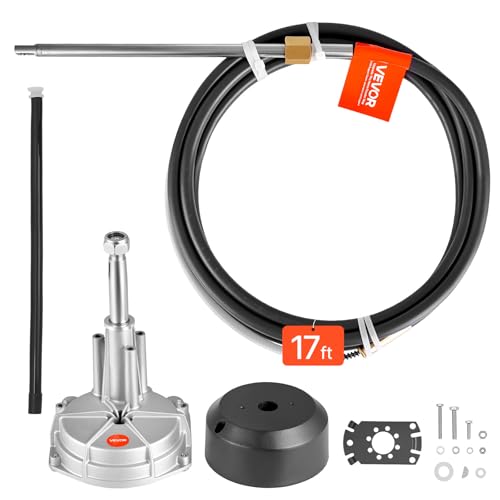
This kit provides a 17 ft steering cable, an aluminum alloy helm, and full mounting hardware. It’s designed to replace worn components and restore smooth, precise, responsive control. The flat 17 ft cable length offers a longer reach for larger boats, with a corrosion-resistant helm. Best for mid-to-large boats needing stronger, reliable control. Caution: confirm cable length compatibility with your boat’s outboard mounting configuration.
VEVOR 12′ Outboard Steering System Kit
The 12 ft kit features a 12 ft steering cable, a 13.5″ steering wheel, and a 3/4″ tapered shaft with a durable alloy helm. Aimed at boats requiring reliable, mid-length steering control with easy maintenance. Best for boats that need balanced performance without extra length. Limitation: ensure the 12 ft cable aligns with your rudder and engine arrangement.
VEVOR 16′ Outboard Steering System Kit
The 16 ft kit pairs a 16 ft cable with a 13.5″ steering wheel and a 3/4″ tapered shaft, plus a 90-degree bezel kit for mounting. It’s designed for larger boats that require longer, stable steering control. Best for established cruisers or sport boats needing extended reach. Caution: assess available cockpit space for the longer cable routing.
VEVOR Hydraulic Steering Kit (150 HP)

This hydraulic kit supports up to 150 HP engines, featuring a 5.5 turns lock-to-lock for precise handling. It includes a 6.9 MPa/1000 psi helm pump, a two-way lock cylinder, and 20 ft high-strength hoses. Best for single-station, single-engine boats where hydraulic power offers smoother, more consistent steering. Caution: hydraulic systems may require more initial setup and space for hoses and fittings.
Camoo 200HP Hydraulic Outboard Kit

This 200 HP hydraulic kit includes a steering wheel, helm pump, hydraulic cylinder, and 26 ft PU hoses, designed for most single outboard-powered boats. Best for high-horsepower vessels requiring robust hydraulic control. Limitation: ensure hose length and cylinder compatibility with your boat’s layout and engine placement.
Buying Guide: Key Considerations For Speed Boat Steering Systems
- Engine horsepower compatibility: Mechanical systems suit smaller to mid-range horsepower, while hydraulic systems are ideal for higher horsepower engines.
- Cable length and routing: Choose a length that matches your boat’s stern-to-cockpit layout and rudder configuration. Longer cables require precise routing to avoid interference.
- Helm material and corrosion resistance: Aluminum alloy and rust-resistant components offer longevity in marine environments.
- Maintenance needs: Hydraulic kits may require periodic fluid checks; mechanical kits typically demand less ongoing maintenance but may require more frequent hardware checks.
- Installation space: Some kits require additional space for mounting a helm, bezel, and hoses. Confirm cockpit and transom clearance before purchase.
- Single vs. dual station: Most kits here are designed for single-station setups. Dual-station configurations require specialized kits or additional components.
- Spare parts availability: Look for kits with readily accessible replacement cables, seals, and hoses to maximize long-term reliability.
Frequently Asked Questions
- What is the difference between mechanical and hydraulic steering?
– Mechanical uses cables and a helm; hydraulic uses fluid pressure and cylinders for smoother operation, especially at higher horsepower. - How do I know which cable length I need?
– Measure the distance from the helm to the outboard and consider routing. Longer boats typically need longer cables. - Are hydraulic systems harder to install?
– They can require more space and careful routing of hoses, but often offer easier steering feel once installed. - Can these kits fit multiple boat brands?
– Many kits are designed to be universal, but confirm compatibility with your engine model and mounting setup before purchasing. - What maintenance is required for rotary helm systems?
– Regular inspection of nuts, fittings, and seals; keep components clean and free of corrosion; replace seals as needed.