Looking for an easy, spray-on solution to protect fiberglass, gel coat, and painted marine finishes? This guide highlights five top spray-on waxes/coatings that deliver gloss, beading, and UV protection with simple application. Best for boat owners who want fast results, minimal effort, and dependable protection when docking, rafting, or trailering. The table below summarizes the featured products and their primary benefits to help you compare quickly.
| Product | Best For | Key Benefit |
|---|---|---|
| Meguiar’s Marine & RV Hybrid Ceramic All Surface Sealant | Fiberglass, Gel Coat, Painted Surfaces | Durable ceramic protection; spray-spread-wipe ease |
| Boat Juice Protection Boat Ceramic Coating | Finish Preservation, UV protection | SiO2-based coating with long-lasting gloss |
| 303 Products Marine Quick Wax | Quick protection, light contaminants | Easy spray-on with 90 days of protection |
| Meguiar’s Marine & RV Quik Wax | Gel coat, fiberglass, painted finishes | Speedy waxing with carnauba-like gloss |
| Boat Juice 2in1 Exterior Boat Cleaner & Protectant Spray | One-step cleaning and protection | SiO2 ceramic sealant with convenience |
Meguiar’s Marine & RV Hybrid Ceramic All Surface Sealant

This spray-and-wipe ceramic sealant provides durable protection for fiberglass and gel coat with a gloss boost and water beading. Best for boaters who want a stand-alone sealant or a drying-aid boost without complex steps. It is safe for painted surfaces, metal, vinyl, and glass, offering UV protection in a simple format.
- Best for: Fiberglass, gel coat, and multi-surface use on boats and RVs.
- Why selected: Combines ease of use with durable ceramic protection and versatility across surfaces.
- Caution: May require multiple light passes on heavily oxidized surfaces for optimal beading.
Boat Juice Protection Boat Ceramic Coating

Formulated with SiO2, this spray creates a durable ceramic coating and enhances UV resistance. It aims for a show-ready shine with hydrophobic properties to make water bead and slide off more easily. Suitable for boats with standard gel coat and painted finishes.
- Best for: Long-lasting gloss and UV protection on boats seeking a ceramic finish.
- Why selected: Strong emphasis on protection against oxidation and sun exposure with a showroom look.
- Caution: Long-term durability can depend on surface preparation and environmental exposure.
303 Products Marine Quick Wax

This spray-on wax offers a fast, convenient shine with a protective layer for fiberglass and gel coat. It provides a slick finish and claims about 90 days of protection, making it a practical choice for regular upkeep between full detail sessions.
- Best for: Quick touch-ups and boats requiring a quick gloss boost between details.
- Why selected: Easy application and noticeable gloss with protective layer.
- Caution: May require more frequent reapplication in heavy-use or harsh sun conditions for sustained protection.
Meguiar’s Marine & RV Quik Wax

Quik Wax provides speedy waxing for gel coat, fiberglass, and painted marine finishes. It cleans lightly and protects with a carnauba wax-based feel for a glossy finish, suitable for quick sessions when time is limited.
- Best for: Speed-focused waxing on boats with light to moderate grime or water spots.
- Why selected: Combines fast application with a durable gloss similar to traditional waxes.
- Caution: May require more frequent reapplication in high-use conditions to maintain peak protection.
Boat Juice 2in1 Exterior Boat Cleaner & Protectant Spray
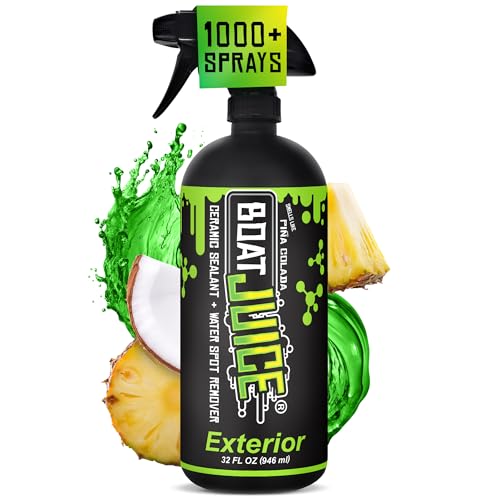
This product combines cleaning with SiO2 ceramic protection in a single step. It removes water spots and mineral deposits while leaving a protective, hydrophobic barrier and UV protection. Best for boaters who want a one-step wash-and-coat approach.
- Best for: On-the-water expeditions needing quick cleaning plus protective coating.
- Why selected: Reduces the need for separate wash and protectant steps without sacrificing protection.
- Caution: One-step approach may not deliver as deep a protection as dedicated, separate coating products over time.
Buying Guide: Spray-On Boat Wax And Coatings
Key purchase considerations help identify the right product for your boat’s finish and your maintenance routine.
- Surface compatibility: Check whether the product is safe on fiberglass, gel coat, painted surfaces, metal, and glass. Some coatings also work on vinyl and chrome.
- Protection type: Decide between silica-based ceramic coatings for durable water beading or wax-based finishes for a classic glossy look.
- Application ease: Prefer spray-spread-wipe formats for faster detailing, especially on large boats.
- Durability: Consider expected protection duration and how often you detail your vessel to align with maintenance goals.
- Maintenance routine: If you want a one-step cleaner and protectant, look for combined cleaners with ceramic protection; otherwise, separate products may yield deeper protection.
- Environmental considerations: Some formulas are safer for non-skid decks and sensitive surfaces; verify safety on deck materials before use.
FAQ
- Q: What is the main difference between ceramic sealants and wax sprays? A: Ceramic sealants use SiO2-based chemistry for longer-lasting protection and water beading, while wax sprays emphasize quick gloss and ease of use.
- Q: Can I use spray-on wax on a non-smooth surface like a textured deck? A: Yes, but choose a formula designed for non-skid or textured decks to maintain safety and traction.
- Q: How often should I reapply spray-on wax? A: Reapplication frequency depends on exposure and cleaning; high-sun or saltwater use may require more frequent protection refresh.
- Q: Is it better to use a cleaner and a separate protective coating? A: For maximum protection, a dedicated cleaner followed by a protective coating can yield deeper, longer-lasting results.
- Q: Do these products require drying time? A: Most spray-on formulas wipe off quickly, but drying time can vary by product and environmental conditions.
- Q: Are these products safe on painted marine finishes? A: Many are formulated for gel coat and painted surfaces, but always test a small area first and follow label directions.