If you’re restoring, repairing, or refreshing a fiberglass hull or gel coat surface, a spray-on gel coat solution can save time and deliver a showroom finish. This guide highlights five top products, explaining who each is best for, why it was selected, and practical buying considerations. The focus is on durable marine-grade gel coats, tintable options, and user-friendly application methods to help you choose with confidence.
| Product | Best For | Why It Stands Out | Limitations |
|---|---|---|---|
| Marine Coat One White Gel Coat with Wax | DIY boat repairs, gloss restoration on white gel coat | Includes MEKP catalyst for fast curing and provides tinting options for color matching | Requires careful catalyst handling; color matching depends on pigments |
| Fiberglass Supply Depot White Gelcoat with Wax | Cosmetic repairs and exterior hull finishes | Professional-grade polyester gel coat with wax; designed for exterior composites | Requires resin colorants for exact match; typical gel coat workflow |
| FGCI Brushable Marine Fiberglass Polyester Gelcoat | Do-it-yourself brush-and-reroller projects | No spray gun needed; thicker formula that hides brush marks for a smooth look | Brush application may be slower for large areas |
| TotalBoat Marine Gelcoat (White, Neutral) | Cosmetic repairs and hull coatings for boats and other composites | Premium marine-grade polyester gel coat; easy to tint and apply with brush, roller, or spray | Non-sagging formula; ensure proper curing conditions for best results |
| TotalBoat Marine Gelcoat (Neutral) | Color-matching repairs and large-area refinishing | Durable, easy to tint; high-visibility finish that sands and buffs well | Color customizations may require pigment matching before MEKP catalyst |
Marine Coat One White Gel Coat with Wax

Best for DIY boat repairs and white gel coat restoration, Marine Coat One includes a handy MEKP catalyst for a hard cure. It supports tinting with compatible colorants before applying the catalyst, enabling color alignment with original white finishes. This option suits small to medium repairs where a strong, glossy finish is desired. A potential limitation is the need for careful catalyst handling and the possibility of color inconsistency if colorants aren’t matched properly.
Fiberglass Supply Depot White Gelcoat with Wax

Best for cosmetic hull repairs and exterior finishes on boats and other fiberglass projects, this gel coat includes wax for a tack-free dry. It’s suitable for color matching through tinting and is designed to work with standard MEKP catalysts. Use this if you want a professional-grade look without heavy spraying equipment. A caveat is that precise color matching may require additional pigments and testing.
FGCI Brushable Marine Fiberglass Polyester Gelcoat
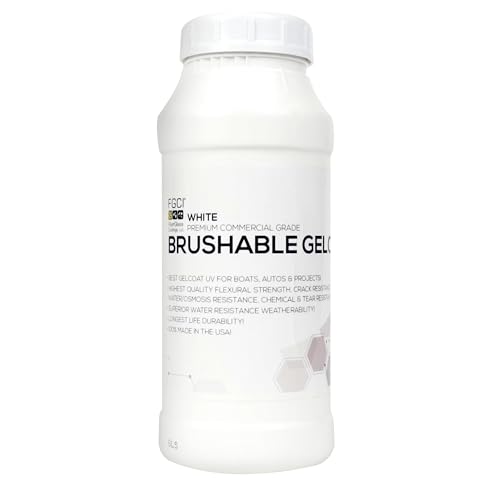
Best for DIYers who prefer brushing over spraying, FGCI’s brushable gelcoat is a marine-grade polyester formula that can be applied with a brush or roller. It yields a smooth, even finish and resists water when cured. Choose this if you lack spray gear or want to avoid spray setup. A limitation is that it may take longer to cover large areas compared with sprayable formulations.
INPAITOO Gel Coat Spray Gun (Tool)

Best for converting spray-capable gel coats into even finishes on larger surfaces, the INPAITOO spray gun offers adjustable air settings and large cups, reducing refill frequency. It’s suitable for users who already have or plan to use gel coat coatings that require spray application. A note: it requires an air compressor and proper setup; water trapping and nozzle choice impact finish quality.
TotalBoat Marine Gelcoat Neutral (Quart with Wax)

Best for color-matching repairs and exterior coatings on boats and other composites, the neutral gelcoat from TotalBoat is easy to tint and apply. It is designed for brushing, rolling, or spraying and offers a forgiving pot life with a high-gloss finish after sanding and buffing. Limitations include ensuring pigment additions are completed before adding MEKP catalyst to achieve the intended color.
TotalBoat Marine Gelcoat White (Quart with Wax)

Best for cosmetic repairs and hull finishes requiring a strong white base, this TotalBoat gelcoat is designed for easy tinting and uniform coverage. It can be applied with a brush, roller, or spray gun, offering versatility for different project scales. A potential limitation is achieving consistently uniform tint when working with multiple batches or pigments.
Buying Guide: Gel Coat Spray Options And Application
- What type of gel coat do I need? Most marine gel coats are polyester-based and designed for cosmetic repairs, hull finishes, or repairs on fiberglass. Choose white for a bright base or neutral for flexible tinting.
- Spray vs. brush apply: For large areas, spray coatings with a compatible spray gun or nozzle offer faster coverage. For small repairs or DIYers without spray gear, brushable gel coats provide a workable alternative.
- Catalysts and wax: Many products require MEKP catalyst and wax additives. Follow manufacturer instructions for mixing ratios and curing times to achieve a hard, glossy finish.
- Tinting and color matching: If your boat’s gel coat color isn’t white, pick a tintable gel coat and test color samples before full application. Colorants should be added prior to catalyst.
- Application surface prep: Clean and lightly sand surfaces before applying gel coat. Remove dust and contaminants to improve adhesion and final gloss.
- Curing conditions: Temperature and humidity affect cure time and finish quality. Work in a controlled environment when possible and avoid high humidity that can cause clouding or sags.
FAQ
- What is the main difference between spray-on and brushable gel coats? Spray-on formulations cover larger areas quickly and can deliver a uniform film, while brushable gels are better for small patches or if you don’t have spray equipment.
- Do I need a catalyst with gel coat products? Yes. Many gel coats require MEKP catalyst to cure properly. Always follow the product’s instructions for correct ratios and handling.
- Can I tint gel coat after applying? Tinting is typically done before adding the catalyst. Make sure pigments are compatible with your gel coat system.
- Is gel coat suitable for interior use? Gel coat is primarily used on exterior fiberglass surfaces like hulls and decks. Interior cosmetic repairs may use compatible gel coat products but test for compatibility with interior materials.
- How long does a gel coat finish take to cure? Curing times vary by product and environmental conditions. Refer to the product’s guidelines for pot life and cure times to plan recoating windows.
- Can I apply gel coat over existing finishes?