Answering the search intent: these stainless steel keel bands are designed for general banding and fastening applications, including marine and outdoor use. They’re best for buyers needing corrosion resistance, strength, and traceability with test certificates. This guide helps identify the right size, material grade, and duty level for different jobs, from light-duty sign mounting to heavy-duty fastening. The top five picks here are selected for versatility, availability, and practical usage in typical projects such as marine, construction, and hardware applications. A quick buying table is included below for quick comparison.
| Product | Size | Material | Best For |
|---|---|---|---|
| ISO BA206 201 Stainless Steel Band | 3/4″ x .030″ x 100′ | Type 201 | General banding, lighter-duty applications |
| ISO BA204 Type 201 Stainless Steel Band | 1/2″ x .030″ x 100′ | Type 201 | General fastening, compact projects |
| ISO BA406 Type 316 Stainless Steel Band | 3/4″ x .030″ x 100′ | Type 316 | Marine or chemical-exposure environments |
| ISO BA430 Type 201 Heavy Duty Band | 3/4″ x .044″ x 100′ | Type 201 | Heavy-duty banding, USA-made |
| Band-It C40699 316 Stainless | 3/4″ x .030″ x 100′ | Type 316 | General banding with high corrosion resistance |
ISO BA206 201 Stainless Steel Band 3/4″ Roll

Best for general banding and fastening needs, this 3/4″ wide band with .030″ thickness is the standard for many non-specialized applications. Type 201 provides corrosion resistance and is harder than common 304 or 316 types, making it a solid choice for everyday projects. Each coil includes a four-digit code for traceability to the test certificate, supporting compliance with ASTM standards. Best for projects where budget and versatility matter, and where a 12-inch measurement point assists in quick layout.
Who it’s best for: DIY builders and light commercial users needing dependable, general-purpose stainless steel banding. Why chosen: balance of strength, corrosion resistance, and traceable quality control. Limitation: not ideal for the most demanding environments or prolonged exposure to severe chemicals.
ISO BA204 Type 201 Stainless Steel Band 1/2″ Roll

This 1/2″ wide, .030″ thick band suits tighter spaces and smaller assemblies while maintaining stainless strength. Type 201 offers corrosion resistance suitable for general applications where extreme environmental exposure is unlikely. It includes a four-digit code on each coil to verify authenticity and ASTM compliance. The 12-inch measurement point remains a practical aid for accurate cutting and fitting.
Who it’s best for: projects with tight spaces or smaller components. Why chosen: compact width and robust general-use performance. Limitation: less suitable for heavy-duty, high-stress marine or chemical environments compared to 316-grade options.
ISO BA406 Type 316 Stainless Steel Band
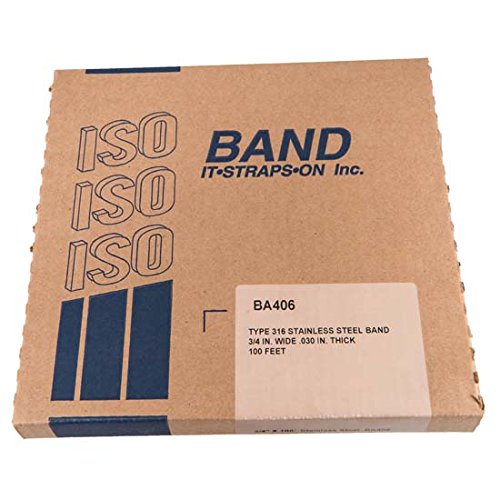
Considered marine-grade stainless steel, 316 offers superior corrosion resistance for use around saltwater, chemicals, or harsh outdoor environments. This band is 3/4″ wide and .030″ thick, with a universal 100′ roll length and a four-digit code for traceability to ASTM conformity. The guidance emphasizes its suitability for environments where rust resistance is critical.
Who it’s best for: outdoor and marine projects, or facilities with corrosive exposure. Why chosen: enhanced corrosion resistance. Limitation: higher cost relative to 201 stainless options.
ISO BA430 Type 201 Heavy Duty Band

A heavy-duty option on a type-201 alloy, this 3/4″ wide, .044″ thick band is designed for more demanding fastening tasks. It is manufactured in the USA and includes a four-digit traceable code for ASTM compliance. The wider and thicker profile provides extra strength for tight or load-bearing connections, with the same general corrosion resistance advantages of Type 201. Best for: heavy-duty applications where extra material thickness is beneficial. Caution: not suited for extreme chemical environments beyond general heavy-use scenarios.
Band-It C40699 316 Stainless Steel Band
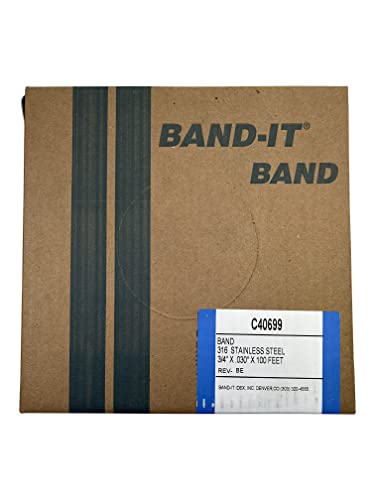
This 316 stainless steel option provides superior corrosion resistance for general banding tasks in slightly more challenging environments, including mild marine splash zones and exposure to fresh water. It features Easy Scale patented imprint to quickly determine band length and minimize waste. Best for: users who need reliable corrosion resistance with a straightforward length-tracking feature. Limitation: slightly higher cost and the 316 grade may be overkill for indoor, low-corrosion tasks.
ISO BA431 Heavy Duty 201 Stainless Band

This 1″ wide, .044″ thick heavy-duty band uses Type 201 and is manufactured in the USA for general heavy-duty fastening needs. It’s harder and stronger than 304 or 316 stainless, with a 4-digit trace code for ASTM verification. Use with ISO BU441 buckles or similar hardware for secure installations. Best for: robust general-use and sign-mixing tasks requiring extra width and strength. Limitation: heavier and stiffer than lighter-duty bands.
BAND-IT VALU-Strap Plus C17199

This 5/8″ wide, 0.020″ thick stainless band offers non-magnetic stainless steel for light-duty banding. It’s suitable for small sign mounting, cable bundling, and decorative hanging tasks. It can be doubled for extra strength. Best for: light-duty applications where magnetic resistance or non-magnetic properties are beneficial. Caution: not intended for high-stress or outdoor heavy-duty applications.
ISO BA206T 201 Stainless Steel Band Tote

This Tote-pack version of the 3/4″ wide, .030″ thick band is designed for convenience and portability. Type 201 provides corrosion resistance suitable for general applications, with the same four-digit traceability code and 12-inch measurement section. It pairs with ISO Type 201 BU256 buckles or ISO Type 201 WS156 wing seals for secure fastenings. Best for: contractors or field workers needing ready-to-carry banding. Limitation: tote packaging may add cost per roll in some contexts.
Buying Guide
Key considerations when choosing stainless steel keel bands include material grade, width and thickness, roll length, and the intended environment. Type 201 offers good general resistance and strength for everyday tasks, while Type 316 delivers superior corrosion resistance suitable for marine and chemical settings. Choose width and thickness based on load and space constraints; wider and thicker bands provide greater strength but may be harder to fit in tight areas. Look for traceability codes on coils to verify ASTM compliance. Consider whether you need heavy-duty or light-duty performance, and whether you require non-magnetic or marine-grade properties for your project.
Frequently Asked Questions
- What is the difference between Type 201 and Type 316 stainless steel in banding? Type 316 offers higher corrosion resistance and is preferred for marine and chemical environments; Type 201 is more general-purpose and typically less costly.
- Which band width should I choose? Wider bands (like 3/4″) offer more strength for heavy loads; narrower bands are easier to fit in tight spaces.
- Why is a traceability code on the coil important? It verifies authenticity and ASTM compliance, providing quality assurance for critical applications.
- Are these bands suitable for outdoor use? Yes, especially the 316 stainless options, but consider environmental exposure and potential maintenance needs.
- Should I choose a heavy-duty band? Choose heavy-duty if you anticipate high loads or rough handling; for light mounting tasks, standard bands are often sufficient.
- What about non-magnetic options? If non-magnetic properties are required (for sensitive electronics or certain installations), look for BAND-IT VALU-Strap Plus or similar non-magnetic lines.