Answering the core buyer intent: To prevent corrosion on aluminum boats, use a mix of protective coatings, barrier coatings, and targeted cleaners designed for aluminum surfaces. This guide highlights five reliable products and the best uses for each, helping you choose based on environment, maintenance needs, and critical areas like electrical connections or hull surfaces.
| Product | Best For | Key Benefit |
|---|---|---|
| CorrosionX Heavy Duty Anti Rust Spray | Harsh environments, outdoor equipment | Self-healing, rain/wash resistant barrier |
| STAR BRITE Ultimate Aluminum Cleaner & Restorer | Restoring dull aluminum | Brightens without harming aluminum |
| STA-BIL Rust Stopper | General rust prevention & battery terminals | Long-lasting protective layer |
| TotalBoat Aluminum Boat Barrier Coat | Hull protection | High-build epoxy barrier for underwater metals |
| TotalBoat Aluminum Boat Leak Sealer | Leaks around rivets and seams | Flexible, two-part waterproof sealant |
CorrosionX Heavy Duty Anti Rust Spray

Reference features: Self-healing barrier clings to metal in rain, seawater, and pressure washing; coating won’t drip or wash away; long-lasting indoors up to 5 years, outdoors up to 2 years; thick formula suitable for large electrical connections like battery posts and grounding lugs.
Best for: Boat trailers, exposed aluminum components, and electrical connections where rugged sealing is needed. Why selected: It provides a durable, non-conductive shield that resists harsh marine conditions and heavy-duty use. Caution: Thick formula may require careful application around sensitive components to avoid oversaturation.
STAR BRITE Ultimate Aluminum Cleaner & Restorer
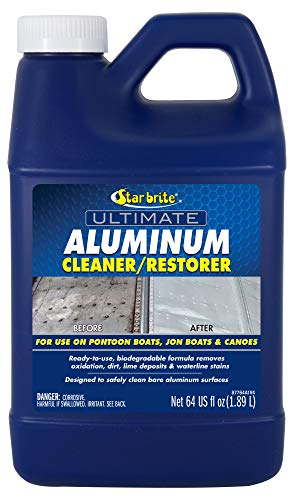
Reference features: Cleans and restores dull aluminum on pontoons, jon boats, canoes; suitable for outdoor furniture and vintage aluminum parts; designed to not harm aluminum while removing grime, lime deposits, and oxidation.
Best for: Restoring look and brightness of unpainted aluminum surfaces. Why selected: It focuses on cleaning and restoring without risking metal damage. Caution: Not a protective coating; follow with a corrosion barrier if exposure to saltwater continues.
STA-BIL Rust Stopper
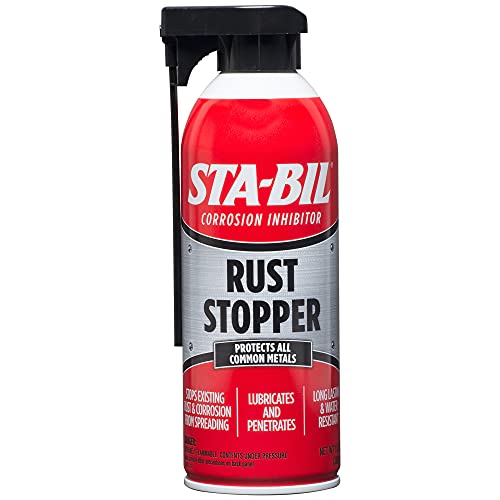
Reference features: Corrosion inhibitor forming a protective layer; battery terminal protector to guard electrical components; water-resistant formula provides weather protection and lubrication to prevent squeaks.
Best for: General rust prevention and protecting battery terminals on aluminum boats. Why selected: Offers both corrosion inhibition and lubrication in one product. Caution: Primarily protective; may need coatings stronger for continuous saltwater immersion.
TotalBoat Aluminum Boat Barrier Coat

Reference features: High-build, two-component epoxy primer and barrier coat; provides excellent corrosion prevention on aluminum hulls and pontoons; fast-drying with no sanding between coats; compatible with other paints.
Best for: Hull protection and underwater metal durability. Why selected: Creates a robust barrier that reduces exposure of aluminum to saltwater and moisture. Caution: Requires proper mixing and surface preparation per product guidelines.
TotalBoat Aluminum Boat Leak Sealer

Reference features: Two-part, flexible waterproof epoxy sealer; repairs leaking rivets and seams; long working time (75 minutes @ 72°F) for better penetration; works at low temperatures down to 40°F.
Best for: Sealing small leaks and patches on aluminum boats. Why selected: Combines flexibility with strong adhesion to aluminum surfaces. Caution: Not a stand-alone barrier for long-term hull protection; use alongside barrier coatings for best results.
Buying Guide
What to consider when stopping aluminum boat corrosion:
- Environment: Coastal saltwater vs. freshwater. Choose products with proven saltwater resistance for marine use.
- Surface condition: Clean, dull, or oxidized aluminum may require cleaners before sealers or coatings.
- Protection type: Use barrier coatings for long-term hull protection; use cleaners for restoration and prep; use inhibitors for electrical components.
- Application method: Some products are spray-on; others require mixing or curing time. Follow manufacturer directions precisely for best results.
- Maintenance plan: Combine a barrier coat with periodic cleaning and inspection of seams, rivets, and hardware to prevent hidden corrosion.
Frequently Asked Questions
- What is the first step to stop aluminum corrosion on a boat?
– Clean the surface to remove oxidation and grime, then apply a protective coating or barrier coat designed for aluminum. - Can aluminum be protected with a single product?
– For best long-term protection, use a combination: a cleaner/restorer to prep, a corrosion-inhibiting spray or barrier coat, and periodic maintenance. - Is a barrier coat better than a cleaner for hull protection?
– Yes, a barrier coat provides a physical shield against moisture and salts, while cleaners restore appearance and prep the surface for sealing. - Should I treat electrical areas separately?
– Yes. Use products like CorrosionX or STA-BIL that are non-conductive and formulated for electrical connections to prevent corrosion without conductivity issues. - Can I use these products on painted aluminum?
– Some cleaners and inhibitors are compatible with painted surfaces, but barrier coats are typically formulated for unpainted aluminum. Check product guidelines. - How often should I reapply protective coatings?
– Reapplication depends on exposure and product type; consult product guidelines, but expect longer intervals in inland use and more frequent reapplication in saltwater environments.