Looking for a surface-drive outboard solution that can handle muddy, shallow waters while delivering solid propulsion? This guide showcases five suitable options, explains who each is best for, and highlights key trade-offs. Ideal buyers include anglers in marshes, guides navigating weedy shallows, and boaters seeking compact, rugged propulsion without high-speed electronics.
| Product | Brand | Key Benefit | Best For |
|---|---|---|---|
| Powerful Short Tail Surface Drive Mud Motor | The Willpower Group | Compact surface-drive for mud environments | Shallow, weed-choked waters; mud motor enthusiasts |
| Newport NT300 Electric Outboard | Newport Vessels | Quiet, emission-free electric propulsion with long range | Quiet fishing trips; freshwater and saltwater use |
| 4 Stroke 7.5HP Outboard Motor (KTYHNPM) | KTYHNPM | Strong power with smooth CVT-like shifting | Small to mid-size boats; easy daily use |
| PERFERATE 7.5 HP 4 Stroke Outboard | PERFERATE | Three-speed cruising with 360-degree steering | Inflatable and small boats; versatile maneuvering |
| NAZEAOB 18HP 2-Stroke Outboard | NAZEAOB | High power for fast travel and load capacity | Heavier load boats; robust performance |
Powerful Short Tail Surface Drive for Mud Motor

Best for: Muddy, shallow-water environments where a compact surface-drive design excels. This option is described as a short tail kit or mud motor with a black finish and an estimated 25 kg weight, offering a focused setup for surface-drive performance. It is chosen for users who need a dedicated mud-motor style propulsion without engine-like heft. Limitation: data available does not specify thrust or top speed, so plan around compatibility with your hull and mounting configuration.
Newport NT300 Electric Outboard

Best for: Boaters seeking quiet, maintenance-light propulsion with extended range on electric power. The NT300 delivers an estimated 110 lb thrust, 36V operation, and a top speed around 6.5 mph with a 66-mile range, ideal for calm freshwater and saltwater trips. It features digital throttle, LCD display, and a 9.8″ two-blade composite propeller. Caution: electric systems require battery management and appropriate charging, which can affect upfront setup and charging time.
4 Stroke 7.5HP Outboard Motor 200CC (KTYHNPM)
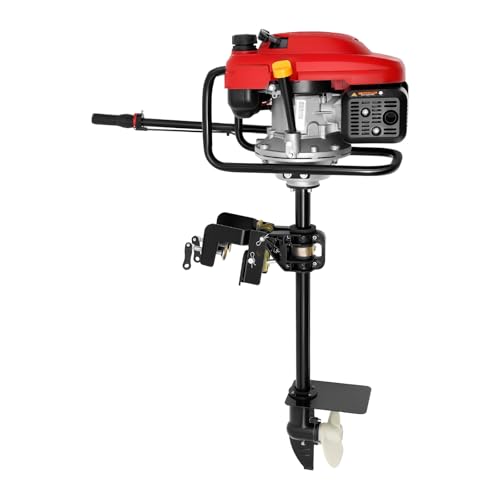
Best for: Small to mid-sized boats needing reliable power with good heat dissipation and smooth driving due to CVT-style gear shifting. This model emphasizes continuous operation comfort and effective cooling. Limitation: data mentions a 3600 rpm engine; verify compatibility with your boat’s transom height and mounting pattern for best results.
PERFERATE 7.5 HP 4 Stroke Outboard
Best for: Boats needing flexible steering and smooth propulsion with a powerful 3,600 RPM engine. The three-speed variable transmission supports forward, neutral, and reverse for versatile cruising. Limitation: information focuses on general features; confirm mounting and shaft length compatibility with your boat.
NAZEAOB 18HP 2-Stroke Outboard

Best for: Heavier boats or when higher power and load capacity are needed. The 18 hp engine provides strong thrust at 4,500–5,500 RPM with a robust aluminum alloy build for corrosion resistance. Caution: as a two-stroke, fuel efficiency varies with load and throttle usage; plan for fuel management accordingly.
Buying Guide
What should you consider when choosing a surface-drive or outboard motor?
- Intended water conditions: Mud, weeds, and shallow water favor surface-drive designs and compact short-tail formats.
- Power and weight: Match horsepower to hull size, load, and desired speed. Heavier boats may benefit from higher horsepower options like NAZEAOB or similar.
- Electrical vs. gasoline: Electric motors like the NT300 offer quiet operation and low maintenance but require reliable battery systems and charging planning.
- Mounting compatibility: Check transom height, shaft length, and mounting patterns for a secure fit on your boat.
- Cooling and durability: Air cooling and robust housings help with long sessions in warm conditions; ensure the unit’s cooling design fits your usage profile.
- Maintenance and serviceability: Simple CDI ignition, accessible parts, and local service options reduce downtime.
- Fuel vs. emissions: Gas engines provide raw propulsion; electric options reduce emissions and noise, with trade-offs in weight and range.
FAQ
- What is a surface-drive outboard motor best used for?
Surface-drive units are ideal for shallow, muddy, weed-filled waters where conventional outboards struggle to stay in position or achieve traction.
- Are electric outboard motors suitable for saltwater?
Yes, many electric models are designed for both saltwater and freshwater, but require proper corrosion protection and battery maintenance.
- Can I install any of these on a small inflatable boat?
Installation depends on transom height, shaft length, and mounting compatibility. Check the product’s specifications and your boat’s transom design.
- Do these motors require special fuel or battery gear?
Gas engines need appropriate fuel type and storage; electric models require a compatible battery system and charger.
- What maintenance is typical for two-stroke vs four-stroke motors?
Two-stroke engines generally require oil-fuel mix and more frequent spark checks; four-stroke engines require standard oil changes and filter checks.
- Which option is best for quiet operation?
Electric outboards, such as the NT300, offer the quietest propulsion with minimal noise and vibration.