If you’re planning a marine drainage or bilge upgrade, choose thru-hull fittings with a shut-off valve to control water flow safely. The right fit ensures reliable seacock operation, allows easy maintenance, and minimizes the risk of leaks. This guide highlights five solid options suited for common hose sizes and marine applications. It helps boaters who want durability, corrosion resistance, and built‑in check valves or easy shut-off capability.
| Product | hose size | Material / Key Feature | Best for |
|---|---|---|---|
| Seachoice Polypropylene Extra Long Thru-Hull Connector | ¾ in. ID | Polypropylene; 1-3/4 in. flange | Reliable, long reach connections |
| SEAFLO 1” Thru Hull with Check Valve (Black) | 1 in. | Polypropylene + Glass-Filled Nylon; built-in check valve | Backflow prevention and durability |
| Seachoice 90-Degree Angled Thru-Hull (White) ¾ in. | ¾ in. ID | Plastic; 1-1/2 in. flange | Low-profile routing at 90 degrees |
| YOQVQOY 1″ Thru Hull Fitting (Black) | 1 in. | Durable, corrosion-resistant; universal fit | Secure connections for 1″ hoses |
| SEAFLO 1” White Thru Hull with Check Valve | 1 in. | Polypropylene + Glass-Filled Nylon; built-in check valve | White matching, check-valve safety |
Note: The table highlights essential buying considerations—hose size compatibility, material durability, and whether a built-in check valve is present. Use the table to compare core traits at a glance when narrowing down choices.
Seachoice Polypropylene Extra Long Thru-Hull Connector

Best for: boats needing a long, reliable thru-hull connection for ¾ in. ID hoses. The white connector uses polypropylene material with a 1-3/4 inch flange for stable mounting. It is a straightforward option when you want durability and a simple installation path. Limitation: does not include a built-in check valve, so separate backflow protection may be required in systems with risk of backflow.
SEAFLO 1” Thru Hull with Check Valve (Black)

Best for: boaters seeking built-in backflow prevention and high impact resistance. This 1” black thru-hull uses polypropylene plus glass-filled nylon and includes a check valve to prevent reverse water flow. Choose this if you want integrated safety in one unit. Caution: ensure proper valve orientation and seal installation to prevent leaks in rough seas.
Seachoice 90-Degree Angled Thru-Hull Connector
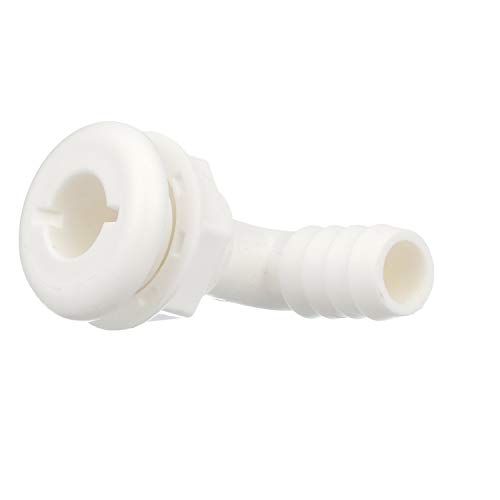
Best for: installations that require a compact 90-degree route for a ¾ in. hose. The white angled connector provides a reliable seal with a 1-1/2 inch flange. Limitation: smaller hose size means it is not suitable for higher volume drainage; verify your system’s flow before using. This is a good choice where space is constrained and a straight path isn’t possible.
YOQVQOY 1″ Thru Hull Fitting (Black)
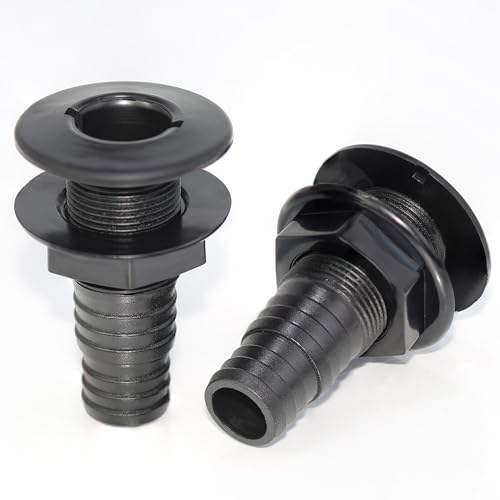
Best for: 1″ hose connections that require a corrosion-resistant, durable thru-hull. The YOQVQOY model emphasizes universal fit and robust construction, making it versatile for various marine setups. Caution: check exact dimensions to ensure it fits hull thickness and hose diameter in your craft; misfit can lead to leaks or poor valve operation.
SEAFLO 1” White Thru Hull With Check Valve

Best for: white-finished installations where a check valve is desired in a 1” line. The assembly blends polypropylene and glass-filled nylon for durability, plus a built-in check valve to prevent backflow. Better for: systems that require a visible, clean finish on deck or hull surfaces. Limitation: color and contour may differ from existing fittings—confirm color match and mounting dimensions before purchase.
SEAFLO 1-1/8″ 90° Angled With Check Valve

Best for: fittings that need a slightly larger 1-1/8″ through-hull with a 90° bend and built-in check valve. The PP+GF/Nylon construction offers corrosion resistance and durability. Caution: it is more specialized for larger hose runs; verify hose size and space in your hull before selecting this option.
Buying Guide
What matters most when selecting a thru-hull fitting with a shut-off valve? Start with hose size compatibility. If your system uses ¾ in., 1 in., or 1-1/8 in. hoses, pick a model that matches precisely to avoid leaks or reduced flow.
Material and construction influence longevity. Polypropylene with glass-filled nylon offers high impact resistance and saltwater durability. Look for a corrosion-resistant build to withstand marine environments and UV exposure.
Check valve presence is a key safety feature. Fittings with a built-in check valve prevent backflow, protecting internal systems from water ingress. Consider this feature if you have a drainage line or bilge pump pathway that could backflow.
Space and mounting considerations matter. Angled or 90° fittings suit tight spaces or hull routing constraints. Ensure flange size and overall dimensions fit your hull thickness and deck clearance.
Finish and color are practical. White fittings blend with light-colored hulls or deck hardware, while black or darker fittings can be less conspicuous. Match the finish with surrounding hardware for a cohesive look.
Practical tips for installation and maintenance
- Prepare the hull surface with appropriate sealing compounds and clean mating surfaces before installation.
- Tighten fittings to manufacturer-specified torque to avoid over-tightening that can crack fittings.
- Test for leaks after installation using a controlled water pressure test before continuing vessel use.
- Inspect valves and seals periodically, especially in saltwater environments where corrosion risk is higher.
FAQ
- What is a thru-hull with a shut-off valve?
It is a through-hull fitting equipped with a valve to stop water flow, enabling safer maintenance and easier drainage control. - Which size should I choose for a 1 in. hose?
Pick a 1 in. thru-hull with a check valve for safety, as it matches your hose size and helps prevent backflow. - Do all thru-hulls include a check valve?
No. Some models omit a check valve; if backflow risk exists, choose those with built-in check valves. - Is material important for longevity?
Yes. PP+GF/Nylon blends resist saltwater corrosion and impact, extending service life in harsh marine conditions. - Can I install a thru-hull through different hull thicknesses?
Check flange diameter and overall length to ensure compatibility with your hull’s thickness and deck clearance. - How do I avoid leaks after installation?
Apply marine-grade sealant at mating surfaces and torque fittings to spec; perform a pressure check before use.