Answer: This guide identifies the best thru hull vent fittings to vent fuel tanks, bilges, and hull cavities. The top picks are suited for boaters needing durable, corrosion-resistant, and easy-to-install fittings. Ideal buyers include DIY marine enthusiasts, captains managing fuel venting, and those upgrading aging hardware. Below, compare the five best options and find clear guidance on suitability, installation, and limits.
| Product | Brand | Key Strength | Best For |
|---|---|---|---|
| Seachoice Thru Hull Fuel Tank Vent (5/8 In.) | SEACHOICE | Polished chrome-plated brass; two vent holes | Durable fuel venting in classic style |
| Seachoice Thru Hull Fuel Tank Vent (90 Degree) | SEACHOICE | 90-degree angle for tight spaces | Controlled routing in confined install areas |
| SEAFLO 1″ 90° Thru Hull With Built-in Check Valve | SEAFLO | Built-in check valve; high-strength PP+GF | Reliable venting with anti-backflow |
| CROSSBODY 2 Pcs Thru Hull Fitting (3/4 Inch, Black) | CROSSBODY | Plastic construction; broad flange | Budget-friendly, easy-to-fit plastic option |
| YOQVQOY 2Pcs Thru Hull Fitting (1″, Black) | YOQVQOY | Corrosion-resistant; universal 1″ size | Long-term marine use with secure connections |
Seachoice Thru Hull Fuel Tank Vent, Chrome-Plated Brass, 5/8 In.

What it is: A chrome-plated brass thru hull vent designed to vent a fuel tank via a hose (not included). Best for boats needing a polished, corrosion-resistant vent with two openings for redundancy or increased venting capacity.
Who it’s for: Ideal for sail or power boats with 5/8 inch hoses seeking a durable, aesthetically traditional vent. Best for exposed installations where chrome-plated brass matches other hardware.
Why chosen: Brass construction offers corrosion resistance in saltwater, and dual vent holes provide effective venting. Consider this if you value longevity and a classic look.
Limitations: Hose not included; ensure compatibility with your hose ID and mounting space.
Seachoice Thru Hall Fuel Tank Vent, Chrome-Plated Brass, 5/8 In., 90 Degree

What it is: A 90-degree version of the Seachoice fuel tank vent for easier routing around hoses and obstructions. Best for installations where straight-through access is not possible or desirable.
Who it’s for: Boaters with tight engine rooms or crowded bilges needing angled vent exits. Suitable for those upgrading from straight fittings to reduce hose bending stress.
Why chosen: The 90-degree design helps keep hose routing tidy and reduces potential kinks. Good for compact layouts.
Limitations: As with all through-hull vents, check hose diameter and mounting clearance; brass fittings require careful tightening to avoid leaks.
SEAFLO 1″ 90° Angled Thru Hull Through-Hull Fitting

What it is: A 1″ angled thru hull with a built-in check valve, designed for corrosion resistance and long-term marine use. It’s built from PP+GF and nylon, suitable for tight spaces where hoses must pass through the hull.
Who it’s for: This is the pick for users prioritizing anti-backflow protection and a robust, high-strength material. Suitable for stern or bow placements where space is limited.
Why chosen: The built-in check valve helps prevent backflow into the tank or system, which can improve system safety and reliability in rough seas.
Limitations: It uses plastic-based materials; ensure chemical compatibility with fuel or vented fluids and note potential differences in torque-tolerances during installation.
CROSSBODY 2 Pcs Thru Hull Fitting – Plastic Through Hull Connector (3/4 Inch, Black)

What it is: A pair of plastic thru hull fittings with a broad flange for secure mounting. 3/4 inch size provides a budget-friendly option for basic venting or drainage needs.
Who it’s for: Ideal for budget-conscious projects, temporary setups, or interior-hull drain tasks where heavy-duty metal isn’t required.
Why chosen: The broad flange helps stabilize the fitting and reduces the risk of leaks at the hull. Simple installation can speed up non-critical applications.
Limitations: Plastic may be less durable in high-stress environments or long-term salt exposure; verify your installation’s mechanical demands before choosing.
YOQVQOY 2Pcs Thru Hull Fitting (1″) – Marine Through Hull Connector Fitting
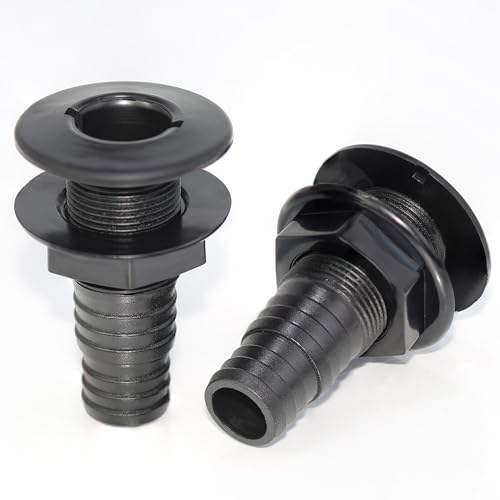
What it is: A pair of 1″ marine thru hull fittings designed for universal hose connections. Durable construction with corrosion-resistant features for seawater use.
Who it’s for: Suitable for boats requiring a common, standard 1″ port size with straightforward installation and reliable performance. A solid choice for replacements or upgrades.
Why chosen: The 1″ size is a widely used standard, making this option compatible with many hoses and fittings. Good balance of durability and price for ongoing maintenance.
Limitations: As with all thru-hull fittings, ensure proper sealing and anti-corrosion measures; check compatibility with your specific hose and vessel layout.
Buying Guide
What to consider when choosing thru hull vent fittings
- Size and hose compatibility: Match the fitting size (5/8″, 3/4″, 1″) to your hose inner diameter for a secure seal and proper venting.
- Material and finish: Brass, stainless, and high-strength plastics offer different durability in saltwater, with brass and stainless offering long-term corrosion resistance where exposed to air and fuel vapors.
- Angle and routing: 90° and straight designs influence hose routing in tight engine rooms or cramped bilges. Choose angles that minimize hose kinking and ease maintenance.
- Check valves: Fittings with built-in check valves provide backflow protection, beneficial for fuel venting or bilge drainage in rough seas.
- Mounting features: Look for wide flanges and robust mounting options to reduce leaks at the hull and improve stability under vibration.
- Installation considerations: Ensure hose clamps, gaskets, and mounting hardware are compatible with the chosen material and your vessel’s seawater exposure.
Installation tips and best practices
- Follow manufacturer instructions for torque and sealing; over-tightening can damage fittings.
- Use marine-grade sealant where recommended and ensure proper alignment with hose connections.
- Inspect fittings regularly for corrosion, cracks, or leaks, especially after docking and fueling maneuvers.
FAQ
- What size is most common for thru hull vent fittings? Most marine vents use 5/8″, 3/4″, or 1″ hose connections, depending on venting needs and system design.
- Do I need a check valve on a thru hull vent? A check valve helps prevent backflow, which can be beneficial for fuel venting or systems exposed to rough seas.
- Are plastic thru hull fittings durable enough? High-quality plastic fittings can be durable for many applications but may be less resistant to impact or long-term UV exposure than brass or stainless.
- Can I mix metal and plastic fittings? Mixing materials is possible, but ensure compatibility with fuels, chemicals, and environmental exposure to avoid galvanic corrosion.
- How do I know what material to choose? Consider exposure to saltwater, mechanical stress, and aesthetic requirements; brass offers classic look and corrosion resistance, while plastics provide cost-effective and lightweight options.
- How often should I inspect thru hull vents? Inspect during seasonal maintenance, after heavy seas, or if you notice signs of leakage or unusual odors.