Answering the best choices for boat owners seeking a reliable tow pole. This guide highlights top options for pontoon boats, wakeboarding, tubing, and water skiing. Each pick suits different deck layouts and user needs, from easy installation to heavy-duty towing. Use the buyer’s notes below to compare fit, material, and performance. Ideal buyers include pontoon owners, recreational skiers, wakeboarders, and all-season water sports enthusiasts seeking safer, clearer tow lines away from motors and wakes.
| Product | Best For | Key Benefit | Width |
|---|---|---|---|
| HECASA Rear Universal Ski Tow Bar | Pontoon boats needing universal fit | Lightweight aluminum, non-rusting | 43″ |
| Attwood 923-009-ADJ Adjustable Height Ski Pylon | Decks with varied heights | Elevated attachment, adjustable brace | 34″-58″ |
| ASVAEVAS Self Centering Tow Harness | Family towables and tubes | 360° pulley, buoyant and tangle-resistant | — |
| Pontoon PRO Rear Ski Tow BAR Tower | Durable stainless option | 304 stainless steel, 38″ width | 38″ |
| Airhead Heavy Duty Tow Harness 16-ft | Long reach tubes and boards | 16-foot rope, heavy-duty connection | 16 ft |
HECASA Rear Universal Ski Tow Bar for Pontoon Boats

Brand: HECASA. Features a universal design suitable for various pontoon boats. Requires a 43″ installation width. The tow bar keeps the traction rope away from the outboard motor and wake, reducing resistance during water sports. Constructed from lightweight aluminum with surface oxidation treatment to resist rust. Uses 2.25″ tubes to save deck space.
Best for: Pontoon owners who need a simple, wide-fit tow option that won’t occupy excessive deck space. Choose this if your pontoon’s rear deck width is around 43 inches and you want a corrosion-resistant aluminum build. Limitation: confirm installation width on your specific model before purchase.
Attwood 923-009-ADJ Adjustable Height Ski Pylon

Brand: Attwood. Features an elevated attachment point to clear deck obstructions and a telescoping brace to fit a variety of deck configurations. The Pro-Swivl head with nylon bushing helps reduce rope wear. Best for: decks with variable heights or layouts where rope clearance is critical. Limitation: installation can be more involved due to adjustable components and alignment requirements.
ASVAEVAS Self Centering Tow Harness

Brand: ASVAEVAS. Heavy-duty 32-strand rope with 5000-lb break strength, designed for 1-4 rider towables, wakeboards, and tubes. Features a 360° rotation pulley for centered towing through turns, plus a yellow float and foam flotation to stay buoyant and away from propellers. Best for: families engaging in multiple water sports and seeking steady, centered towing. Limitation: harness length and buoyancy may require extra caution in rough waters.
Pontoon PRO Rear Ski Tow BAR Tower

Brand: Krypt Towers. This 304 stainless steel tow bar uses 1.5″ tubing for durability, with a width of 38″ and a depth of 11″. Designed to keep ski ropes elevated and clear of the outboard motor for safer towing. Best for: pontoon setups requiring a sturdy stainless option with clear rope clearance. Limitation: stainless steel adds weight; ensure mounting space and deck strength can support the install.
Airhead Heavy Duty Tow Harness 16-Feet
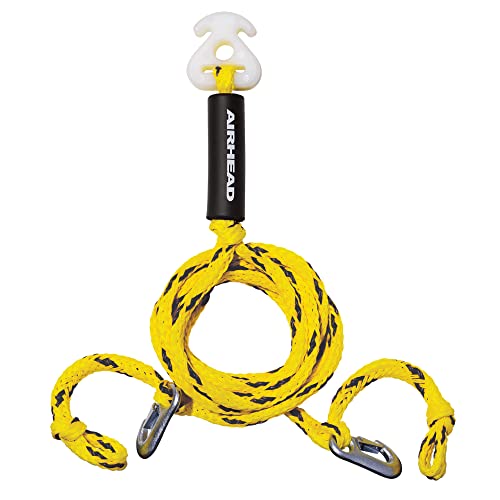
Brand: AIRHEAD. 16-foot heavy-duty tow harness ideal for 1-4 rider towables, water skis, wakesurf boards, and wakeboards. Uses a Kwik-Connect system for easy attachment. Best for: longer-reach towing across wider deck beams or when you need extra rope length for safe clearance. Limitation: longer rope may add slack management needs in tight lanes or crowded docks.
Buying Guide
What matters most when choosing a tow pole or harness?
Compatibility with your boat’s rear deck width, especially for fixed-width bars. Material matters: aluminum is light and corrosion-resistant, while stainless steel offers extra strength. Rope length and pulley design influence tangling, control, and safety during turns. Consider adjustable height if your deck height varies. Look for buoyant features to keep lines away from propellers and passengers.
Fixed bar vs. harness?
- Fixed bars (tow bars) provide a dedicated tow point with minimal rope wear but require precise width matching.
- Harness systems offer flexibility for different riders and types of water sports, with centrifugal centers to maintain rope alignment.
Safety and maintenance considerations
- Regularly inspect for corrosion, especially on stainless-influenced fixtures.
- Ensure mounting hardware is tight and deck structure can handle loads.
- Keep rope and hardware clear of engines, props, and swimmers.
How to measure for fit
- Measure the rear deck width where the pole or bar will mount; many models specify an installation width (e.g., 38″, 43″).
- Check whether a fixed-height pylon or adjustable height is needed for your boat’s seating and deck configuration.
Quick comparison by use-case
- Best overall for pontoon rotation and stability: ASVAEVAS with 360° pulley.
- Best for easy installation and visibility: Airhead 16-ft harness.
- Best corrosion resistance: Pontoon PRO Rear Ski Tow BAR Tower (304 stainless).
- Best for height flexibility: Attwood Adjustable Height Ski Pylon.
- Best universal fit for wide pontoons: HECASA Rear Universal Ski Tow Bar and KUAFU Universal Rear Ski Tow Bar.
FAQ
- Q: Do these tow poles fit all pontoon boats? A: Many are designed for standard rear deck widths; measure your installation width to confirm compatibility.
- Q: Is a harness safer than a fixed tow bar? A: Both can be safe when properly installed; harnesses offer flexibility for multiple riders and sports.
- Q: What maintenance is required? A: Regularly inspect for rust, tighten hardware, and replace worn rope or fittings.
- Q: Which is best for beginners? A: Adjustable-height pylon options help beginners by accommodating varied deck heights and easier rope management.
- Q: How long should the rope be? A: Rope length depends on the sport and boat width; longer ropes can reduce drag but require more space for safe operation.