Clear, reliable television reception while at sea requires purpose-built marine antennas. This guide highlights five top options that balance performance, durability, and ease of use for boaters. Ideal buyers include coastal cruisers seeking coastal TV, offshore travelers needing stable signal, and boat owners who want straightforward installation without heavy equipment. After the intro, a quick product table summarizes key choices for fast comparison.
Quick Comparison Table
| Product | Brand | Best For | Notes |
|---|---|---|---|
| TracVision TV3 | KVH | Coastal cruising and near-shore sailing | Compact dish; coastal range up to ~100 miles |
| Intellian B4-509AA i5 | Intellian | Medium-range offshore TV | High-performance, 20″ dish |
| TracVision TV5 | KVH | Higher-end marine TV | Full-featured, larger system |
| Anina 16 Inch Marine Antenna | Anina | AM/FM radio reception on boats | Flexible mounting options |
| Indoor HDTV Antennas (Merryan) | Merryan | Shore-based or temporary use | Not specifically marine; best for nearby signal |
Note: The table highlights best-fit scenarios. Indoor antennas may be convenient for docked use or as a backup, but marine-specific antennas generally perform better in wind, spray, and motion.
KVH TracVision TV3 With IP-TV Hub

The KVH TracVision TV3 is designed for use with North American systems and coastal cruising up to about 100 miles. Its 14.5-inch dish supports TV reception while underway and includes an IP-TV hub for streaming compatibility. This option is best for boaters who need reliable coastal TV without a large installation footprint. Better for: coastal cruisers who want a compact, purpose-built marine antenna. Limitation: offshore performance may not match larger, premium KVH models in high seas.
Intellian B4-509AA i5 HD Satellite TV System

The Intellian B4-509AA i5 is a full satellite TV system with a 20″ dish and a 24″ diameter dome, designed for Tri-Americas LNBF compatibility, including U.S. and Caribbean markets. It’s a solid choice for boaters who want robust satellite reception and wider regional availability. Best for: offshore legs with access to satellite feeds. Caution: higher installation complexity and cost than entry-level marine antennas.
KVH TracVision TV5 With IP-TV Hub

The KVH TracVision TV5 represents a step up from TV3 in terms of feature breadth and coverage. It includes an IP-TV hub for streaming and is intended for boaters seeking higher-end marine TV performance. Best for: experienced boaters who require more channels and a broader coverage footprint. Limitation: larger footprint and higher price than entry-level options.
Anina 16 Inch Marine Radio Antenna

The Anina 16 Inch Marine Radio Antenna is a versatile FM/AM radio antenna suitable for boats and other vehicles. It offers broad compatibility and adjustable mounting, making it a practical choice for ensuring reliable radio reception onboard. Best for: boaters who need dependable radio reception in addition to TV. Caution: this is a radio antenna, not a TV antenna, so pair it with a TV antenna if TV reception is also needed.
Merryan Indoor HDTV Antenna With 360° Reception
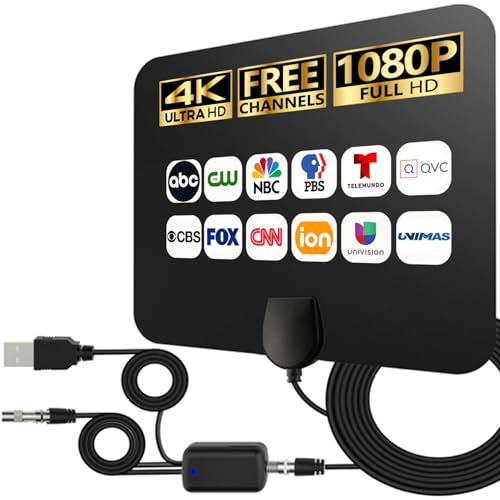
This Merryan indoor TV antenna is designed for free-to-air channels with 4K HD capability and a long 16.5-foot coaxial cable. It’s best used dockside or in locations with nearby broadcasting towers. Best for: boaters at the dock or inshore, seeking an easy backup option. Limitation: not marine-dedicated, performance can be affected by marine environment and motion.
Buying Guide: Key Considerations For Marine TV Aerials
Signal availability and installation conditions dictate the best marine antenna choice. Consider dish size, satellite compatibility, dome type, and IP integration when choosing a system for a boat. Coastal cruising often benefits from compact dishes and reliable coastal coverage, while offshore passages may require broader satellite access and higher power.
What should I look for in a marine TV antenna?
- Dish size and signal range: Larger dishes typically offer stronger reception at longer distances.
- Mobility and mounting: Consider how the antenna will be installed on a moving vessel and whether it tolerates vibration and spray.
- Satellite compatibility: Some systems support multiple satellites and regions; ensure it covers your typical cruising area.
- IP-TV and streaming: IP hubs enable streaming from satellite or onboard networks; verify compatibility with your devices.
Should I pick a dedicated marine antenna or an indoor/shore-based option?
Marine antennas are engineered to withstand salt spray, motion, and weather, ensuring reliability at sea. Indoor or shore-based antennas may be easier to install but usually perform worse in a marine environment and while underway. Choose marine-specific products for active sea use; reserve non-marine options for dockside or backup scenarios.
Which option is best for different boating lifestyles?
- Coastal cruisers: Compact, coastal-focused marine antennas like TV3 are ideal and easier to install.
- Offshore sailors: High-end systems like TV5 or Intellian B4-509AA i5 provide broader satellite access for longer passages.
- Boat owners needing radio plus TV: A marine radio antenna (Anina) complements a TV antenna for all-weather communication.
FAQ
- What is the difference between a marine antenna and a home antenna? Marine antennas are designed to resist salt, spray, and motion, while home antennas are not optimized for marine conditions.
- Can I install a satellite TV system on any boat? Most systems require a stable mounting surface, power supply, and proper alignment to satellites. Some systems are easier to set up than others.
- Do I need an IP-TV hub for streaming? An IP-TV hub enables streaming and network integration, but some users may rely on direct satellite channels instead.
- Is a larger dish always better? Larger dishes generally offer better reception in challenging conditions but require more space and installation effort.
- Should I pair a radio antenna with a TV antenna? If you want both radio and TV reception, a combined setup or compatible components can simplify installation.
- What maintenance is needed for these antennas? Regular washing, inspection for corrosion, and checking cable connections help maintain signal quality at sea.