Hands-on guidance for selecting the best VHF marine antenna for your boat, based on range, durability, and installation needs. This guide highlights five reliable options that suit different boaters—from casual day sailors to serious coastal communicators. Each product section explains who it’s best for, why it was chosen, and any notable limitations. A concise buying guide and quick FAQs help you compare features like gain, length, and mounting options at a glance.
| Product | Height | Gain | Cable Included | Best For |
|---|---|---|---|---|
| Shakespeare 4′ Centennial VHF Antenna, White | 4 ft | Not specified | Not specified | Budget-friendly basic day-use |
| Tram Pretuned VHF 3-dBd-Gain, 46 in. | 46 in | 3 dBi | RG58, PL-259 adapter | All-around performance |
| UAYESOK VHF Marine Base Antenna, 48 Inch | 48 in | 3 dBi | 7 m RG58U | Solid mid-length option |
| HYS VHF Marine Antenna, 43.3 in. | 43.3 in | 3 dBi | Included 7 m RG58 | Compact but reliable |
| Arridioter VHF Marine Antenna, 43.5 in. | 43.5 in | Not specified | 7 m RG58, PL259 | Durable fiberglass build |
Shakespeare 4′ Centennial VHF Antenna, White

The Shakespeare 4′ Centennial VHF Antenna is a compact, white fiberglass option designed for small- to mid-sized boats. It is a straightforward choice for boaters seeking basic VHF performance without extra mounting complexity. This antenna is best for casual coastal chatter, harbor calls, and routine weather updates. A limitation is that the listed data do not specify gain, so users should manage expectations about range compared with higher-gain models.
Who this is best for: boaters on small to midsize vessels needing a dependable, simple VHF solution without advanced tuning.
Tram Pretuned VHF 3-dBd-Gain, 46-in.

The Tram 46-inch pretuned VHF antenna provides a practical 3 dBi gain and ready-to-use functionality with RG58 cable and a PL-259 adapter. This makes it suitable for many mid-sized boats that require reliable voice communications without extensive setup. It’s a solid choice for those who want a mid-length, all-around performer. A potential limitation is that the product data emphasize general coverage rather than specialized marine channels, so advanced operators may seek higher gains for distant communications.
Who this is best for: boaters seeking a balanced, easy-install VHF antenna with good all-around performance.
UAYESOK VHF Marine Base Antenna, 48 Inch
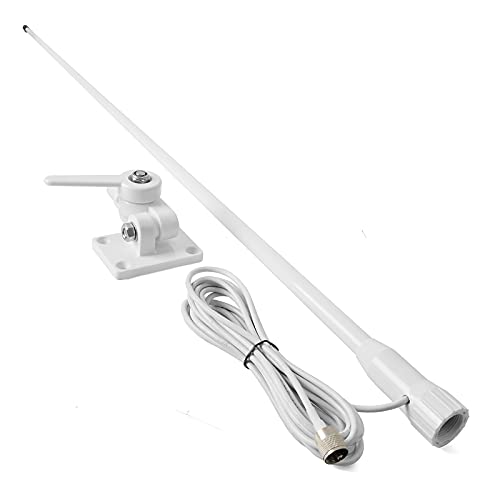
The UAYESOK 48-inch fiberglass base antenna uses a 3 dBi gain and includes a 7-meter RG58U cable with a PL259 connector. It’s designed for robust, all-weather marine use and features anti-corrosion materials. This antenna is well-suited for boats that need a longer reach than compact models but don’t require extremely high gain. A caveat is that higher-gain models can outperform it in very long-range scenarios, though it remains reliable for everyday communications.
Who this is best for: boaters who want a longer, fiberglass base antenna with a good balance of gain and ease of installation.
HYS VHF Marine Antenna, 43.3 in.

The HYS 43.3-inch VHF marine antenna offers a 3 dBi gain with a 156-163 MHz frequency range and a 360-degree horizontal beam width. It’s a compact option that still provides reliable communication for most coastal and inland boating activities. The data mention a vertical beam specification, which helps with general coverage around the vessel. A limitation is that the data do not show a higher gain option for longer-range needs.
Who this is best for: boaters seeking a compact, all-weather antenna with dependable everyday performance.
Arridioter VHF Marine Antenna, 43.5 in.

The Arridioter 43.5-inch fiberglass VHF antenna is built for marine environments and includes a 22.9 ft (7 m) RG58 coax with PL259 adapter. It’s designed to be durable and reliable for ship-to-ship and ship-to-shore communications within the marine VHF band (156-163 MHz). A practical note is that the features emphasize construction and cable length, which helps in flexible installations. The limitation is that gain is not explicitly stated in the data, making it harder to compare long-range performance against higher-gain models.
Who this is best for: boaters who want a sturdy fiberglass antenna with ample cable length for flexible mounting options.
Buying Guide: How To Choose The Right VHF Antenna For Your Boat
What length do you need? Longer antennas can extend range, especially on larger boats, but may be prone to interference in tight spaces or near rigging. Shorter antennas are easier to install and less likely to snag, but may offer more limited reach.
What gain do you require? Antennas with higher dBi gain generally provide better range, particularly in open water. For routine harbor use, 3 dBi variants are typically sufficient; for long-distance communication, consider higher gain models if available.
What mounting and installation options are needed? Look for base-mount or ratchet-mount configurations that fit your boat’s rails, T-top, or transom. RG58 coax length affects installation flexibility; longer cables simplify placement but can introduce minor signal loss.
What material matters? Fiberglass antennas are common for marine use due to durability and corrosion resistance. Ensure the antenna is rated for marine environments and has watertight seals where applicable.
What compatibility matters? Confirm the antenna’s frequency range (156-163 MHz for marine VHF) and connector type (PL-259/SO-239 compatibility) with your radio model to avoid mismatches and ensure reliable operation.
Practical buying tips
- Match antenna length to your boat size and mast clearance to avoid mounting conflicts.
- Prefer fiberglass construction for durability in saltwater environments.
- Verify included cable length to ensure you can reach the radio without excessive stress on the coax.
- Check mounting integrity; ratchet mounts offer adjustable positioning for best signal reception.
Quick FAQ
- What does dBi gain mean for VHF antennas?—Gain indicates the antenna’s ability to focus signal in a particular direction, affecting effective range in open water; higher gain can extend reach but may reduce broadside coverage.
- Is longer always better for boat antennas?—Not always. Longer antennas can improve range but may be bulky or interfere with rigging; choose length that fits your boat and docking needs.
- Do I need a special coax cable?—Most marine VHF uses RG-58U cable with PL-259 connectors; ensure your radio and antenna guide match the connector type.
- Can I install a VHF antenna myself?—Yes, many marine antennas use simple base-mounts and standard coax; follow the manufacturer’s mounting instructions for best performance.
- What maintenance is recommended?—Rinse with fresh water after exposure to salt, check seals, and inspect coax for wear or cracking to maintain signal integrity.
- Which antenna is best for a small boat?—A compact fiberglass antenna around 43–46 inches with a 3 dBi gain is typically a good balance for small to mid-sized boats.