Finding the right wheels for inflatable boats helps move, launch, and store small craft with less effort. This guide focuses on practical options for common inflatable boats, dinghies, and light aluminum craft. The top picks below are best for solo users, family boaters, or weekend anglers who need reliable, easy-to-store launch wheels. The table highlights each option at a glance to speed buying decisions.
| Product | Load Capacity | Wheel Size | Best For |
|---|---|---|---|
| VEVOR Boat Launching Wheels (12″) | 600 lbs | 12 inches | Medium boats up to 13′ with rougher surfaces |
| Brocraft Boat Launching Wheels (12″) | 500 lbs | 12 inches | Aluminum and inflatable boats, compact setups |
| Bestauto Boat Launching Wheels (15″) | 300 lbs | 15 inches | Beaches and soft surfaces, lighter boats |
| XinKunmarine Boat Launching Wheels (10″) | 600 lbs | 10 inches | Heavy-duty, versatile trailer and beach use |
| WONDERCAMEL Balloon Wheels (13″) | Not specified | 13 inches | Soft sand and beach launches, portable setup |
The following sections detail five top options. Each entry explains who it’s best for, why it was selected, and any practical limitations to consider when choosing a wheel kit for inflatables.
VEVOR 12-Inch Transom Launching Wheels
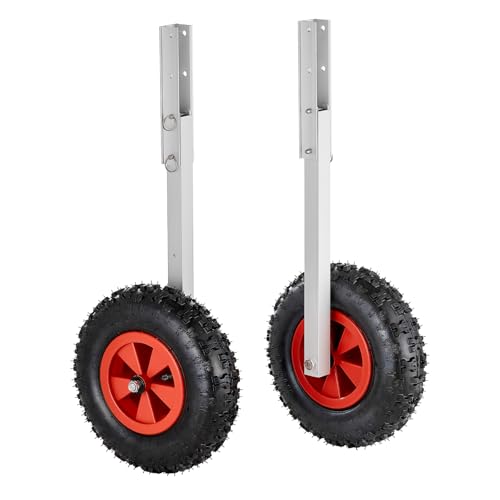
Best for medium-sized inflatables and light aluminum boats up to 13 feet, with a 600 lb load capacity. The 12-inch inflatable tires provide stable rolling on grass, dirt, and sand. Foldable arms and quick-release pins simplify storage and on-trail adjustments. Choose this if you need reliable performance and easy setup for frequent use on varied terrain.
Limitations: Heavier boats near the 600 lb limit may require careful handling to avoid tip or imbalance. Ensure correct weight distribution across the transom.
Brocraft 12-Inch Launching Wheels
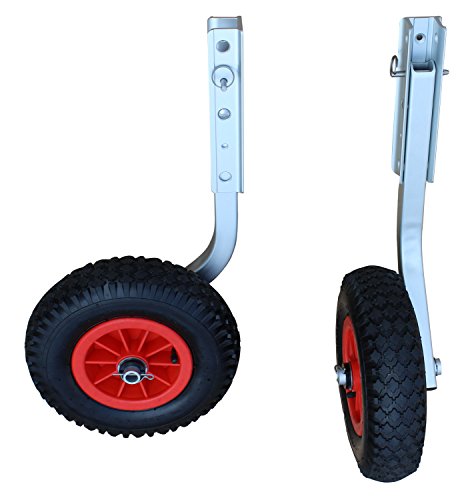
Best for aluminum and inflatable boats that require a sturdy, long-lasting dolly. The marine-grade aluminum construction and CNC-processed frame provide durability with a compact footprint. A 500 lb capacity supports most smaller to mid-size craft. Wheels lock up for hands-off transport when the boat is in transit.
Limitations: Weight capacity is lower than some competing options, so avoid heavier craft or heavy loads on rough terrain without testing balance first.
Bestauto Stainless Steel Launching Wheels
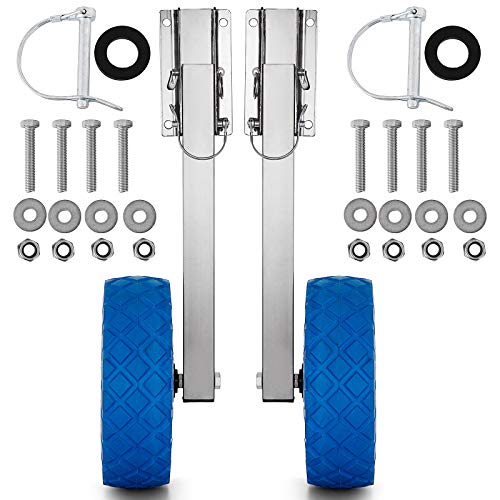
Best for corrosion resistance and long-term outdoor use. The kit uses stainless steel brackets with polyurethane wheels for stability on sand or concrete. It supports up to 300 lbs and offers dual-position setup, letting you tilt wheels up without impacting water operation. Ideal for frequent beach launches and mixed surfaces.
Limitations: The 300 lb capacity may be limiting for larger inflatable boats; assess boat weight and gear before purchasing.
XinKunmarine 10-Inch Transom Wheels

Best for lightweight, heavy-duty versatility. The kit combines stainless steel brackets and 10-inch pneumatic tires, delivering rust resistance and solid stability up to 600 lbs. It features three-position wheel locking and easy installation on transoms. Choose this if you need robust performance with flexible mounting options.
Limitations: Smaller wheel diameter may require smoother surfaces for best maneuverability; rough terrain could be less forgiving than larger wheels.
WONDERCAMEL Balloon Wheels 13”

Best for soft beach launches and easy beach-to-water transitions. The 13-inch diameter with wide tires provides superior flotation on sand. Stainless steel brackets resist corrosion, delivering durable performance in marine environments. The kit suits small to mid-sized inflatables and dinghies needing extra flotation.
Limitations: Balloon tires can be slower on hard surfaces; consider adding a second set of wheels for varied terrains when frequent on-road transport is required.
Buying Guide: How To Choose Boat Launching Wheels
Key factors to compare include capacity, wheel diameter, material, and mounting options. Large wheels roll more easily across soft surfaces but may add weight. Aluminum and stainless steel offer durability in saltwater, while corrosion-resistant plastics and nylons reduce maintenance. Consider foldability, quick-release pins, and adjustable arms for multi-boat compatibility. For solo use, prioritize lighter setups with simple detachment. For frequent beach launches, prioritize flotation and wider tires to prevent sinking.
Additional Buying Considerations
- Boat weight versus wheel capacity: Do not exceed the listed maximum.
- Surface terrain: Sand, grass, mud, and concrete require different tire profiles.
- Mounting compatibility: Transom design and boat length affect fit and clearance.
- Storage and portability: Foldable arms and quick-release mechanisms save space.
FAQ
- What wheel size is best for soft beach launches? Larger, balloon-style or wide-tread wheels (around 12–15 inches) perform better on sand.
- Can I use wheel kits on any inflatable boat? Most kits fit many inflatables, but check transom mounting compatibility and total weight.
- What maintenance is required? Rinse after saltwater use, check air pressure in pneumatic tires, and inspect fasteners for looseness.
- Is a higher load capacity always better? Not always; choose capacity based on boat weight plus gear to maintain balance.
- Are foldable wheels worth it for small craft? Yes, for storage and transport convenience, particularly in garages or car trunks.